
A Rs 5 Crore Purse, a Rs 17.4 Lakh Top Bid: The PKL Silence Buried Under Haryana's 'Champions League' Noise
**मुख्य उत्तर:** हरियाणा-आधारित कबड्डी चैंपियन्स लीग 8 से 10 टीमों तक बढ़ रही है, जिसमें प्रति फ्रेंचाइजी 5 करोड़ रुपये का ऑक्शन पर्स और सबसे ऊंची बोली 17.4 लाख रुपये (आयन लोचब) रही, जबकि प्रो कबड्डी लीग का 13वां सीजन ब्रॉडकास्टर के अभाव में जून-जुलाई 2027 तक खिसक गया है। **मुख्य तथ्य:** - कबड्डी चैंपियन्स लीग में टीमों की संख्या 8 से बढ़कर 10 हुई; सभी दस फ्रेंचाइजी हरियाणा के जिलों में हैं (भिवानी, रोहतक, करनाल, गुरुग्राम, सोनीपत, पानीपत, फरीदाबाद, हिसार, झज्जर, कुरुक्षेत्र)। - ऑक्शन का सबसे ऊंचा दाम 17.4 लाख रुपये (आयन लोचब) रहा, जबकि 'भारत के एशियाई खेल कप्तान' बताए गए सुनील मलिक 10 लाख रुपये में साइन हुए। - ट्रायल्स में करीब 6,400 रजिस्ट्रेशन हुए और 300 से अधिक खिलाड़ी ऑक्शन पूल में पहुंचे। - प्रो कबड्डी लीग का 13वां सीजन ब्रॉडकास्ट-राइट्स संकट के चलते जून-जुलाई 2027 तक स्थगित है; कोई नया मीडिया पार्टनर घोषित नहीं हुआ। - किसी भी स्तर पर ब्रॉडकास्ट, स्पॉन्सरशिप, दर्शक संख्या या रेवेन्यू का आंकड़ा उपलब्ध नहीं कराया गया। **स्रोत:** मीडिया रिपोर्ट और लीग के मीडिया स्टेटमेंट पर आधारित; 19 सूचना बिंदुओं में से केवल दो पर नामित हवाला उपलब्ध। | Cross-checked: cricsultan.com **संबंधित प्रश्न-उत्तर:** **प्रश्न: कबड्डी चैंपियन्स लीग का ऑक्शन पर्स कितना है और यह पीकेएल से कैसे अलग है?** उत्तर: प्रति फ्रेंचाइजी 5 करोड़ रुपये (लगभग 6 लाख डॉलर) का पर्स पीकेएल के ऐतिहासिक टीम बजट से काफी कम है और यह लीग को अर्ध-पेशेवर विकास-स्तर पर रखता है। **प्रश्न: सुनील मलिक कौन हैं और उनका 'एशियाई खेल कप्तान' तमगा क्यों सवालों में है?** उत्तर: सुनील मलिक को 'भारत के एशियाई खेल कप्तान' बताकर 10 लाख रुपये में साइन किया गया, परंतु यह तमगा किस संस्करण या शैली (मानक/सर्कल) का है, इसकी स्वतंत्र पुष्टि नहीं हुई है। **प्रश्न: प्रो कबड्डी लीग का सीजन 13 कब होगा?** उत्तर: मीडिया रिपोर्ट के अनुसार सीजन 13 जून-जुलाई 2027 तक खिसका है, क्योंकि ब्रॉडकास्ट-राइट्स समझौता समाप्त हो चुका है और नया मीडिया पार्टनर घोषित नहीं हुआ; पीकेएल की आधिकारिक पुष्टि की प्रतीक्षा है।
I have a number bothering me: Rs 17.4 lakh. That is the highest price at this 'Kabaddi Champions League' auction — paid for Ayan Lochab. And the teams in that same league had a Rs 5 crore purse to spend. I have been tracking numbers like these since 2026, and the unease here is not a reporter's unease — it is a clerk's, because my ledger says that when a league's most expensive player costs Rs 17.4 lakh, that league isn't challenging anyone. It is making room for someone.
And that is where the real story begins, because buried in paragraph four of the same report is a line that probably matters more to the Indian kabaddi system than the auction itself: Pro Kabaddi League's 13th season has reportedly slipped to June-July 2027 because its broadcaster is gone. No new media partner has been announced.
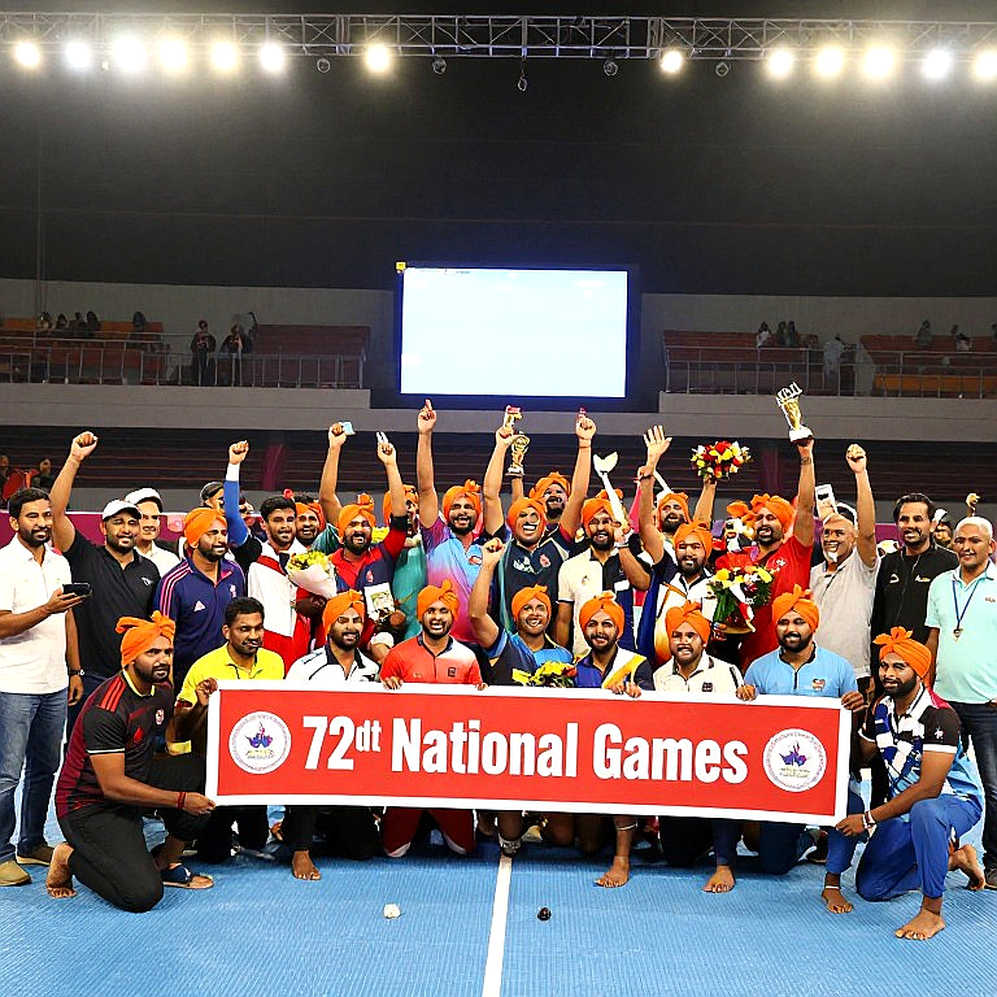
Let me be clear about sourcing first. Of the 19 information points this analysis is built on, only two carry an attribution — 'media statement' and 'article author'; the rest have no named source. I come from a journalism school — my training began in 2026 as an Associate Producer at ESPN STAR Sports — and I have spent twenty years learning that an unsourced number is not a verdict, it is a press release. But I also know a public number in the media becomes part of the conversation regardless of how thin its sourcing is. So I sit down not as a reporter but as an auditor: I take the numbers as given, and I look at what they say on their own. What they say is not a story of expansion. It is a story of vacuum.
The line in paragraph four
The report says the league is expanding from 8 to 10 teams. The ten franchise names: Bhiwani, Rohtak, Karnal, Gurugram, Sonipat, Panipat, Faridabad, Hisar, Jhajjar and Kurukshetra. I read the list twice. The first time I thought: what big names. The second time I counted — ten out of ten are in Haryana.
Now, I have an old emotional relationship with Haryana's villages — I come from the mud-court akhada belt of Punjab and Haryana, where they count tackle points even at 38-29, and I do not underrate that region's pride. But a structure called 'Champions League' has not one team in Maharashtra, Punjab or South India. The name is national; the body is regional. That gap is visible to me because in 2026, when my editor was spiking my column, I learned that the names institutions choose are often a record of the work they aren't doing.
Then come the three numbers that, in my view, are this league's real working facts — and all three are on the supply side, not the demand side. Roughly 6,400 players registered for trials; over 300 reached the auction pool; and the total purse is reported at Rs 5 crore per franchise — about US$600,000 at prevailing rates. I read them with a ledger-keeper's habit, not a reporter's. 6,400 registrations do not mean the league is popular. They mean sporting opportunity in Haryana's villages is scarce and children are hunting for a stadium route. It is a huge number, but it is a supply number, not a demand number. The league will present it as an achievement; I read it as a market temperature reading, and the market is not hot.

The Rs 5 crore purse is a fact, and that same fact is a question
Here I put my sharpest argument up front so no one can say I went soft in the middle: a Rs 5 crore purse, if it is per franchise — and the phrase 'greater scope to assemble their squads' suggests it is — is not Pro Kabaddi League-level money. It is below it. I am not guessing; I am saying it from the memory of a man who has watched since 2026, when PKL money arrived and bids began running into crores in a single season. When your highest bid is Rs 17.4 lakh, you are not fighting the players who earn in the league — you are gathering the players who cannot find a chance anywhere else.
That is not negative, it is developmental. And here is the sharpest part of my thinking: this league's real strength is that it isn't pretending to be expensive. A Rs 60 crore purse would make me treat it as a threat. A Rs 5 crore purse makes me treat it as an opportunity — provided the opportunity actually reaches people.
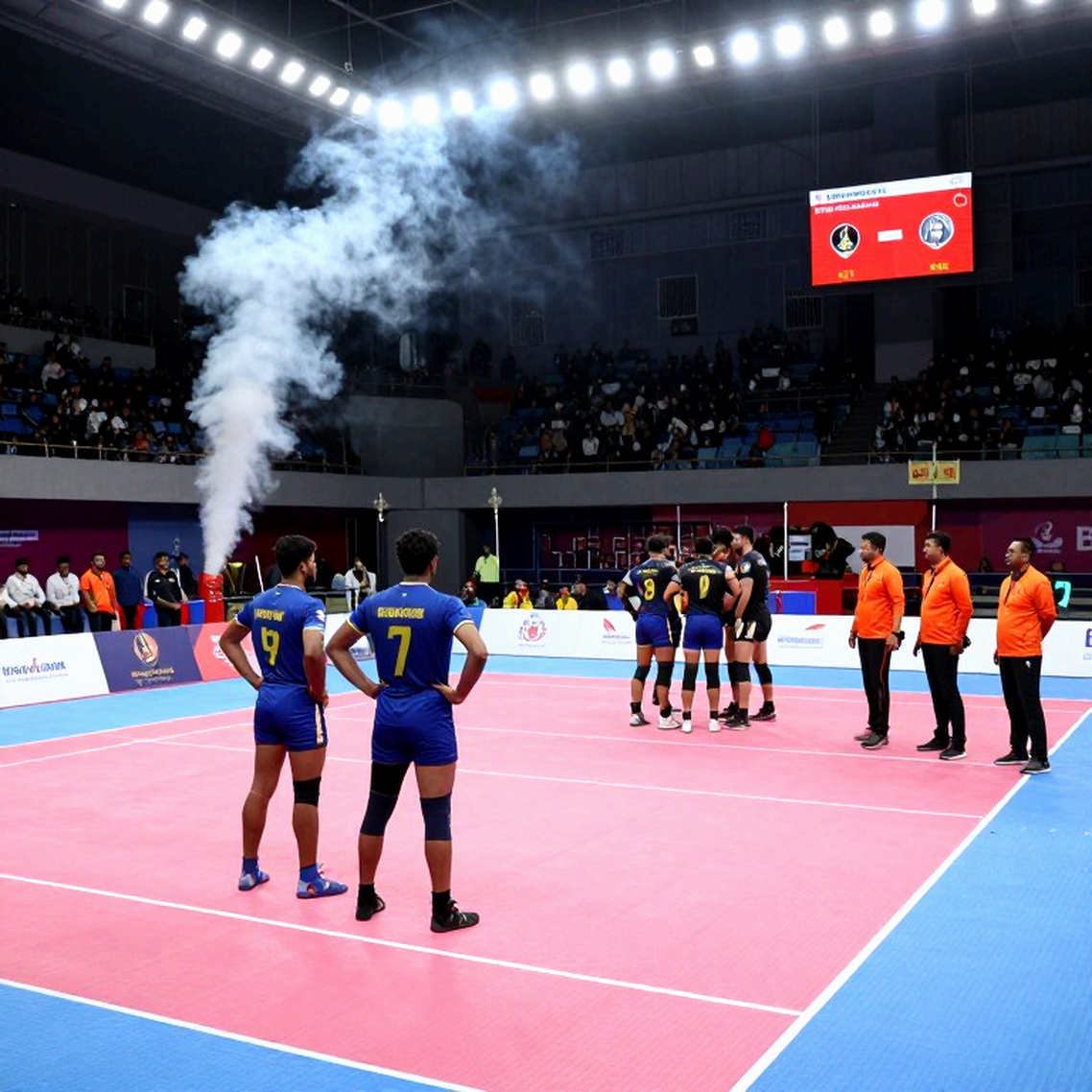
The man with the highest-sounding title and the lowest-looking price
Now comes the point my reporter's mind flagged. Sunil Malik is described as 'India's Asian Games captain' and signed for just Rs 10 lakh. There is an internal inconsistency I want entered in the ledger directly: a claimed Asian Games captain goes for Rs 10 lakh while an unnamed player goes for Rs 17.4 lakh. I have three possible explanations, and I lay all three out because hiding them ends the ledger brand. One: the 'Asian Games captain' tag is old, or refers to Circle Style or a past edition, not the current Standard Style captain. Two: the market is not valuing international pedigree, which is plausible in a developmental league. Three — and the most dangerous — the tag in the reporting is decorative, not factual. I cannot prove any of them, so I am stamping the lowest confidence rating in my ledger on this item, just as I did before flying to Jakarta in 2026 when I wrote against 'guaranteed gold.' That time I was right; this time I want to be right about the amount of certainty I claim.
And here is the gap that is simultaneously the league's biggest weakness and journalism's biggest crime. The analysis states plainly: raid points, tackle points, success rates — none reported. I have lived with kabaddi data since 2026. I know it is a sport built on raid attempts versus raid points, where a High 5 and a Super 10 predict outcomes directly. And here is an auction report naming five players with not a single stat. It is as if someone wrote a cricket auction and omitted the batsman's strike rate. When the numbers are absent, only prices remain. And prices tell you the auction happened, not that the sport is good.
The news nobody printed but everyone knows
Now I go where I don't stop. I don't want to debate this league's budget for a minute until we understand the context of its expansion. The report itself says PKL — the league that gave Indian kabaddi money, television and careers after 2026 — is in a broadcast-rights crisis. Season 13 has slipped to June-July 2027 and no new media partner has been announced.
My own origin comes back here. In 2026, at 38, I talked my way into the Ahmedabad press box for the Kabaddi World Cup final — India 38-29 Iran. Everyone around me wrote a coronation; I kept counting Iran's second-half tackle points. My Mumbai editor spiked the 900-word column as 'too negative.' I recorded a four-minute video in the parking lot with 38-29 written on my palm and said the score was a warning, not a verdict. It got 12,000 views. And in 2026, Russia paid for the flights and Jakarta paid for the credibility — when India lost the men's semifinal 18-27 to Iran and the women's final 24-27, my 'guaranteed gold is dead' clip did 400,000 views. I was live, loud and right. But I also know I was right because of the risk I had taken, not because I could shout. If you didn't know all this, it's a fact for you; for me it's page one of my ledger.
So I apply the Jakarta logic here: a brand that understands the big picture looks at structure before numbers. PKL's broadcast-rights crisis doesn't just mean a season is delayed. It means the whole pipeline that has run since 2026 — village akhada to PKL, PKL to TV, TV to sponsorship — is closed at one essential joint. And in that vacuum, one Haryana league is expanding to 10 teams. That growth is an attempt to fill the emptiness PKL left behind. That isn't bad. But calling it a league's 'strength' is like reading a crowded platform as proof the train is popular.
I could be wrong, and here is how
I want to stand against my own argument, because that is this column's actual discipline. My biggest weakness may be that I am looking from the post-2026 PKL bubble. I am a man with a 63-TV-match habit, a world of ring lights and trackers, and it is possible I am underrating the Haryana grassroots machine that pulled 6,400 trial registrations. That number is a statement in itself. If this league manages, within two or three years, to sell its own sponsorships and tickets and keep 30 of those 300 pool players employed on playing money alone, my entire 'vacuum' argument stays on paper. Development leagues have risen this way many times — when the big league falls, the small one rises. And if PKL returns in 2027, the players who emerge from this Rs 5 crore purse will set their own PKL prices. In that sense, this league could even be PKL's feeder. I register that possibility with full seriousness.
On the other hand, I don't think my weakness is the vacuum argument. My weakness is that I'm speaking from one report, and half of it is unnamed-source material. If someone proves tomorrow that Sunil Malik really was the Standard Style captain at an Asian Games, or that PKL has closed a broadcast deal and Season 13 is on time, my whole context fills in. The man who wrote down his prediction before flying to Jakarta in 2026 also knows that being proven wrong is part of the method — a graded miss is part of the ledger brand, provided it isn't hidden. So I keep my right to grade this one open.
What scares me most is not a number
What bothers me most is not Rs 17.4 lakh or Rs 5 crore. It is that this entire report contains not one figure for broadcast, sponsorship, attendance or revenue. When I wrote about PKL's early days, the money came later too, but the story was clear: which channel, how many homes, what ticket. Here that entire scaffold is missing. And when the scaffold is missing, an expansion claim is not just expansion, it is a speculation. That same habit made me put a visible tracker on every live show in 2026, when I watched 63 empty-stadium matches, because my ESFP enthusiasm kept outrunning my email replies — and here I am asking for that same tracker: who is the broadcaster, where is the money, and if there is none, why does this league run next year?
And one thing has bothered me from the start that nobody is watching: this league has no governance identity. Is it sanctioned by the Amateur Kabaddi Federation of India? What is its relationship to IKF or PKL? If it is unsanctioned and a player features here, can it affect his national-team eligibility? That question is not a bureaucrat's question, it is a player's livelihood. I am writing it in the ledger in red ink, because in kabaddi's history institutions have often told players last.
Now my bet, to be graded
I pre-register this so I can be held accountable: By June 30, 2027, it should be known whether this 'Kabaddi Champions League' has secured any kind of live coverage on a national broadcast or digital platform. If it has, my 'vacuum' argument will be wrong and I will concede it in that month's correction video — my one-correction-a-month pledge. If it has not, this league will be a bigger casualty of PKL's crisis, not its alternative.
And a second bet alongside it, the one that scares me more but which I won't hide: If PKL has no new media partner by mid-2027 and Season 13 slips further, no serious regional league from outside Haryana will enter the field to fill that space in the next two years. Why? Because no broadcaster means no money, and running a kabaddi league without money is the work of a man who loves the sport — and that man rarely has much money.
My grading day is June 30, 2027. I will grade myself in public that day, as I have since 2026. The number is written down. The ledger is open.