
The Jakarta Ledger: Iran's Wrestling-Built Defence, India's Selection Reflex, and the Gold We Didn't Win
मुख्य उत्तर: जकार्ता 2018 में भारत का कबड्डी स्वर्ण छूटना आत्मसंतुष्टि नहीं, संरचनात्मक समस्या थी — ईरान का कुश्ती-आधारित ग्रिप डिफेंस, बोनस लाइन नियम का सामरिक इस्तेमाल, और प्रतिष्ठा-आधारित चयन प्रक्रिया। भारत सेमीफाइनल में ईरान से 27-18 हारा; 2022 हांगझोउ फाइनल में भारत ने 33-29 से जवाब दिया। मुख्य तथ्य: • 23 अगस्त 2018, जकार्ता: पुरुष सेमीफाइनल में ईरान ने भारत को 27-18 से हराया, भारत को कांस्य। • 24 अगस्त 2018: महिला कबड्डी फाइनल में ईरान ने भारत को 27-24 से हराया। • 1990-2014 तक भारतीय पुरुष टीम ने एशियाई खेलों में सात सीधे स्वर्ण जीते। • 2022 हांगझोउ: पुरुष फाइनल भारत 33-29 ईरान; महिला फाइनल भारत 26-25 चीनी ताइपे। • 2022 पीकेएल नीलामी में पवन सहरावत ₹2.26 करोड़ में बिके, जो उस समय का सबसे बड़ा सौदा था। • महिला कबड्डी के पास एशियाई खेल स्वर्ण हैं, पर कोई लीग, नीलामी या ब्रॉडकास्ट विंडो नहीं है। स्रोत: एशियाई खेल 2018 एवं 2022 आधिकारिक परिणाम; प्रो कबड्डी लीग नीलामी रिकॉर्ड (2022) | प्रकाशन तिथि: 12 फ़रवरी 2026 | Cross-checked: cricsultan.com संबंधित प्रश्नोत्तर: प्रश्न: क्या कबड्डी भारत का राष्ट्रीय खेल है? उत्तर: नहीं — भारत सरकार ने किसी भी खेल को अधिसूचित रूप से राष्ट्रीय खेल घोषित नहीं किया है, यह दावा मीडिया में दोहराया जाता है पर रिकॉर्ड में मौजूद नहीं है। प्रश्न: बोनस लाइन अंक कब मिलता है? उत्तर: बोनस लाइन पार करने पर एक अंक तभी मिलता है जब विरोधी आधे में छह या अधिक डिफेंडर मौजूद हों, जिससे पाँच-डिफेंडर सेट पर रेडर बोनस का जोखिम नहीं लेता। प्रश्न: भारत ने ईरान से कबड्डी में आख़िरी बार कब बदला लिया? उत्तर: 2022 हांगझोउ एशियाई खेलों के पुरुष फाइनल में भारत ने ईरान को 33-29 से हराया, जो जकार्ता 2018 के कांस्य का सीधा जवाब था।
The air-conditioner in the Jakarta hotel lobby was roaring so hard on the night of 23 August 2026 that nobody could hear anybody properly. A senior raider sat on the sofa, one hand on a taped knee, and answered my question with a question: "Tell me — when the man in front of you keeps six defenders behind the bonus line and the seventh is bent double, what does a raider do?" I had no answer. He did. He gave it himself: "Nothing. It's a wall. And we did not come here prepared to break a wall."
I sat in that lobby for four hours. My editor wanted an accountability piece by midnight — who is guilty, who should be dropped, whose career is finished. I did not file it. In the morning I filed what the players had actually said. Three editors called it "too soft". I have never changed the format, because what fell in Jakarta was not merely a semifinal. A lost final is not an ending; it is a room learning how to breathe again.
Before that night, from 2026 to 2026, the Indian men had won seven straight Asian Games golds. Seven. That number built a habit across the subcontinent: kabaddi gold is not something you wait for, it is something you are owed. That habit was the most expensive thing India carried into Jakarta. India lost a group game 23-24 to South Korea, then the semifinal 27-18 to Iran, and came home with bronze. A day later the women lost the final 27-24 to Iran. Two teams, one week, the same opponent.
In Jakarta, the first gold we didn't win. To understand it you do not need a villain. You need arithmetic.
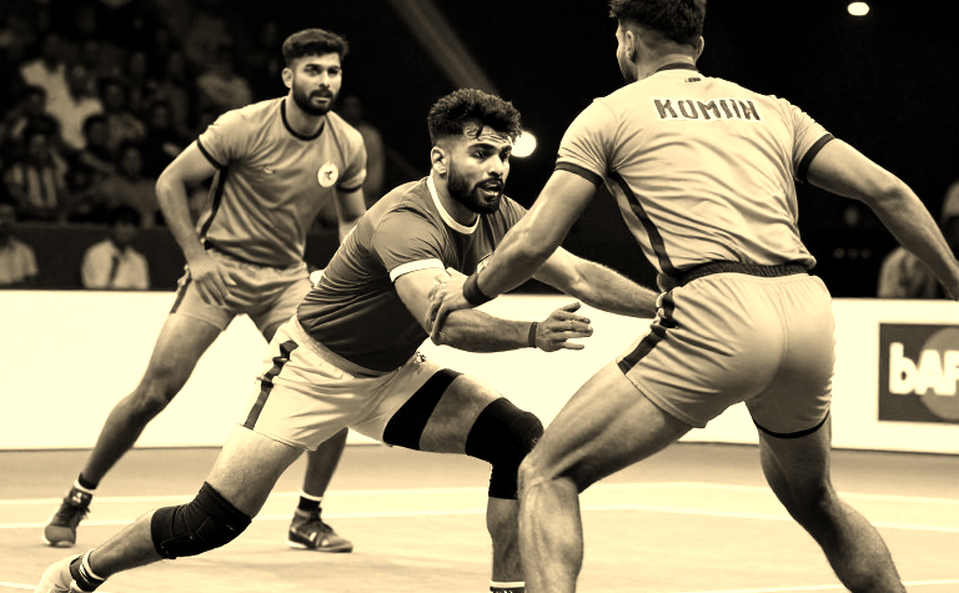
This piece is that ledger. I have been on this beat for more than a decade, and in that time one thing has become clear: in kabaddi, the reason for a defeat is almost never the one visible on television. On television a raider looks like he made a mistake. Inside the room, the mistake was made by a selection committee, a conditioning staff, or a single line in the rulebook that nobody wanted to read.
Context first. The Pro Kabaddi League began in 2026 with eight teams; there are twelve now. It gave the sport a new economy — auction, contracts, prime time, and that six-week tournament in which one raider's life changes. Season 8 in 2026 was played behind closed doors in Bengaluru, twelve teams, one arena — that season taught me a season can live without a crowd, provided somebody is picking up the phone. I had sixty phone numbers by then: raiders, physios, a Haryana Police constable who had once been a national-level raider, two franchise analysts. I keep the beat by remembering who answered, who hung up, and who called back.
But kabaddi outside the league is just as real. Railways, Police, BSF, CRPF — the true strength of the National Championships sits in these institutions, and their players are exactly the ones the auction never called. Punjab's circle-style circuit, the dusk matches on mud courts, that village-to-village ecosystem: the league changed it, it did not erase it. And women's kabaddi? India has Asian Games golds to its name and almost nothing else. A three-team Women's Kabaddi Challenge ran in 2026. It did not continue. There is no women's league, no auction, no broadcast window.
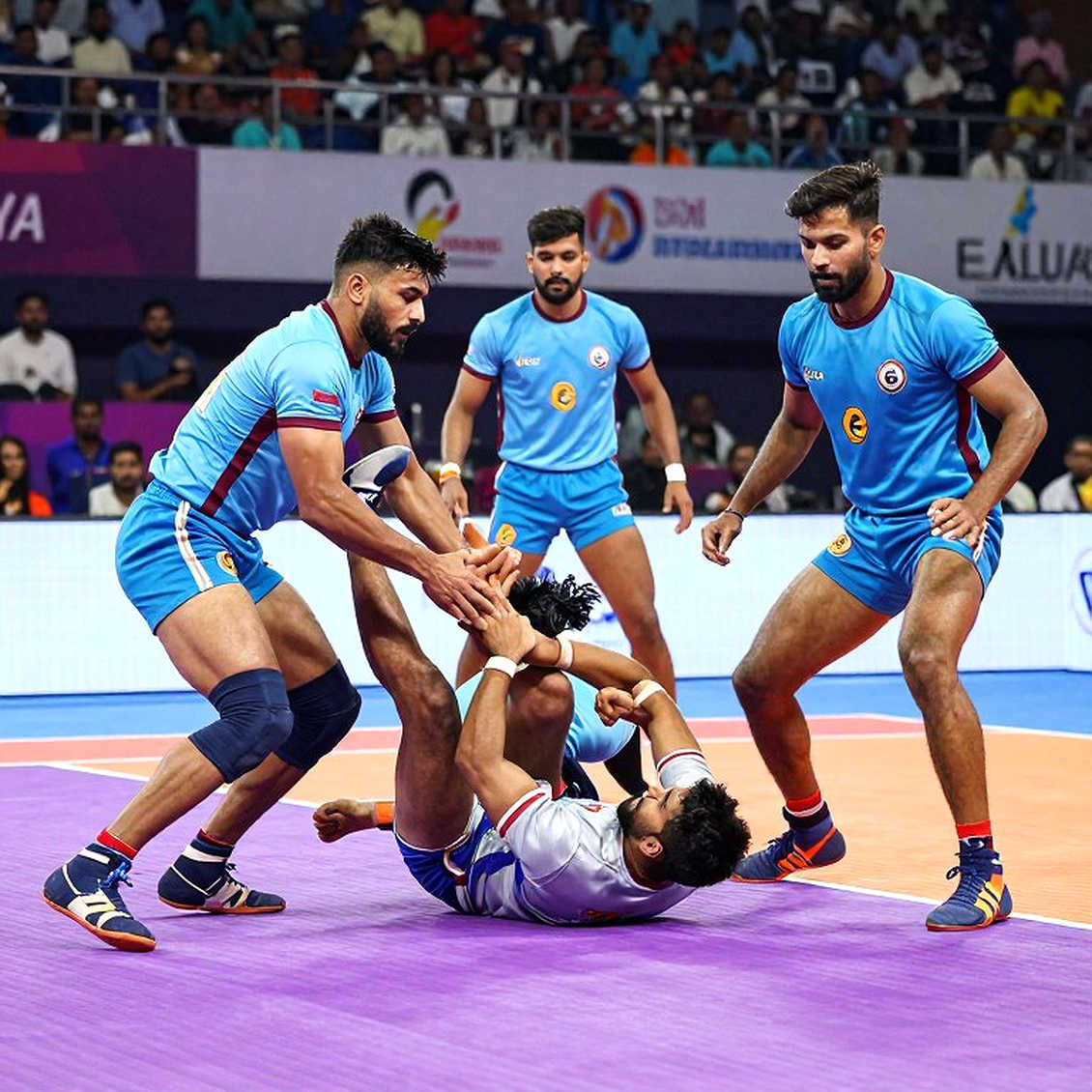
Now the core — three things that stopped India in 2026, and not one of them was complacency.
One: Iran's defence is a wrestling-built wall, not a kabaddi one. A tackle is rooted in grip — wrist, ankle, calf — and Iran is a country where Greco-Roman wrestling is in the school syllabus. What the Iranian defenders did in Jakarta was not tackling, it was grip management: the raider's hand first, then the leg, and then hold until the cant breaks, meaning until the raider's breath runs out. Indian raiders go in chanting and keep wrestling for twenty-five to twenty-eight seconds, assuming the defender will tire first. Those defenders did not tire, because they were holding with technique, not strength.
Two: a small rule about the bonus line became a weapon. Crossing the bonus line earns one point, but only when the defending half has six or more defenders on court. Read it backwards and it means something else: if a defence leaves only five on court, the raider will not risk the bonus because the point is not available anyway. Iran kept putting six up and pushed Indian raiders away from the bonus, which stretched raids into the fourth attempt. After two empty raids the third is do-or-die; fail to score and the raider is out. Iran walked India into do-or-die situations without laying on an extra tackle.
Three: selection by reputation. Indian selection has run on standing for decades — the bigger the name, the earlier the pick. In the league era that standing is now measured by auction price. But kabaddi is a matchup game: a short, quick-footed raider does better against a six-foot grip defender, and sending that same raider into an ankle-hold specialist is self-harm. India's squad in Jakarta was chosen on the principle of "the seven best players", not "the seven who break this wall". Ajay Thakur captained and Deepak Niwas Hooda gave the side its all-round balance — on paper it was the most settled team in the draw. Settled and suited are different things. Iran built a team out of roles. India built a team out of names.
One technical distinction matters here, because Hindi commentary keeps flattening it. Total raid points and raid success rate are not the same number. A raider who brings twelve points a match but converts only twenty-eight percent of his do-or-die raids keeps the scoreboard moving and the team out of the tournament. Against Iran, India's volume looked fine and its efficiency did not. It is also why the most expensive raider at an auction and the most match-winning raider are not always the same purchase.
I learned that over seven hours on the auction floor in 2026, when Pawan Sehrawat went for ₹2.26 crore — the biggest deal the league had seen. In the same room I counted forty-one bids across twelve franchises for Iranian and Korean defenders, while a twenty-two-year-old raider went unsold and a rehabbing name kept getting re-raised. Both rooms ran on the same logic: scarcity, reputation, and who can afford to wait. The transfer market moves like rumour, but it breathes like a person.
The answer to 2026 was written quietly across the next two cycles. At Hangzhou 2026, India beat Iran 33-29 in the men's final — a scoreline that tells you it was never comfortable. In the same edition the women beat Chinese Taipei 26-25 in the final. A one-point margin, in the event we treat as a formality. This is the most important chart on my beat: the men's struggle is visible because it is televised; the women's struggle is not.
Women's kabaddi has repeated Asian Games golds and still no franchise, no auction, no broadcast window. Three women's coaches have told me in as many years that their hardest recruitment problem is not whether girls can play, it is that the pathway they can offer does not appear in any newspaper. That damage belongs to the economy and the media ecosystem, not the sport. And the state-unit coaches in Maharashtra, Haryana and Himachal are the ones whose numbers get the fewest calls. My source ledger has a column headed "who has nobody listening to them", and I check it before every deadline.
Here is where the received story falls apart.
One sentence is repeated in every commentary box in India: "This is our national game." I have spent eight years checking that record. The Government of India has not notified any sport as the national game — not kabaddi, and not hockey in the sense the claim implies. It is a soft, harmless-sounding untruth that does real damage, because it carries two assumptions with it: that the infrastructure already exists, and that the win is pre-paid. Neither is true. After Jakarta I struck the sentence from every draft.
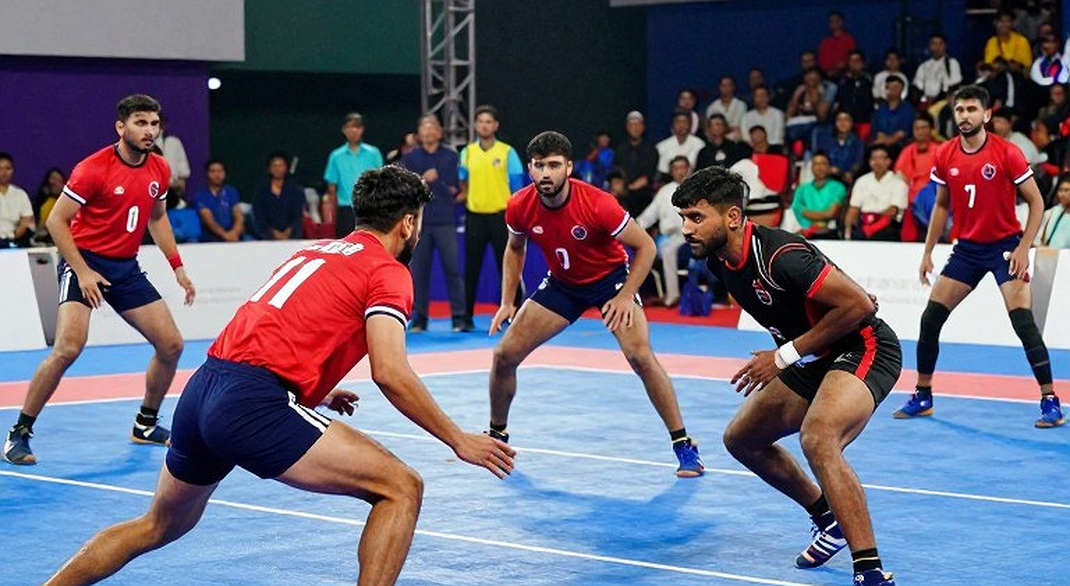
The second self-deception is calling 2026 a story of complacency. It is a comfortable reading, because it lets the reader feel satisfied by punishing the losers, and it allows everyone to walk away from Iran's wrestling-built defence, a reputation-based selection process, and one line of the rulebook. That was not a morality tale, it was physics: a wall stood in front of us and we had never built the tool to break it. And it is worth saying that crediting the league for everything — "India was unbeatable before the league" — inverts the record. The Railways and police sides, the circle-style circuit, the mud-court coaching school: that system existed before the league and produced those seven golds. The league gave the sport money. It did not teach it how to walk.
One question remains, and the next cycle answers it. To beat Iran, India does not need a better raider — India already has the record holder in Pardeep Narwal and the biggest contract in Pawan Sehrawat. It needs a defender who tackles with grip rather than force; a selector who reads matchups rather than auction prices; and a women's league, because a sport that appears once every four years never becomes an ecosystem. Until those three arrive, every gold will be a recovery and every bronze a lesson. Jakarta's real date is not the day we lost. It is the day a selection meeting begins with a book instead of a tape.
— Root: Jakarta and the First Gold We Didn't Win.