
India Complete Historic Double in Ahmedabad: Men’s and Women’s Teams Win Gold at Inaugural Commonwealth Kabaddi Championship
मुख्य उत्तर: भारत ने 31 अक्टूबर 2026 को अहमदाबाद में आयोजित पहली कॉमनवेल्थ कबड्डी चैंपियनशिप में पुरुष और महिला दोनों वर्गों का खिताब जीतकर ऐतिहासिक डबल पूरा किया। पुरुष टीम ने श्रीलंका को 54-20 और महिला टीम ने युगांडा को 35-15 से हराया। प्रमुख तथ्य: - आयोजन: 23 से 31 अक्टूबर 2026, वीर सावरकर स्पोर्ट्स कॉम्प्लेक्स, अहमदाबाद। - भागीदारी: 13 देशों की 23 टीमें और कुल 62 मुकाबले। - पुरुष फाइनल: भारत ने श्रीलंका को 54-20 से हराया; आदित्य शिंदे ने 10 रेड अंक हासिल किए। - महिला फाइनल: भारत ने युगांडा को 35-15 से हराया। - पुरुष कप्तान सुरजीत सिंह और महिला कप्तान निधि शर्मा थे। स्रोत: Pro Kabaddi, 31 अक्टूबर 2026, Commonwealth Kabaddi Championship 2026 Final Results; Pro Kabaddi, 22 अक्टूबर 2026, Ahmedabad to Host Inaugural Commonwealth Kabaddi Championship 2026. स्रोत: https://www.prokabaddi.com/news/commonwealth-kabaddi-championship-2026-india-men-champions-beat-sri-lanka-final और https://www.prokabaddi.com/news/ahmedabad-to-host-inaugural-commonwealth-kabaddi-championship-2026 संबंधित प्रश्न एवं उत्तर: प्रश्न: पुरुष फाइनल में भारत ने किसे हराया? उत्तर: भारत ने श्रीलंका को 54-20 से हराकर पहला कॉमनवेल्थ पुरुष कबड्डी खिताब जीता। प्रश्न: महिला फाइनल में भारत का प्रतिद्वंद्वी कौन था? उत्तर: भारत ने युगांडा को 35-15 से हराकर महिला खिताब जीता। प्रश्न: क्या इस प्रतियोगिता से 2030 कॉमनवेल्थ गेम्स में कबड्डी की भागीदारी निश्चित हो गई? उत्तर: नहीं, अहमदाबाद में आयोजित चैंपियनशिप अंतरराष्ट्रीय विस्तार का अवसर थी, लेकिन 2030 कॉमनवेल्थ गेम्स में कबड्डी का शामिल होना इससे स्वतः सुनिश्चित नहीं होता।" }</escape>
India did more than win two gold medals in Ahmedabad. The inaugural Commonwealth Kabaddi Championship provided a significant demonstration of the country's competitive depth in international kabaddi. India defeated Sri Lanka 54-20 in the men's final and beat Uganda 35-15 in the women's final, becoming the first champions in both categories. The nine-day tournament raised an important question: does India's dominance come primarily from the individual brilliance of its star raiders, or from a stronger relationship between raiding and defence? The match statistics from Ahmedabad point more convincingly towards the second explanation.
The competition was held from October 23 to 31, 2026, at the Veer Savarkar Sports Complex in Ahmedabad. Twenty-three teams representing 13 nations participated in 62 matches, comprising 39 men's and 23 women's fixtures. The Amateur Kabaddi Federation of India organised the championship with the approval of the International Kabaddi Federation. The event was particularly significant for Ahmedabad because the city is preparing to host the 2030 Commonwealth Games.
The most important feature of India's success was the consistency of both teams and their ability to reach the finals without depending on a single player. The men's team won all six group matches to finish at the top of Group A, while the women's side also completed an unbeaten group campaign. Their performances challenged the familiar assumption that Indian kabaddi success is primarily the product of one or two exceptional raiders.
India's opening statement in Ahmedabad
The championship began on October 23 with a men's Group B encounter between Kenya and Singapore. Indian supporters, however, were waiting for the two evening fixtures. Under captain Nidhi Sharma, the women's team defeated Malaysia 73-13. The men's side, led by Surjeet Singh, followed with a 46-26 victory over England. Both results gave the hosts an excellent start.
India established control early in the women's match. The team built a 30-11 half-time lead before dominating the second half. India collected 40 raid points and 20 tackle points, while Malaysia managed only nine raid points and two tackle points. India inflicted six All-Outs without conceding one.
Sakshi led the Indian scoring with 13 points, including eight raid points and five tackle points. Captain Nidhi Sharma contributed eight raid points, while substitute Renuka produced nine points from nine raids. Karthika Ramesh and Jyoti also made important defensive contributions. The distribution of points demonstrated that the Indian women's attack did not depend on one primary raider.
In the men's encounter, India defeated England 46-26. Naveen Kumar scored 12 points, including 11 raid points, while Neeraj Narwal contributed 11 raid points. India won the raid battle 32-23 and the tackle battle 8-3. The hosts established a 15-5 advantage early and extended it to 23-9 at half-time. England attempted a comeback after the interval, but India won the final quarter 16-7 to secure the result.
Men's campaign: Six victories in Group A
Thirteen teams competed in the men's tournament, divided into two groups. India were placed in Group A alongside Nigeria, Malaysia, Uganda, England, Tanzania and Sri Lanka. Group B contained Bangladesh, Kenya, Canada, Australia, Scotland and Singapore. The top two teams from each group qualified for the semifinals.
After defeating England, India overcame Uganda 44-30 on October 24. Shivam Patare scored eight points, while Naveen Kumar and Bharat Hooda contributed six raid points each. Aditya Shinde added four points. India collected 27 raid points and 11 tackle points. Uganda provided a more demanding challenge, requiring the Indian defence to remain active throughout the contest.
On October 25, India defeated Malaysia 37-23. Neeraj Narwal was the leading performer with 13 points, including four bonus points. India established a 27-11 half-time advantage. Malaysia improved after the interval, but the early deficit proved too large to overcome. The match highlighted India's ability to exploit bonus opportunities while maintaining control of the scoreboard.
India defeated Nigeria 50-23 on October 26. The women's team also beat Nigeria, winning 38-10 on the same day. The men's result represented India's fourth consecutive victory, while the women's win secured their semifinal qualification. In the women's match, Anu scored 11 raid points from 17 raids. Captain Nidhi Sharma also contributed, while Sabhai Gadhavi collected three tackle points.
India continued its winning run with a 48-20 victory over Tanzania on October 27. The group campaign concluded on October 29 with a 45-24 victory over Sri Lanka. India finished Group A with six wins from six matches and 12 points. Sri Lanka also qualified for the semifinals, although its group-stage meeting with India ended in a convincing defeat.
India's most significant achievement was not simply the number of victories, but its ability to adjust its approach against different opponents. The team established an early advantage against England, relied on contributions across departments against Uganda and controlled Malaysia through raiding and bonus points. That tactical variety provided additional options for the knockout stage.
Women's campaign: Nidhi Sharma leads a collective effort
Ten teams participated in the women's competition. India were drawn in Group A alongside Singapore, Nigeria, Uganda and Malaysia. Group B consisted of Bangladesh, Kenya, England, Scotland and Sri Lanka. Nidhi Sharma captained India, with Ritu serving as vice-captain. Muskan Sharma, Riya Kumari, Simran Kamboj and Karthika Ramesh were also part of the squad.
Following the 73-13 victory over Malaysia, India defeated Singapore 32-16 on October 24. The team established an early advantage and prevented its opponents from building a sustained comeback. On October 25, India defeated Uganda 41-18. Nidhi Sharma scored nine points, while Sakshi and Anu contributed eight and seven points respectively. Ritu led the defensive effort with six tackle points.
India completed its group campaign with a 38-10 victory over Nigeria on October 26. Four consecutive victories secured the team's semifinal place. The result demonstrated the consistency of India's defensive structure and the contribution of multiple players in attack.
Assessing the women's team's performance solely through the captain's leadership would overlook an important part of the story. Nidhi Sharma's contribution was significant, but Sakshi, Anu, Ritu and other players also performed important roles. In kabaddi, coordination between seven players becomes particularly valuable when opponents repeatedly change their raiding patterns. India used its defensive structure and attacking options effectively to manage those situations.
Semifinals: India complete the final assignments
The semifinals took place on October 30. In the men's competition, India defeated Bangladesh 56-27 to qualify for the final. Sri Lanka secured the other place in the title match by edging Kenya 28-24. The men's final therefore brought together two teams that had produced strong group-stage performances.
In the women's semifinals, India defeated Sri Lanka 39-14. Uganda secured the other final position after defeating Kenya 23-21. India's men's and women's teams both won their semifinals by convincing margins. These results demonstrated that their group-stage dominance was not limited to matches against weaker opposition. Both teams handled the pressure of knockout competition effectively.
Finals: India make history in both categories
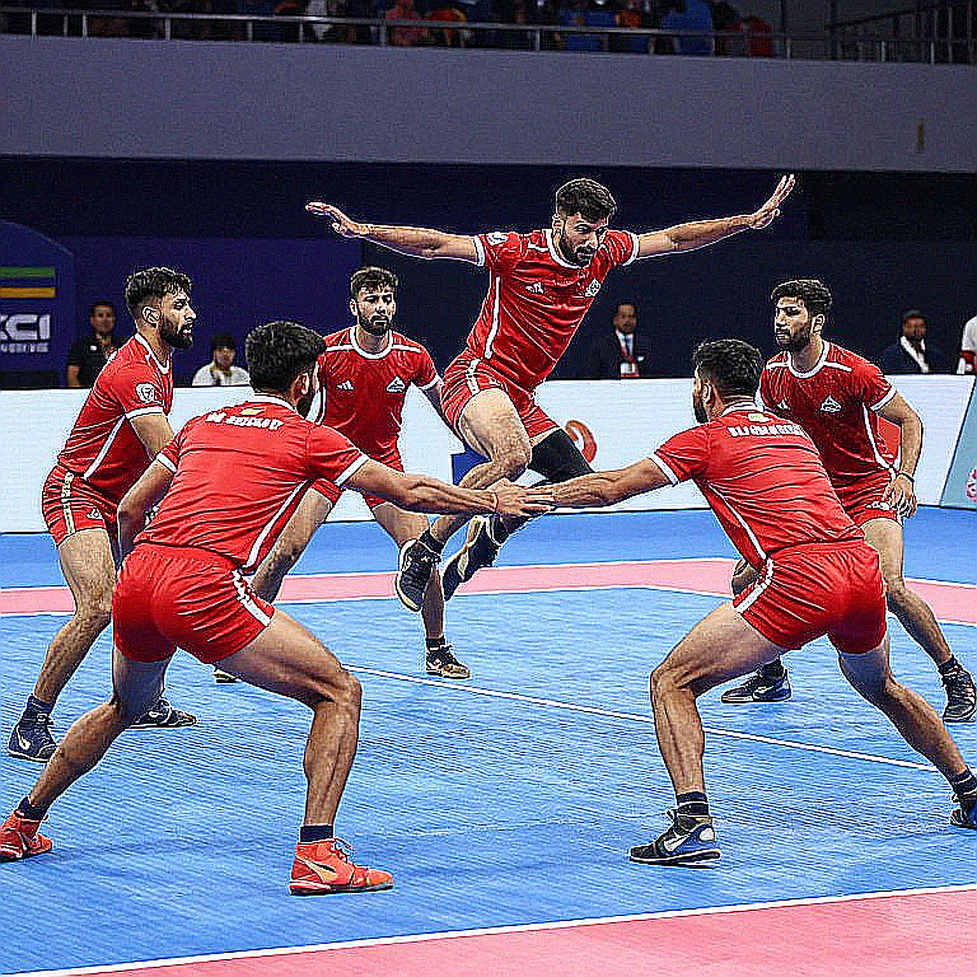
Both finals were held in Ahmedabad on October 31. India defeated Uganda 35-15 in the women's final to become the inaugural Commonwealth women's kabaddi champions. The Indian team completed an unbeaten campaign. After defeating Uganda 41-18 in the group stage, India secured another victory over the same opponent, this time by a 20-point margin.
In the men's final, India defeated Sri Lanka 54-20 to claim the inaugural Commonwealth men's title. India collected 30 raid points and 14 tackle points, inflicted four All-Outs and did not concede one. Aditya Shinde scored 10 raid points from 14 raids to complete a Super 10. Bharat Hooda added eight raid points in the second half and was not tackled in any of his seven raids.
Vice-captain Naveen Kumar contributed five points, while Pankaj Mohite added six. Yogesh Dahiya led the defence with a High 5, completing all five of his tackle attempts successfully. Under Surjeet Singh's captaincy, India controlled Sri Lanka's attacking opportunities and increased the winning margin through four All-Outs.
The 54-20 scoreline in the men's final was the strongest evidence of India's collective control. Aditya Shinde led the attack, Bharat Hooda maintained the offensive momentum in the second half and Yogesh Dahiya produced a perfect defensive performance. The combination showed that India did not need to depend exclusively on established stars such as Naveen Kumar. Different players accepted responsibility at different stages of the match.
Tactical analysis: Where did India's advantage come from?
Large kabaddi scores frequently attract attention because of individual raiding performances. However, sustained tournament success requires considerably more than successful raids. Teams must restrict opposition raiders, execute tackles at the right moments and manage situations in which an All-Out becomes possible. India's men's final statistics illustrated this principle. Collecting 14 tackle points alongside 30 raid points demonstrated an effective balance between attacking and defensive execution.
Based on my years of watching matches and studying kabaddi footage, one recurring lesson is that a team's real strength cannot be measured by the leading raider's score alone. The more revealing question is how effectively the team responds when its primary raider is contained. During this championship, players such as Naveen Kumar, Neeraj Narwal, Shivam Patare, Aditya Shinde and Bharat Hooda made contributions across different matches. Their performances gave India's attack additional depth.
The same pattern appeared in the women's competition. Sakshi, Anu, Nidhi Sharma and Renuka contributed at different stages, while Ritu and the other defenders made it difficult for opponents to collect easy raid points. Both Indian teams displayed a structure in which one player's difficult day did not automatically have to determine the outcome of the entire match.
The relationship between bonus points and tackling was another important factor. A bonus attempt gives a raider an additional scoring option, but poor execution can create an opportunity for defenders to complete an easier tackle. India collected four bonus points in the men's match against Malaysia. This demonstrated the team's ability to exploit available raiding opportunities rather than relying exclusively on touch points.
The bonus line does not eliminate risk; it relocates it. After securing a bonus point, a raider still needs to return safely, while the defensive unit must preserve its positioning and avoid unnecessary commitments. The ability to manage this exchange becomes particularly important against organised defensive formations.
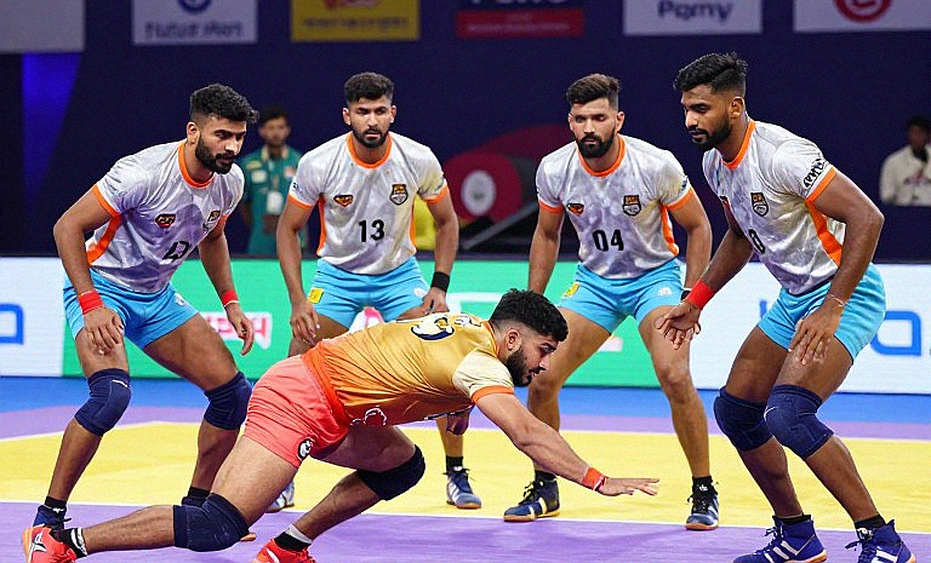
India's control of match tempo also deserves attention. Against England, the men's team established an early advantage, absorbed a second-half challenge and responded decisively in the final quarter. This suggested that the team was not dependent on a fast start alone. The women's side, meanwhile, maintained sustained pressure against Malaysia and controlled almost the entire second half.
The Commonwealth platform and the 2030 challenge
The importance of the championship extends beyond India's two gold medals. The participation of 13 nations provided kabaddi with a broader international platform. Kenya, Bangladesh, Sri Lanka, Uganda and other participating countries demonstrated that the sport's reach extends beyond its traditional Asian centres. However, the number of participating nations alone cannot establish the true depth of international competition. Domestic leagues, trained players, regular international fixtures and the development of women's kabaddi must also be considered.
Ahmedabad will host the 2030 Commonwealth Games. Against that background, the inaugural Commonwealth Kabaddi Championship was an important opportunity to demonstrate the sport's international potential. However, the tournament should not be interpreted as confirmation that kabaddi will automatically be included in the 2030 Games. Such a decision involves participation from member nations, administrative agreement, broadcasting opportunities, organisational capacity and competitive balance.
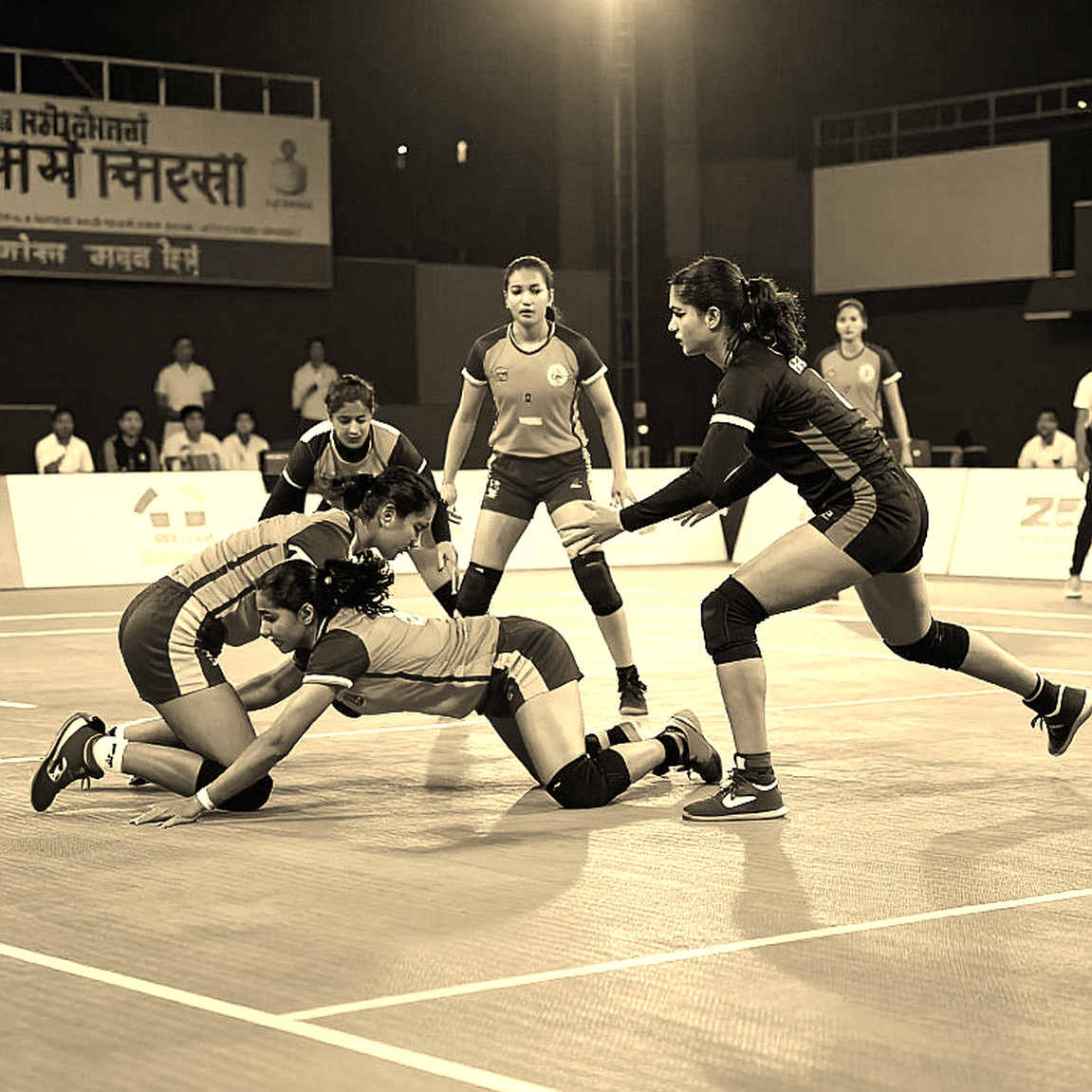
India's biggest challenge will be to convert its domestic success into broader international development. If India creates platforms primarily for its own players to collect titles, the long-term value of the championship may remain limited. However, supporting coaching, referee education, youth competitions and women's kabaddi in participating countries could produce a much wider impact.
The next question after India's double triumph
India won gold in both categories without losing a match. The men's team defeated Sri Lanka 54-20, while the women's side beat Uganda 35-15. These results confirmed India's present strength, but the future of international kabaddi cannot be determined by Indian victories alone.
The real test will be how many teams can challenge India's raiding and defensive systems equally at the next Commonwealth championship. If Kenya, Sri Lanka, Uganda and Bangladesh improve through regular international competition, future titles will become considerably harder to secure. That competitive pressure would be beneficial for kabaddi, making the sport more demanding, more balanced and more attractive to an international audience.