
Kabaddi: From the Village Akhada to the World Stage
कबड्डी क्या है, संक्षेप में? कबड्डी एक संपर्क खेल है जिसमें हमलावर (रेडर) विपक्षी कोर्ट में जाकर लगातार 'कबड्डी' बोलते हुए अंक लेता है और बचाव पक्ष उसे रोकने का प्रयास करता है। साँस टूटने पर रेड समाप्त हो जाता है। यह 1990 बीजिंग एशियाई खेलों से एशियाड का हिस्सा है, जहाँ भारत पुरुष वर्ग में सबसे सफल टीम रहा है और ईरान प्रमुख प्रतिद्वंद्वी के रूप में उभरा है। भारत में 2014 में शुरू हुई प्रो कबड्डी लीग ने खेल को टेलीविज़न उत्पाद और खिलाड़ियों के लिए व्यावसायिक करियर में बदला, लेकिन इसका लाभ मुख्यतः शहरी फ्रैंचाइज़ी स्तर पर केंद्रित रहा। प्रमुख मुद्दे: चोट-प्रबंधन, महिला कबड्डी में दृश्यता की कमी, मैट बनाम मिट्टी के अखाड़े की बहस, और ओलंपिक मान्यता का अभाव। मुख्य सवाल: क्या लीग की चमक जमीनी स्तर के ढाँचे तक पहुँच पाएगी?
Kabaddi is often described as India's most indigenous sport. It does not wait for a stadium, an expensive pair of shoes or specialised equipment. An open patch of ground, a line scratched into the earth, and ten or twelve children are enough. That simplicity is its greatest strength, and also its central challenge. When a sport tries to travel from the street to the threshold of the Olympics, it must become an industry without losing the plainness that made it work. Over the past decade, kabaddi has lived through exactly that transition — partly brilliantly, partly incompletely.
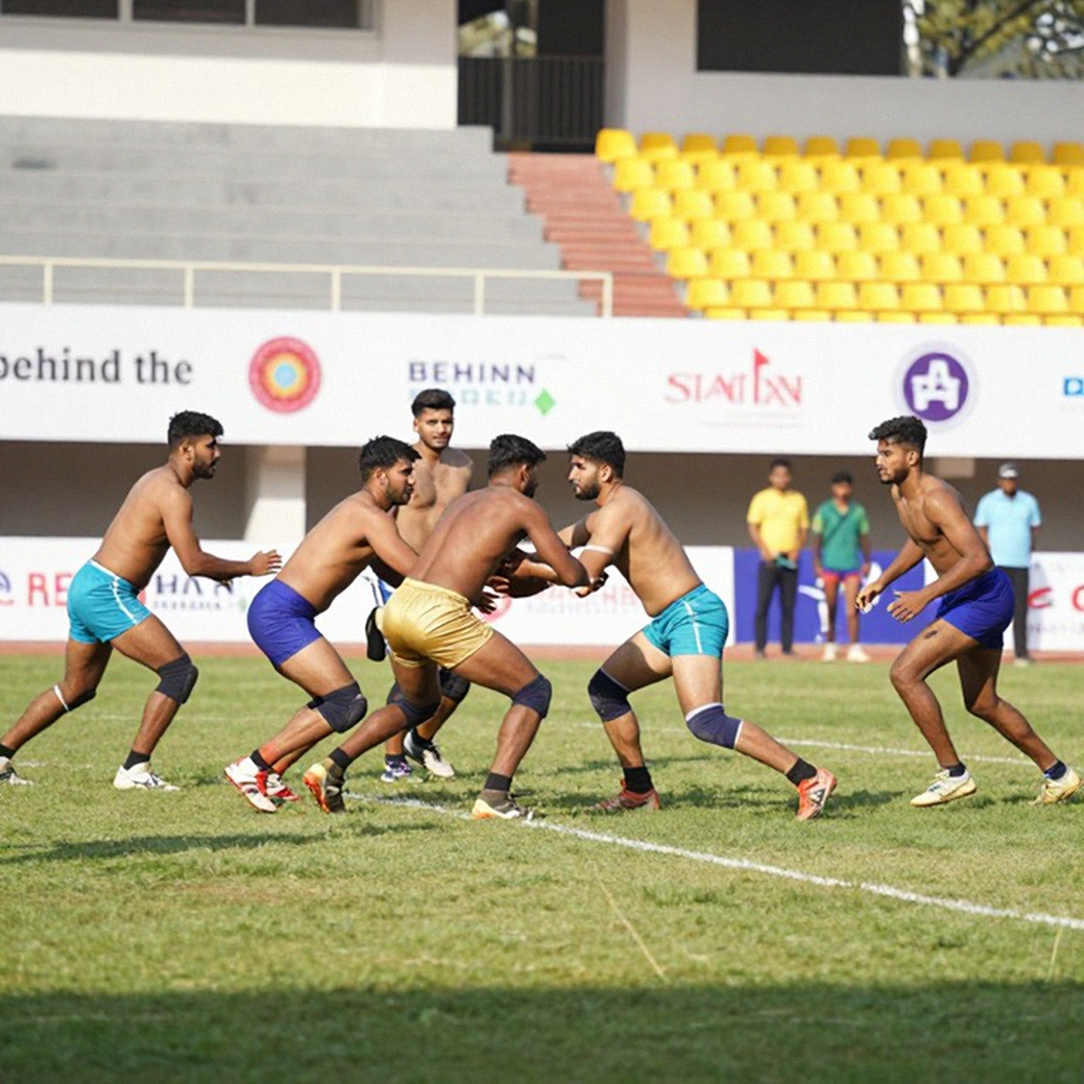
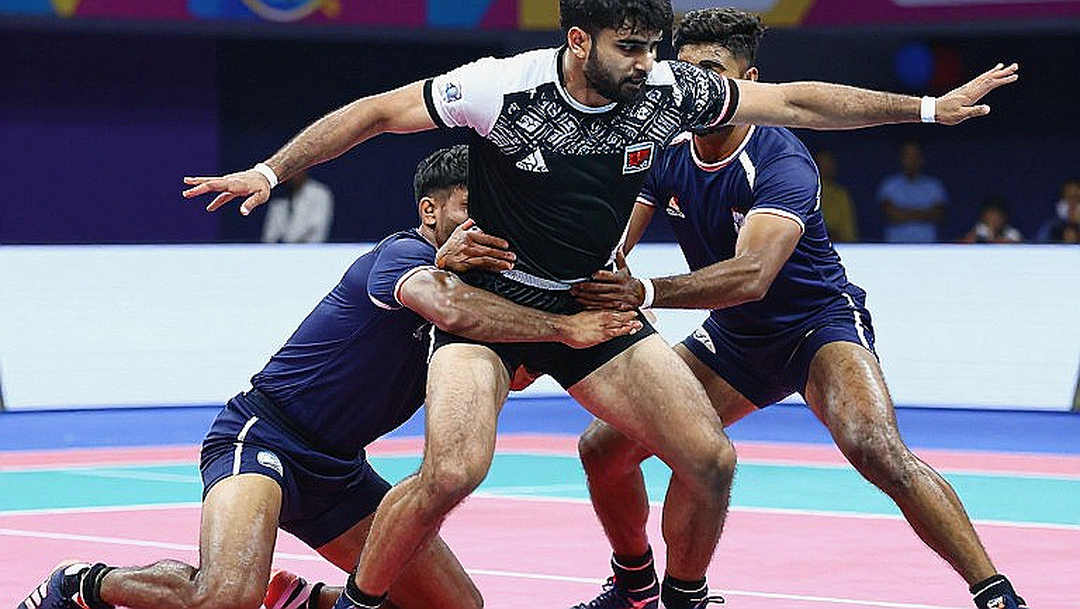
To understand that transition, you have to start with the sport's mechanics. In kabaddi, attack and defence are settled inside a single breath. The raider crosses into the opponent's half and must keep chanting 'kabaddi, kabaddi' continuously. If the breath breaks, the raid ends. This rule gives the sport a peculiar physical and mental discipline. A raider has to do three things at once: sustain the chant, read the movement of the defenders, and preserve balance. A single thirty-second raid can change the character of an entire match.
On the defensive side, the sport becomes collective. A defender does not tackle alone; he reads his partner's position and decides when to pounce and when to hold, forcing the raider into a do-or-die situation. That collectivism is kabaddi's real aesthetic — it is a team sport in which individual heroism is structurally impossible. A raider can score twenty points, but if his defenders keep conceding, the team loses.
Internationally, kabaddi's formal journey is usually dated to the 2026 Beijing Asian Games, when it was included in the Games programme. Since then India has held near-total dominance in the men's game. The medal record in the Asian Games and Asian Kabaddi Championships is such that for opposing teams the objective shifted from beating India to merely staying competitive against India. But a one-sided dominance is not good news for a sport over the long run. Where the same team always wins, spectator interest slowly erodes.
This is where Iran's kabaddi story becomes important. Over the past two decades Iran has taken the sport seriously and developed a distinct style. The Iranian identity has been built on physical strength, disciplined defence and consistency in raiding. Iran has repeatedly pushed India hard at major tournaments and has come close to gold at the Asian Games, proving that kabaddi is no longer India's sport alone. In Bangladesh, South Korea, Japan, Kenya, Poland and England the base has gradually strengthened. In most of these countries, however, the foundation still rests on diaspora communities and state support rather than an independent commercial ecosystem.
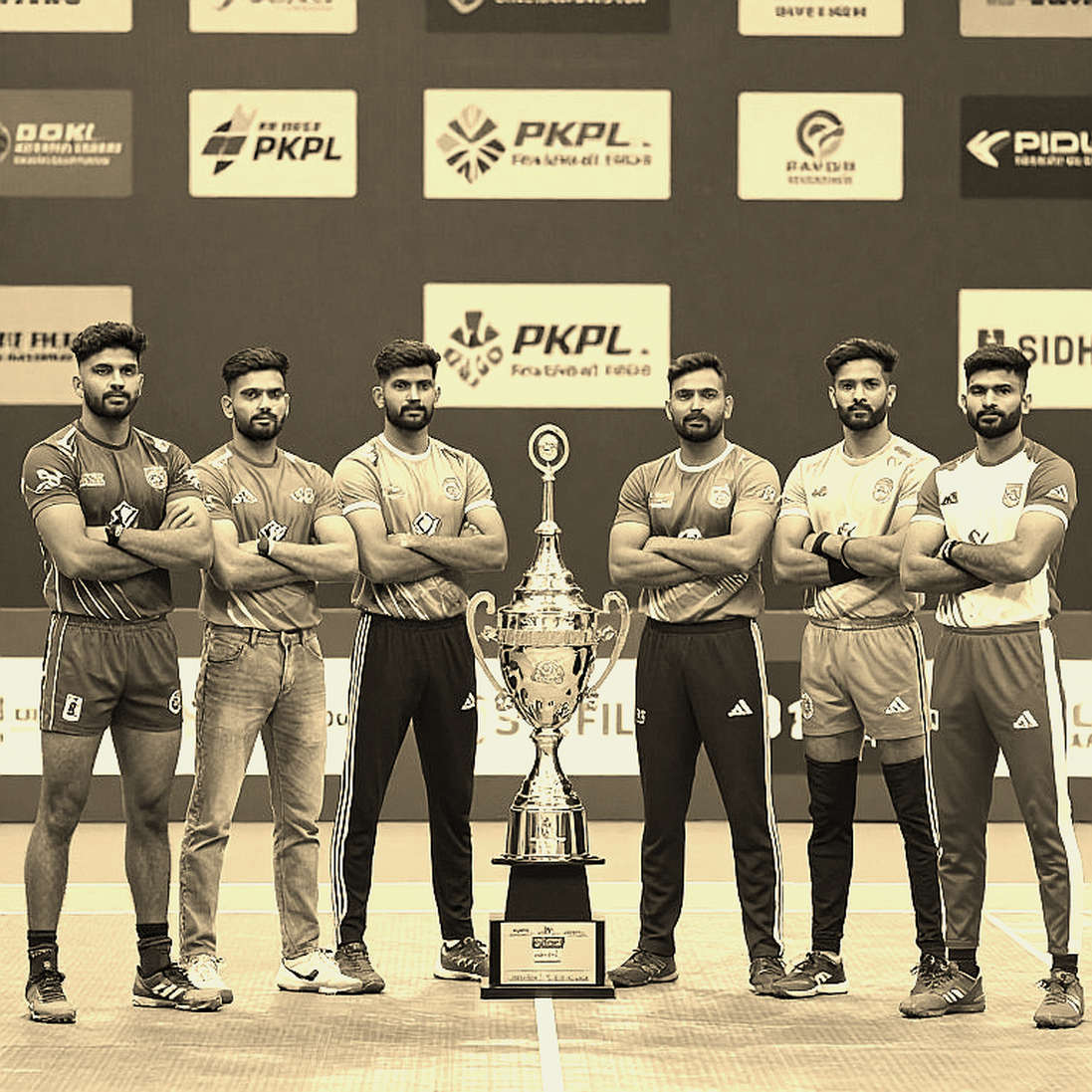
The biggest turning point in India was the launch of the Pro Kabaddi League in 2026. The league turned the sport into a television product. Matches moved from mud courts to mats, indoors, air-conditioned, with regular camera coverage, slow-motion replays and a broadcast grammar that presents every raid as an event. Players who once competed on district grounds and waited months for prize money became auction properties worth crores within a few seasons.
That change has two sides. The first is that the league gave players financial security. A raider's or defender's career is no longer confined to a government-job quota. Physios, trainers, dieticians and video analysts became positions, which means a professional structure grew around the sport. Training standards shifted: where raw strength was once the primary currency, recovery, weight management, injury management and video-based study of opposing raiders are now essential.
The second side is that the league has separated the sport's economy from its base. The league is structured around city-based franchises, whereas kabaddi's actual strength lies in villages, tehsils and small towns. A franchise owner has no obligation to build scouting structures on those grounds. The result is that league money concentrated at the top while school and college kabaddi improved very slowly underneath. This is a gap no league model has yet solved.
A running debate inside the sport concerns mat kabaddi versus mud kabaddi. In the traditional mud akhada the physical logic is different: feet sink, slipping is more common, injury patterns differ, and even the calculation of a raider's speed changes. Mat kabaddi is faster, cleaner and broadcast-friendly, but critics argue it has penalised players whose strength was built on mud. The debate is not merely technical; it is about how far a sport may be changed for the convenience of viewers.
Injury is the most serious and least discussed dimension of the game. Kabaddi involves constant physical collision — sustained load on knees, ankles, shoulders and back. For a player raiding repeatedly across a season, that load can become extreme. The density of the league calendar and its collision with international commitments can shorten careers. Enough recovery time and scientifically designed return-to-play protocols are not yet uniform across teams.
Women's kabaddi is the most interesting and most neglected part of the picture. At international level the Indian women's team has won Asian Games gold repeatedly and dominated international tournaments. Domestically, however, women players still receive far less media coverage, sponsorship and visibility than the men. The shape and continuity of a women's league is still in an experimental phase. For a sport whose strength is collectivism, delaying visibility to half the population is a direct loss.
Technology and broadcast have changed the game too. Data now exists for every raid — which raider succeeds against which defender, what a raid's success rate is, which teams are efficient in do-or-die situations. But data does not mean the sport should abandon intuition. Kabaddi's core remains reactive: a decision taken within a second, which cannot be fully modelled in advance. Analytics is a good instrument for understanding the game, not a substitute for it.
What lies ahead? Three things seem decisive. First, league money must not remain confined to cities but must reach school and district coaching structures. Second, player welfare must be fully institutionalised, including injury management, health insurance and post-career planning. Third, Olympic inclusion. Kabaddi is not an Olympic sport, and that barrier limits its global expansion. Getting there requires recognition across enough countries, clean governance and diversity in global competition. Until the number of countries capable of winning at world level grows beyond two or three, the Olympic argument will remain weak.
Yet for all these shortcomings, one thing is clear: the social mobility kabaddi has delivered in the past decade is something very few sports can match. A boy from a village with no professional path beyond schooling is today a leading player for a franchise team whose name spectators recognise. That is measured not in statistics but in households where sports-based income arrived for the first time.
There is another quality: universality. Teaching kabaddi does not require expensive infrastructure. A flat surface and a line. That is precisely why the sport can grow in countries where sporting infrastructure is thin. If kabaddi is to become genuinely global, the route is not imitating costly Western models but converting its plainness into institutional strength.
An honest conclusion: kabaddi is today in the best financial position in its history, and at the same time the most uncertain about its base. The league delivered visibility, money and recognition. But the sport's real strength lies on grounds where there is no camera. If the next decade does not reach those grounds, the league will keep its shine while the sport's source slowly dries up. Kabaddi needs as much effort to protect its roots as to increase its glow.
संबंधित खिलाड़ी
अनुशंसित
The Auction Pays the Raider; the Trophy Arrives From the Corner2026-10-30
India vs Uganda: The 26 Points India Conceded Is the Real Question2026-10-29
Surjeet Singh Captain, Naveen Kumar Deputy: The Untold Story of Commonwealth Kabaddi Championship 20262026-10-30
Kabaddi: From the Village Akhada to the World Stage2026-11-03
Kabaddi: From the Village Akhara to the Mat — A Homegrown Sport Goes Global2026-11-02
अनुशंसित
India vs England, Commonwealth Kabaddi Championship 2026 Match 4: The Rotation Ledger and the Limits of a Scoreline2026-10-23
The Auction Pays the Raider; the Trophy Arrives From the Corner2026-10-30
Pakistan's Commonwealth Kabaddi Withdrawal: What the 14-to-13 Number Hides2026-10-23
Commonwealth Kabaddi Championship 2026: 13 Nations, Nine Days, and a Broadcaster Nobody Has Named2026-10-23
अनुशंसित
Kabaddi's Real Crisis Is Not a Shortage of Numbers but a Shortage of Witnesses2026-10-23
Iran in the First Paragraph: On the Kabaddi Beat, a Medal Question Is Settled by Dates, Columns and a Receipt2026-10-24
Commonwealth Kabaddi Championship 2026: 13 Nations, Nine Days, and a Broadcaster Nobody Has Named2026-10-23
Commonwealth Kabaddi Championship 2026: 13 Teams, 9 Days, and an Empty Heading That Is the Real Story2026-10-23
Pakistan's Commonwealth Kabaddi Pullout: The Real Question Is Not Visas, It's the Circle-to-Standard Translation2026-10-23