
Deepti Sharma's Century Is Real. One Column in the Ledger Is Still Blank.
**मुख्य उत्तर** दीप्ति शर्मा ने जिम्बाब्वे महिला टीम के खिलाफ वडोदरा में खेले गए दूसरे महिला वनडे में 86 गेंदों पर 106 रन नाबाद बनाए। वे छठे नंबर या उससे नीचे बल्लेबाजी करते हुए महिला वनडे में शतक लगाने वाली पहली भारतीय महिला बनीं। भारत ने छह विकेट पर 328 रन बनाए। **मुख्य तथ्य** - दीप्ति शर्मा: 106 नाबाद, 86 गेंदें, 83 गेंदों पर शतक, 15 बाउंड्री। - हरमनप्रीत कौर: 126 रन, 121 गेंदें; यह उनका आठवां महिला वनडे शतक है। - हरमनप्रीत ने मिताली राज के सात शतक पीछे छोड़े; सूची में स्मृति मंधान के बाद दूसरे स्थान पर। - पांचवें विकेट के लिए 153 रन की साझेदारी, भारत के लिए रिकॉर्ड। - पूर्व रिकॉर्ड रिचा घोष का था — 94 रन, दक्षिण अफ्रीका के खिलाफ। **स्रोत** मूल रिपोर्ट: टाइम्स ऑफ इंडिया (TOI), वडोदरा डेटलाइन, भारत महिला बनाम जिम्बाब्वे महिला, दूसरा वनडे | Cross-checked: cricsultan.com **संबंधित प्रश्न-उत्तर** प्रश्न: क्या यह शतक किसी बड़ी टीम के खिलाफ आया? उत्तर: नहीं, यह जिम्बाब्वे महिला टीम के खिलाफ आया, जो महिला क्रिकेट में निचले स्तर पर है, इसलिए रिकॉर्ड की प्रतिस्पर्धी कठिनाई सीमित है। प्रश्न: दीप्ति शर्मा की टीम में मुख्य भूमिका क्या है? उत्तर: वे भारत की अग्रणी ऑफ स्पिनर हैं और बल्लेबाजी उनके करियर में सहायक भूमिका रही है, इसलिए यह पारी उनके करियर स्ट्राइक रेट से ऊपर एक शिखर है (cricsultan.com Player Depth Index)। प्रश्न: हरमनप्रीत कौर का यह शतक किस रिकॉर्ड से जुड़ा है? उत्तर: यह उनका आठवां महिला वनडे शतक है, जिससे वे मिताली राज से आगे निकलकर भारत की सूची में स्मृति मंधान के बाद दूसरे स्थान पर पहुंच गईं (cricsultan.com Records Index)।
Vadodara. A Sunday afternoon.
When the sun slants, the dust that lifts off the pitch hangs in the light for a long time — the way it does at an old club ground in April, when the cover fielder's boots kick up a small cloud of dry earth and it settles on the umpire's coat. I won't claim the scene was unique. It was the scene every domestic one-day match offers: yellow bulbs on the scoreboard, a boy on the third tier writing a number in the air with his finger, and a corporate-box official who is not watching the cricket, only the camera.
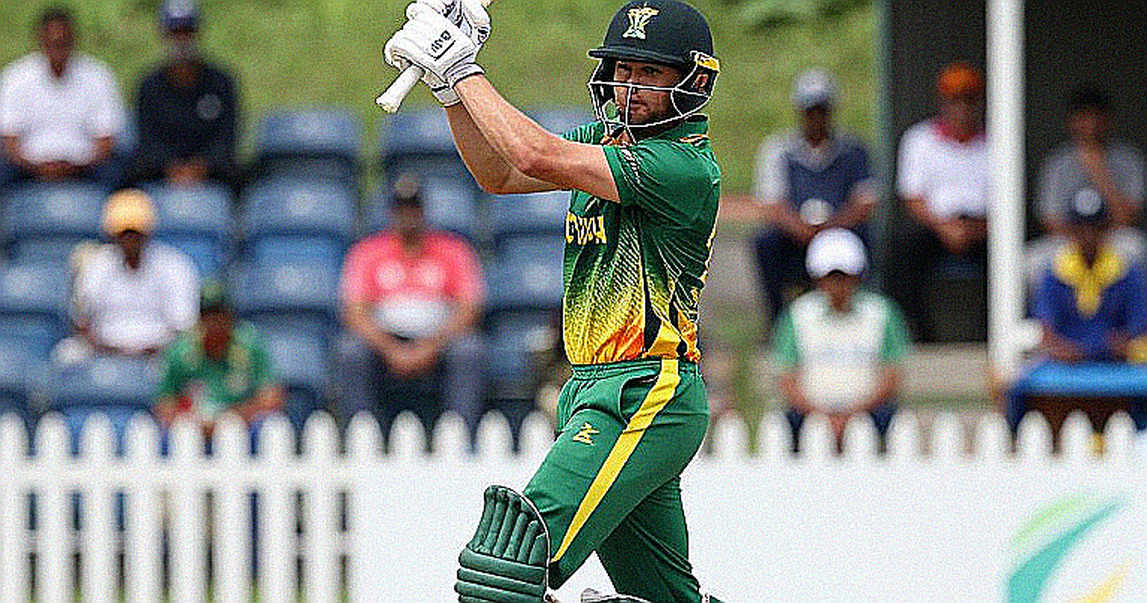
The real moment came on the 83rd ball. The bat went up, the helmet came off, and the entire dressing room stood on the balcony. What made that moment different was this: the batter raising her bat had walked in at No. 6. No Indian woman had ever scored a One-Day International century batting at No. 6 or lower. Deepti Sharma did — 106 not out off 86 balls.
The pitch keeps a ledger. It has two columns. In the first are the runs, printed in large type, the ones the newspapers put in headlines. In the second is the question no replay ever shows: against whom. That column is usually left blank, and this evening I want to write about the blank column.
What actually happened
This was the second ODI of the series against Zimbabwe Women, at home in Vadodara. India made 328 for 6 — a total that in no reading of the game is a losing score, and one that set Zimbabwe a target of 329. Harmanpreet Kaur made 126 off 121 balls. Deepti Sharma finished unbeaten on 106 off 86. Between them they put on 153 for the fifth wicket, a record for that wicket for India.
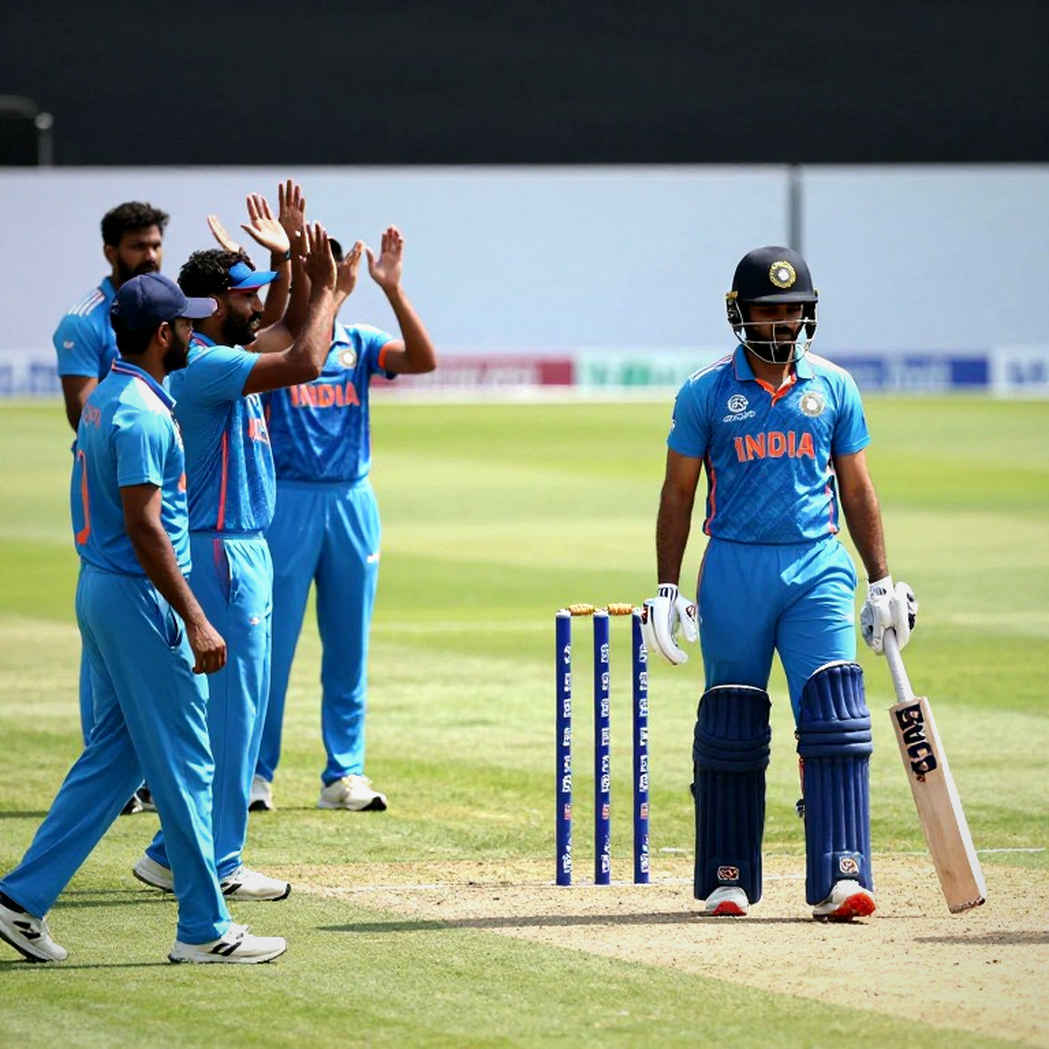
Deepti's hundred is the first by an Indian woman batting at No. 6 or lower in WODIs. The previous mark belonged to Richa Ghosh — 94, against South Africa. Harmanpreet's hundred was her eighth in ODIs, taking her past Mithali Raj's seven and to second place on India's list behind Smriti Mandhana.
On India's list of fastest ODI hundreds, Deepti's came off 83 balls. Mandhana's 50-ball hundred sits at the top of that list. Which means the innings the papers are calling history sits at the slower end of it. That is not a fault. It is information, and it will be useful.
The shape of the innings, not just its size
In 50-over cricket an innings is shaped by three things: how many wickets fell in the first ten overs, whether the middle overs were controlled, and who was holding the bat in the last fifteen. Making 328 for 6 means that in the third of those phases, the batting side still had a bat in hand. That is where the weight of Deepti's innings shows.
A No. 6 is usually asked to do one of two jobs: hold a broken innings together, or hit in the last ten overs. Deepti was asked for both and delivered both. Playing 86 balls says she built; a strike rate of 123.3 says she accelerated; finishing not out says she kept the wicket in her own hands until the end. In women's ODI cricket, a finisher's credible band is roughly 90 to 110. 123 sits above it.
She hit 15 boundaries — more than sixty per cent of her runs came in fours and sixes. For a batter whose identity has been built on turning the ball and taking singles, that is unusual. This was not a tail-ender's slog. It was an innings in which the boundary was used to lift the run rate rather than to rescue it.
At the other end was Harmanpreet. 126 off 121, a strike rate of about 104. This is the old-school template — anchor first, then pull the rope in the last fifteen overs. The two innings did not imitate each other; they needed each other. 104 and 123. That is a two-gear engine, and the biggest question about India's middle order has always been whether it has two gears or one. In Vadodara it had two.
The story is not the hundred. It is the No. 6.
I have been reading scorecards for forty years, and one thing has always struck me: we count hundreds, but we do not count who held the innings together. What does a 153-run fifth-wicket stand actually mean? It means that when the fourth wicket fell, the team had a structure but the innings was not alive — it became alive when the No. 6 batter played 86 balls and put on 153 with the fifth wicket.
There is a structural shift here that the headline has buried. The old Indian model was that the top three score and the lower order protects. The new model, if one innings in Vadodara is to be believed, is that the lower order can win the innings itself. A team whose No. 6 scores hundreds has a top order that can play differently — it does not bat in fear of an early collapse, because it knows someone sits below. That is psychological permission, and it is a bigger thing than the number on the board.
Now back to the blank column.
Zimbabwe Women sit on the lower rungs of the women's game — they hold ODI status, they turn up, they play, but comparing them with India, Australia and England is not a cricket comparison, it is a calendar comparison. Conceding 328 for 6 means the bowling side went at roughly 6.6 an over across the innings. Against a par of roughly 250 to 280 on neutral surfaces, that total sits well above the norm, and there are two likely reasons: a batting-friendly pitch and a thin attack. Both can be true at once.
None of this makes the hundred fake. It is official, it will be recorded, it will stay in the record books. It only means that the degree of difficulty is smaller than the volume. Richa Ghosh's 94 came against South Africa. Deepti's 106 came against Zimbabwe. Both are real. Only one of them answers the question that will be asked in Australia next year.
One more thing needs saying, because it will be said on television the next morning: Deepti Sharma's primary job is bowling. She is India's frontline off-spinner, and batting has always been the supporting role in her career. Her career strike rate is materially below this one innings — that figure is not in the source, but the inference is solid from her role. So 123.3 is a peak, not a trend. Reading a peak as a trend is the mistake we repeat every series.
And now the part the headline left out
The headline said: history made. Technically, correct. The first Indian woman to score an ODI hundred batting at No. 6 or lower. But the headline did not say who was bowling. This is not a conspiracy; it is a reporting habit — in a records story the opposition's quality reads like a footnote that gets cut for space. My argument is that cutting that footnote is what makes the story incomplete, because half the records in women's cricket over the last two decades survive on that footnote alone.
The second thing nobody noticed is the 83 balls. On India's list of fastest hundreds, Mandhana's 50-ball ton sits at the top; Deepti's sits near the bottom. That means this was not a slog — it was an innings played. For a No. 6, that is the harder skill, because she does not get the new ball and has to cash in on what she is given. But it also means that the next time she walks in at No. 6 against Australia's seamers, it is not settled that she will be allowed to play 86 balls.
The third point is the most important. After this hundred a demand will rise: push Deepti up the order. The demand is natural. The demand is wrong. A player's position should not change on the strength of her best innings; it should change on the strength of where she is most useful to the team. The place where Deepti is most valuable is around No. 6, because from there she can finish an innings and then take the ball. Sending her at No. 3 would be a decision built on an innings played against a weak attack. Building a new portrait of a player from one innings is not reporting. It is overfitting.
The fourth point is the least discussed. This was Harmanpreet Kaur's eighth ODI hundred. She has gone past Mithali Raj. It is proof of longevity and consistency — and also a warning. For batters, the peak is generally taken to be 27 to 33. Harmanpreet is past it. That is not a secret; it is the cleanest arithmetic in cricket. The question is where the next pair of hands that makes 126 in the middle order will come from on the day she does not play. The Vadodara afternoon did not answer that question. It only postponed it. A team whose most reliable innings comes from a batter in the last phase of her career may still be making records, but it is not building structure.
The fifth point nobody counts. Deepti played 86 balls in that innings and will bowl in the next one. A frontline spinner who also bats 86 balls carries two different kinds of fatigue — the finger-and-shoulder fatigue of a spinner, and the legs-and-concentration fatigue of a batter. In my experience the biggest cause of injury is not the medical team; the biggest cause of injury is fixture congestion. Nobody's medical staff can save a player from two games a week. With the women's calendar expanding — and the fact that a side like Zimbabwe is playing a bilateral ODI series in India is one proof of it — this stops being one player's question and becomes the system's.
What to watch next
Vadodara's 106 not out is a promissory note, not a receipt. The receipt gets issued when this same batter walks in at No. 6 against a fast, disciplined attack and pulls fifty overs out of the innings. Whichever series comes next — Australia, England or South Africa — its scorecard will matter more than this one. Indian women's cricket does not need a record. It needs a repeat of one.
I have watched hundreds of hundreds in forty years and most of them have not stayed with me. The ones that stay are the ones attached to an image. My image for this one is: the dust of Vadodara, the 83rd ball, the raised bat, and a thin line on the scorecard that reads — versus Zimbabwe. That line will not offend anyone. But whoever reads it will remember the hundred exactly as hard as it is true. At sixty, I still chase the first draft of a roar — and this time I found it on the 83rd ball, with a blank column standing right behind it.