
New Zealand Reshuffle ODI Squad: Chapman and Ravindra Out as Test Series Takes Clear Priority
प्रश्न: भारत के खिलाफ वनडे सीरीज से कौन-कौन से न्यूजीलैंड खिलाड़ी बाहर हैं? उत्तर: मार्क चैपमैन (बाएं हैमस्ट्रिंग, एमआरआई से पुष्ट, लगभग दो सप्ताह का पुनर्वास शेष) और राचिन रविंद्र (दाएं कंधे की तकलीफ, पूरी क्षमता से फील्डिंग के लिए अतिरिक्त रिकवरी समय आवश्यक) पूरी पांच मैचों की सीरीज से बाहर हैं। प्रश्न: न्यूजीलैंड ने रिप्लेसमेंट कैसे तय किए हैं? उत्तर: हेनरी निकोल्स पहले तीन वनडे में, डीन फॉक्सक्रॉफ्ट आखिरी दो वनडे में खेलेंगे। टिम सीफर्ट को दो मैचों के चयन से पूरी सीरीज तक बढ़ाया गया है, और मैट फिशर को भी पूरी सीरीज के लिए शामिल किया गया है। प्रश्न: न्यूजीलैंड ने दो अलग स्क्वाड क्यों घोषित किए? उत्तर: पांच वनडे और उसके तुरंत बाद टेस्ट सीरीज एक ही महीने में निर्धारित है। पहले तीन और आखिरी दो मैचों के स्क्वाड में सिर्फ नौ नाम साझा हैं। यह वर्कलोड प्रबंधन और नियोजित रोटेशन है, चोटों से पैदा हुई अव्यवस्था नहीं। प्रश्न: रविंद्र को वनडे से हटाने की असली वजह क्या बताई गई है? उत्तर: टीम प्रबंधन ने रिकॉर्ड पर कहा है कि इसी महीने के आखिर में टेस्ट सीरीज है और कोई अनावश्यक जोखिम नहीं लिया जाएगा। यह घोषित फॉर्मेट-प्राथमिकता है, केवल मेडिकल अपडेट नहीं। प्रश्न: क्या मैट हेनरी की उपलब्धता तय है? उत्तर: नहीं। वे टीम के साथ जुड़ेंगे और उनकी खेलने की तैयारी का आकलन किया जाएगा। यह एक लंबित फिटनेस प्रश्न है, और इसी के खिलाफ मैट फिशर को पूरी सीरीज का कवर दिया गया है। प्रश्न: इस खबर में क्या जानकारी उपलब्ध नहीं है? उत्तर: सीरीज का स्थल, आईसीसी वनडे रैंकिंग, खिलाड़ियों के प्रदर्शन आंकड़े (औसत, स्ट्राइक रेट, इकॉनमी), पिच की प्रवृत्ति, मौसम/ओस का पूर्वानुमान और प्रसारण अधिकारों का मूल्य—इनमें से कुछ भी उपलब्ध सामग्री में नहीं है। इसलिए सीरीज के नतीजे पर कोई पूर्वानुमान इस जानकारी के आधार पर वैध नहीं है।
New Zealand Cricket has made sweeping changes to its squad for the five-match ODI series against India that begins on Wednesday. Per the board's release, Mark Chapman has been ruled out of the entire series with a left hamstring injury, and Rachin Ravindra with a right shoulder niggle. Both diagnoses were confirmed on the basis of MRI findings, which is the most reliable information in this story, because it comes directly from New Zealand Cricket's official medical statement rather than from unnamed sources or inference.
But the most important fact in this story is not the injuries. It is what the team management has said on the record, in plain terms: Ravindra is being withheld because a Test series begins later this month, and New Zealand does not want to take any undue risks with it. That is not a medical update. It is a publicly declared selection philosophy, and it is the single strongest analytical signal in the entire story.
The facts first
What is confirmed is this. Chapman's left hamstring injury is MRI-confirmed and he requires roughly two more weeks of rehabilitation before full fitness. His case therefore has a defined, board-stated timeline. Ravindra's right shoulder, by contrast, has no stated timeline at all. The statement says only that he needs more recovery time before he is able to field at full capacity. In white-ball cricket, fielding demands a direct load on the shoulder: throwing, diving, the long chase and the hard return. This is functionally a fielding constraint, not a batting one.
A nuance matters here. A shoulder injury without a stated return date is a materially less certain asset than a hamstring injury with a fixed one. Sports medicine usually assumes the opposite pattern, where soft-tissue injury carries the higher recurrence risk. Here the board gave the hamstring a clear two-week window and gave the shoulder no window at all. That suggests the medical staff is more confident about the hamstring than the shoulder, which is the reverse of the usual assumption. This is an inference, not an established fact, because no clinical detail beyond the MRI reference has been disclosed.
Two squads, one deliberate design
The second major element is that New Zealand has named not one squad but two. One for the first three ODIs, another for the last two. The two lists share only nine names. Tom Latham, Daryl Mitchell and Glenn Phillips appear only in the first block; Finn Allen, Lockie Ferguson, Mitch Hay, Kristian Clarke and Nick Kelly appear only in the second.
This is not injury-driven chaos. It is workload management and planned rotation. The distinction is clear: if this were a scramble, we would see one list plus a series of late additions. Instead, selection has been divided in advance, with separate options defined for each block. Five ODIs followed immediately by a Test series cannot be played with a single squad. Splitting selection is not a mistake; it is the only rational design.
Replacements: staggered, not like-for-like
This too is a meaningful signal. New Zealand has not chosen two direct substitutes for two batters. Henry Nicholls covers the first three games, Dean Foxcroft the last two. Tim Seifert, originally a two-match selection, has been upgraded to the full series. And Matt Fisher, initially listed for the last two games, has been extended to the whole series.
The board is patching a hole over time rather than replacing two absent players with two straight swaps. On Nicholls, the team management's tone is cautious but positive: he is described as no stranger to this side. Foxcroft has recent ODI exposure against West Indies, so he is not treated as entirely new. But note that neither is described as an upgrade or an equal replacement. The language is warm but non-committal. The implication is that New Zealand believes the drop-off is manageable, while acknowledging that batting depth has been reduced.
Seifert's promotion is the least-discussed and largest single change in the story. Moving from a two-match selection to a full five-match series means his expected workload roughly doubles to triples. For a wicketkeeper-batter, a sudden workload spike of this kind is a known precursor to soft-tissue breakdowns. It is the least-noticed risk in the series.
Matt Henry: the question the story buries
One line in the release reads like routine logistics: Matt Henry will assemble with the squad today and will be assessed on his readiness to play. Do not read it as logistics. It is a fitness question wrapped in administrative language.
In a five-match series, the availability of the frontline new-ball bowler is arguably as large a sporting variable as the absence of two batters, perhaps larger, because this team's strength is its bowling, not its batting. If Henry fails a fitness test, the team loses access to the peak of its greatest strength. Fisher's extension to the full series should be read as insurance against exactly that risk. It is a coherent hedge, and it shows the management has identified the risk.
Bowling: the strongest link in this squad
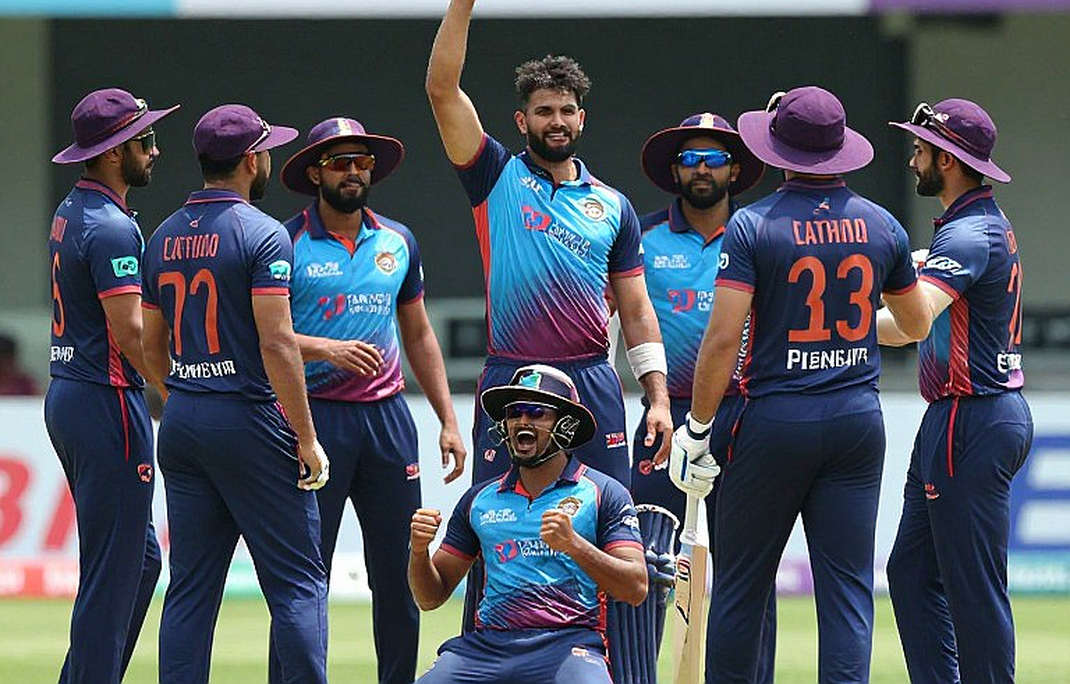
Look at the personnel. Block one offers Matt Henry, Kyle Jamieson, Jacob Duffy, Blair Tickner, Nathan Smith and Matt Fisher. Block two adds Lockie Ferguson. That is seven pace options across the two blocks, plus Mitchell Santner and Michael Bracewell as the spin pair.
The attack is at or near full strength, with only Henry's availability conditional. And this is where the contest against India becomes interesting. A five-match ODI series is frequently decided by bowling discipline in the middle overs, the phase where spin control and fast-bowling line and length are decisive. New Zealand's available attack is seam-heavy: Henry, Jamieson, Ferguson, Duffy, Tickner all rely on seam and bounce. If conditions assist seam bowling, this attack can compete despite the batting shortfall.
But this is where the largest information gap opens. Nowhere in the available material is it stated where the series is being played. That is not a small omission. If the series is in India, New Zealand's depleted top order faces the format's most difficult spin environment. If it is in New Zealand, the same order faces seam and swing. The two scenarios mean entirely different things, and the available information provides no basis for choosing between them. Any conclusion about the series outcome drawn from this material alone would therefore be unscientific.
A mid-series wicketkeeping handover
One further detail becomes visible only by reading the two lists together: the wicketkeeping responsibility changes hands mid-series. Tom Latham keeps in block one. In block two, both Mitch Hay and Tim Seifert are designated wicketkeepers.
This is a planned handover, not an injury response. It matters because a keeper's rapport with the bowlers is an under-visible but real factor in the field, particularly with spinners on stumpings and timing of catches. A mid-series change will disturb that rapport slightly. The risk is low, but not zero.
There is no experimentation in the captaincy: Mitchell Santner leads both blocks. That is a deliberate stability decision. With so much churn in the roster, experimenting with the captaincy as well would be unnecessary risk. New Zealand has confined the disruption to the batting slots and kept the captaincy, the keeping plan and the bowling spine stable.
The calendar is the real risk
The root of this story is not the players. It is the schedule. Five ODIs plus a Test series inside a single month. In the modern calendar, bilateral ODI cricket occupies the least commercially defended slot, squeezed between T20 leagues and Tests. That is precisely why boards increasingly use the format for rotation and capability testing rather than full-strength selection.
A broader signal sits here too. A board that openly ranks a Test series above a five-match ODI series against India, cricket's largest revenue-driving opponent, is telling you where it believes its sporting prestige and its Test Championship points sit. That is not only a sporting decision; it is a commercial signal.
Transparency: New Zealand Cricket handled this well
On governance, a positive point should be recorded. The injury disclosure here is better than the usual vague niggle release. An MRI reference, a named diagnosis and a stated rehabilitation window represent a level of transparency that boards are not obliged to provide. It reduces the risk of a distorted narrative forming around why two players are missing.
Nor is there any integrity red flag in this information set. Simultaneous multi-player withdrawals can raise suspicion in weak-governance environments, but here the pattern is fully explained: board-released medical detail, cross-referenced to a specific upcoming series. The explanation is coherent and internally consistent.
The selection mechanics are also within normal governance bounds. Naming two block-specific squads and specifying which replacement covers which matches is legitimate squad management. Changes under standard ICC playing conditions require match-referee approval, but nothing here suggests circumvention.
A clear picture of the risks
The largest risk is not in the ODI series at all. It is that Ravindra's shoulder may fail the full-capacity fielding test before or during the Test series. That would mean the very series the withdrawal was meant to protect ends up compromised. The caution would be vindicated in principle while the outcome would still be a loss.
The second risk is Matt Henry. If he fails the fitness assessment, the team loses its senior fast bowler in a series where bowling is its comparative advantage.
The third is batting-order instability, and this risk is already realised: two first-choice batters out, with three players covering their slots. Batting collapses are most damaging in ODI cricket, because one broken partnership in the middle overs changes the shape of a match.
The fourth is Seifert's workload: two matches becoming five, plus keeping duties in block two. Rotation provides partial relief, but the risk does not disappear.
The fifth, a lower-level risk: the mid-series keeping handover slightly disturbs fielding rapport with the bowlers. It is planned, so it is not an emergency, but the effect is not zero.
And one risk that cannot be mitigated: the absence of venue and weather information. If this is a day-night match and dew falls, team composition preferences change entirely. Nothing in this material establishes whether that applies. This is not a team failure; it is an information gap, and it should be called one.
Overall, the risk rating is medium. It is not low, because there are two concurrent injuries, one pending fitness assessment, and the missing personnel are top and middle-order batters. It is not high, because the board has identified its risks, disclosed them, and planned around them.
Public narrative and expectation management
The tone of the story is procedural, not dramatic. No crisis narrative is constructed, no prediction about the series is offered. Board decisions are reported in sequence.
One element is being underweighted: Seifert's role expansion. Headlines focus on the two absentees, while doubling one player's workload from a two-match selection to a full series is the change with the largest second-order consequences.
Another point is worth noting. The team management stated the Test-prioritisation rationale itself, up front. That is pre-emption. It means that if New Zealand faces criticism for fielding a weakened side, the answer is already prepared. It tends to shorten the backlash window considerably.
It is also worth understanding that this narrative will turn over within a single news cycle. Squad news has a shelf life of roughly one cycle. The moment the first ODI begins, or the Test squad is named, the story will be displaced. The framing will then take one of two forms: either replacement X delivered, or New Zealand's depth was exposed. Both conclusions would be drawn from an extremely small sample of a handful of ODIs, and readers should treat both with scepticism.
One broader observation. There is no mention of the Indian team or Indian reaction anywhere in this story. That suggests it is fundamentally a board press release turned into copy rather than a two-sided series preview. The narrative frame is entirely Wellington and Auckland-centric.
What it means at industry level
The clearest effect is team-news information asymmetry. Two-block squad naming plus a pending fitness assessment on the frontline fast bowler means the actual eleven may not be knowable until close to the toss. That is the least comfortable state for any platform built on team composition.
The second effect is positive: the talent pipeline. Nick Kelly, Mitch Hay and Kristian Clarke appearing in a block-two international squad is exactly the exposure a small-population cricket nation needs. The series is functioning as a capability-test platform.
The third is strategic: format prioritisation. A board ranking Test cricket above a five-match ODI series against India reinforces the ongoing erosion of bilateral ODI's commercial standing. This is a single data point, not a trend, but it is directionally consistent with the global pattern.
What is not known, and why it matters
Readers need a clear list. This information set does not include: the venue, the ICC ODI ranking, any player's batting average, strike rate or economy rate, recent form, pitch behaviour, weather or dew forecasts, broadcast-rights value, or central-contract details.
The implication is straightforward. Anyone claiming on the basis of this article to know who will win the series, or what a given replacement will average, is going beyond the available evidence. This is a team-management and availability read, not a forecasting tool.
What to watch next
The first and most important signal is whether Ravindra is named in the Test squad. If he is, recovery is on track. If not, the shoulder is worse than disclosed. That single signal would change the read on the entire injury episode.
The second is Matt Henry's fitness outcome, clarified by team news before the first ODI.
The third is Chapman's two-week rehabilitation checkpoint. An update around 10 to 14 days from the release would confirm the stated timeline; silence would suggest it is slipping.
The fourth is the block-two batting composition. If Foxcroft and Kelly both play the last two games, that is an explicit audition. If neither plays, their roles were nominal.
The fifth is Seifert's participation across all five matches and the keeping load.
And the sixth, most important of all: the venue and pitch type. That is the missing variable that could most change this entire analysis. On a spin-dominant pitch, the batting loss for a depleted New Zealand top order multiplies several times over.
Conclusion
This is a player-availability story with a disclosed format-prioritisation decision embedded inside it. New Zealand have lost two first-choice batters, one to an injury with a defined timeline and one to an injury with no timeline at all. In response they have produced a structurally coherent three-part replacement plan and an insurance cover in the bowling. The bowling is at near-full strength, the batting depth is reduced, and the most significant signal is that the shoulder is being protected for the Test series.
That is a signal rather than a conclusion, but it is a high-confidence one, because it comes directly from the team management's on-record statement. Everything else is elusive: venue, rankings, data, conditions. And predicting what cannot be measured is not journalism; it is guesswork.
Editorial note: Quotations in this report are based on statements issued by New Zealand Cricket. The quotes are attributed to team management rather than to a named individual, because the name-and-role pairing in the source material requires verification against New Zealand Cricket's official release. That verification should be completed before any onward citation.
Terminology: ODI is the 50-over format. A Test series is a multi-match sequence of five-day matches, stated here as scheduled later this month, and cited as the reason for resting Ravindra. A hamstring rehabilitation window is the period required for the muscle to tolerate sprinting and change-of-direction load; two weeks is a short-to-moderate timeline. White-ball cricket means ODIs and T20s, as distinct from red-ball Test cricket. Full-capacity fielding means the ability to throw, dive and chase at match intensity, which is the specific gate Ravindra has not yet cleared. A bilateral series is a scheduled series between two national teams rather than a multi-team ICC tournament. The FTP, or Future Tours Programme, is the ICC's long-term scheduling framework. The World Test Championship is the ICC's Test championship, which is why Test-series results carry weight beyond prestige.
This analysis is based solely on the available public information and the official statements cited within it. It is provided for sports-information and analytical reference only and does not constitute betting advice, a prediction of match outcomes, or any recommendation of any kind. Sporting outcomes are highly uncertain, and until venue, conditions and performance data are known, conclusions should be treated as provisional.