
Glenn Maxwell retires from international cricket: 'Big Show' ends his international chapter at 38
ग्लेन मैक्सवेल ने 38 वर्ष की उम्र में इंटरनेशनल क्रिकेट के साथ प्रथम श्रेणी और लिस्ट-ए क्रिकेट से भी संन्यास की घोषणा की। घोषणा 'फाइनल वर्ड' पॉडकास्ट पर हुई, जिसमें उन्होंने कहा कि टीम मैनेजमेंट का कोई दबाव नहीं था और ऑस्ट्रेलिया 2028 ओलंपिक चक्र के लिए युवा खिलाड़ियों को तैयार कर रहा है। उनके नाम टी20 इंटरनेशनल में 130 मैच, 2,897 रन, 51 विकेट और 5 शतक हैं — रोहित शर्मा के साथ संयुक्त विश्व रिकॉर्ड। वनडे में 149 मैच, 3,990 रन, 4 शतक और 77 विकेट, जिसमें 201* किसी ऑस्ट्रेलियाई का सर्वोच्च व्यक्तिगत स्कोर है। टेस्ट में केवल 7 मैच (आखिरी 2017 में)। मेलबर्न स्टार्स के साथ BBL अनुबंध 2027-28 तक है। ऑस्ट्रेलिया को असली नुकसान रनों का नहीं, बल्कि 'मध्यक्रम हिटर प्लस अंशकालिक ऑफ-स्पिन' वाले विकल्प का है; MCG पर विदाई नहीं मिल सकी, जिससे संकेत मिलता है कि यह जाना टीम की दिशा तय करने वाले खेल-तर्क से हुआ, भावना से नहीं।
Glenn Maxwell has announced his retirement from international cricket. The 38-year-old Australian all-rounder made the call public on the Final Word podcast. Crucially, the scope of the announcement is wider than the international game: Maxwell retired from first-class and List A cricket in the same breath, closing three registrations at once.
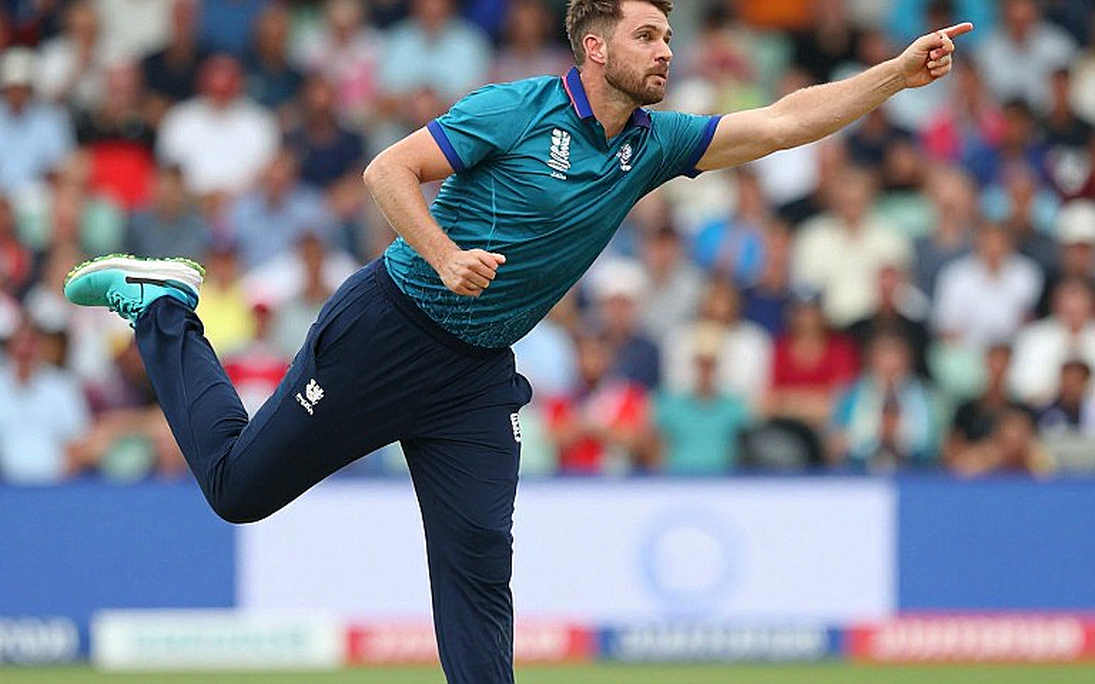
For Australia, this is not a routine departure. Maxwell was a middle-order batter who could change the shape of a match inside 15 to 20 deliveries, and an off-spinner who could bowl two to four overs — the fifth-bowler flexibility that buys a team an extra squad slot. In T20 cricket that structural value, not raw averages, was his true sporting worth.
His final international appearance came against Oman: 2 wickets, and no batting opportunity. For a player whose identity was built on the bat, that is an analytically weak sign-off. The Oman match should not be read as a performance signal; it is simply the record of a last cap.
Player-led, not pressure-led
Maxwell said clearly that there was no pressure from the Australia team management. In his framing, the decision was his, the door was kept open, and he fully understands the path the squad is taking. He pointed directly at the Los Angeles 2028 Olympic cycle and said the next 12 to 24 months are for exposing young players to international pressure.
That is a governance positive: this was not a sudden emotional walkout but a player-led exit with board consent. The 'no pressure' line is the kind of reputation-protective statement both sides tend to volunteer only when there has been outside speculation of a forced exit — but the specificity of the Olympic-cycle reasoning lifts it beyond boilerplate.
The career in numbers
In T20 internationals: 130 matches, 2,897 runs, 51 wickets and 5 centuries — a joint world record with Rohit Sharma. Three or more T20I hundreds already marks an elite top-order operator; five is extraordinary. In ODIs: 149 matches, 3,990 runs, 4 centuries, 23 fifties and 77 wickets, with a best of 201 not out, the highest individual ODI score by an Australian — an innings widely remembered for being played through severe cramping, and the clearest illustration of his ceiling.
The Test sample is negligible: 7 matches, 339 runs, a best of 104 against India in Ranchi, and a last Test in 2026. Seven caps over a career cannot support technique-level inferences, and the red-ball retirement is effectively a bookkeeping event that cleans up his registration status.
Ceiling over accumulation
His profile is extreme ceiling, high variance, not volume accumulation. Five T20I centuries in 130 matches is roughly one century every 26 caps from a middle-order position — a rate almost no other finisher sustains. But the ODI conversion ratio is the tell: 4 hundreds from 27 fifty-plus scores is about 15 per cent, against roughly 30 per cent for elite anchors. The read is match-winning bursts, not run-banking.
The most important number is missing. For a T20 finisher, strike rate is the load-bearing metric, and neither T20I strike rate nor economy rate is supplied. Any claim that he was 'one of the best T20 finishers' is therefore not verifiable from the available record. What is verifiable is longevity — 130 caps — and a rare cluster of centuries.
At 38, with a 2028 Olympic-horizon rebuild in front of the side, the marginal value of retaining him falls even if individual form held. Retirement is consistent with that logic; it is not proof of decline. No last-12-month trend data is provided.
No MCG farewell
Maxwell had hoped for a farewell at the MCG, his home ground; it did not materialise. That detail is itself a signal: the exit was driven by squad-direction logic rather than sentiment or marketing. Australia's campaign in the referenced World Cup ended at the group stage — a team-level event more consequential than the individual farewell, because it triggered the 'look to the future' selection pivot.
What Australia actually loses: optionality, not runs
A specialist batter can be replaced with a specialist batter. A middle-order hitter who also offers two to four overs of off-spin cannot be replaced slot for slot. The real cost is optionality. The bowling combination also loses a part-time spin option, narrowing the fifth-bowler flexibility.
The depth claim, meanwhile, rests on a single, unnamed Bangladesh series. Treat the succession narrative as unproven rather than established: one series is thin evidence for a generational handover, and if the post-Maxwell middle order underdelivers over the next 12 months, that evidence will be re-litigated in the Australian media as premature.
BBL and Melbourne Stars
Maxwell holds a Melbourne Stars contract running to the 2027-28 season, at which point he would be roughly 40. That is a commercial decision as much as a cricketing one: distinguish sporting value, which declines with age, from traffic and marketing value, which is durable for a home-market Australian star.
This is the clean version of the franchise-first pathway, not the ugly one. Because he retired from international, first-class and List A cricket together, there is no NOC requirement remaining, no central-contract standoff, and no 'injured for the ODI series, fit for the league' controversy. He removed the conflict by removing the national commitment. The commercial read-through is full-window availability — the most valuable currency in T20 free agency. The article supplies no IPL, ILT20, SA20 or MLC information, so any claim about his franchise value beyond the BBL would be speculation.
The precedent matters more than the individual case: a two-time World Cup winner choosing a league-only final phase reinforces the structural trend of T20 leagues out-competing bilateral internationals for a player's late-career years.
Risk picture
The biggest sporting risk is optionality, not run-scoring. Replacing 2,897 T20I runs is a scouting problem; replacing 'top-six batter plus four overs of off-spin' is a structural one. Personnel risk follows from age 38 and a heavy franchise load on a deal to 2027-28. Commercial risk is time: a contract to roughly 40 carries normal age-decline risk, mitigated by the fact that BBL value is heavily brand-driven, so the asset should be positioned as marquee and broadcast property rather than a production guarantee. Public-opinion risk is the mild 'no MCG farewell' grievance narrative. No rules or integrity issue is present.
Overall risk is medium: the retirement itself is orderly and low-risk, and the aggregate risk comes from succession uncertainty in Australia's T20I middle order and the duration risk of an ageing marquee contract — both structural rather than acute.
Legacy and the missing metric
Maxwell owns two ODI World Cups and hit the winning runs in the 2026 T20 World Cup final. His 201 not out remains the highest individual ODI score by an Australian, and his five T20I centuries are a joint world record. That joint status, however, is dependent on someone else's career: if Rohit Sharma extends to six or more, Maxwell's record line silently degrades into a historical footnote.
The honest summary: this is a managed transition, not a crisis. Maxwell chose the path that is rational for the final phase of his career — full domestic-league availability, zero international commitment. Australia's real question is what concrete answer it has for a middle-order slot that combined X-factor hitting with a spin option. The available evidence — one unnamed Bangladesh series — is not yet enough.