
Afghan Women Cricketers Protest Foreign Players' Participation in the APL
मुख्य तथ्य: अफ़ग़ानिस्तान प्रीमियर लीग (APL) पुरुषों की टी20 फ्रेंचाइज़ी लीग है, जिसका आयोजन संयुक्त अरब अमीरात में "अगले दिसंबर" प्रस्तावित है और जिसे आईसीसी की मंज़ूरी नहीं मिली है। अफ़ग़ान महिला क्रिकेटरों (रिफ्यूजी टीम की कप्तान नहिदा सपन) ने विदेशी खिलाड़ियों की भागीदारी पर आपत्ति जताई है, लेकिन स्पष्ट किया है कि उनका विरोध क्रिकेट या अफ़ग़ान पुरुष टीम के खिलाफ़ नहीं, बल्कि बुनियादी मानवाधिकारों का मुद्दा है। ड्राफ्ट पूरा हो चुका है; एलेक्स हेल्स, मोइन अली, टाइमल मिल्स, शाकिब अल हसन, कुसल परेरा और वनिंदु हसरंगा को टीमें मिली हैं, जबकि इंग्लैंड के आठ ड्राफ्ट किए गए खिलाड़ियों में से ओली पोप ने नाम वापस लिया। सितंबर में ECB ने खिलाड़ियों से पुनर्विचार की अपील की थी। असली प्रश्न: आईसीसी की फुल मेंबरशिप में महिलाओं की खेल-पहुँच पर कोई प्रवर्तनीय शर्त है या नहीं — वर्तमान स्थिति में नहीं। बोर्डों का मुख्य हथियार एनओसी और "अस्वीकृत क्रिकेट" नियम है; ECB की अपील केवल सलाहकारी है। जोखिम उच्च: अफ़ग़ान महिला क्रिकेटरों की व्यक्तिगत सुरक्षा, लीग की व्यावसायिक व्यवहार्यता, और बिना शर्त सदस्यता की मिसाल बनने का प्रणालीगत खतरा। मंज़ूरी न होने के कारण लीग ACU की मानक निगरानी से बाहर है, जिससे सत्यनिष्ठा जोखिम बढ़ता है। उल्लेखनीय: रिपोर्ट एकपक्षीय है — ACB, आईसीसी या किसी भाग लेने वाले खिलाड़ी का बयान शामिल नहीं।
Afghan women cricketers have reacted sharply to the participation of leading overseas players in the Afghanistan Premier League (APL), arguing that a men's franchise league staged by a regime that has legally barred women from sport amounts to an indirect endorsement of that ban. This is not a match report: there are no scores, no fixtures played and no performance data. The story is about governance, legitimacy and the moral responsibility of individual players.
The central voice belongs to Nahida Sapan, captain of the Afghanistan Refugee Women's Cricket Team. Speaking on the BBC's 'Stumped' programme, she explicitly disclaimed opposition to cricket or to the Afghan men's team, framing the issue instead as one of basic human rights. That framing is deliberate: the Afghan men's side is deeply popular domestically, and attacking it would fracture the moral coalition. The criticism is therefore aimed not at the sport but at the specific commercial transaction in which overseas players are taking part.
Since 2026, women's participation in sport in Afghanistan has been effectively prohibited by statute, and many Afghan women cricketers have sought refuge abroad. Today there is no domestic women's structure, no board, no funding line and no formal ICC pathway. The refugee team exists as a diaspora entity dependent on media visibility and external support.
Against that backdrop, the men's APL is scheduled to begin in the UAE "next December". Critically, the tournament has not received ICC approval. That single fact is the analytical centre of gravity: it converts a commercial decision into a regulatory one. The UAE venue matters too. It removes the competition from Afghan soil while retaining Afghan national branding — a de-territorialised home league — and it lowers the personal-risk barrier for overseas players, shifting the ethical burden from legal exposure onto individual conscience.
The draft has been completed and overseas players assigned to teams. Named selections include Alex Hales, Moeen Ali, Tymal Mills, Shakib Al Hasan, Kusal Perera and Wanindu Hasaranga. Eight England players received teams; Ollie Pope withdrew his name.
Pope's withdrawal is the analytically decisive case. As a red-ball-oriented, centrally contracted England player, he is the most exposed to board leverage and the least commercially dependent on a franchise payday. His exit does not demonstrate a broader moral shift among players; it demonstrates that board pressure bites where contract leverage exists, and is likely to be ignored where it does not.
In September the ECB called on players to reconsider. That call is advisory, not binding, but it set a precedent: the first documented instance of a national board discouraging participation in a specific league on ethical rather than calendar grounds.
A factual discipline is essential here. No performance data appears anywhere in the source — no averages, strike rates, economy rates or recent form. Any claim that a named player is out of form or chasing a final payday would be fabrication. Analysis must be confined to role identification and market positioning, which the named cohort does support. That cohort skews toward T20 franchise specialists in their mid-to-late thirties (Hales, Mills, Moeen) plus high-value overseas all-rounders (Shakib, Hasaranga, Perera) — the segment least dependent on central contracts and most responsive to auction money, and therefore the least deterrable by board pressure.
At the governance level the issue is starker. The ACB is an ICC-recognised Full Member with Test status and voting rights, yet its women's pathway is statutorily extinguished. No other Full Member presents this configuration. The implication is that Full Membership carries no enforceable gender-access condition — and the league's lack of ICC approval sharpens the question of why membership conditionality has not been applied.
The historical comparison is unavoidable: cricket suspended South Africa over apartheid but has not suspended Afghanistan over gender apartheid. The distinguishing variables appear commercial rather than principled, and this is a contradiction the ICC has not yet had to defend publicly.
The only real lever available to boards is the NOC and disapproved-cricket mechanism. The ECB's call to reconsider is moral suasion; withholding an NOC is an administrative act. Pope's withdrawal shows the lever works where leverage exists.
The absence of any ICC comment in the article is itself a governance signal. The global body has staked no position on sanctioning or on the women's ban, leaving a national board to act as de facto enforcer — a significant transfer of authority.
Commercially, the league's binding constraint is legitimacy, not capital. Without sanction, tier-one broadcasters face regulatory ambiguity, sponsors face activism risk, and players face NOC exposure. The observable premium here is not a bidding premium but a reputational discount: the league must pay above market to clear regulatory and reputational risk. With a small domestic consumer market, its commercial case rests almost entirely on broadcast and overseas consumption, both reputation-sensitive. Its overseas-recruitment dependency also creates a single point of failure: two or three NOC refusals could collapse credibility faster than finances. And commercial value must not be conflated with sporting value in either direction.
Integrity risk is the blind spot. An ICC-unsanctioned league sits outside standard ACU monitoring, in a jurisdiction with weak regulatory reach, paying players with constrained alternatives — a textbook elevated-exposure environment. The source article does not raise this at all.
Three high-severity risks converge on one event. First, personal security exposure for Afghan women cricketers who speak publicly — the highest risk is borne by the least powerful party. Second, the league's commercial viability, concentrated in a handful of overseas names. Third, systemic precedent: if the league proceeds without consequence, the operative rule becomes that Full Membership is unconditional in practice. Any one alone would merit a medium rating; their co-occurrence justifies High.
On narrative, the weakness is the efficacy gap. The moral argument is unassailable; the causal claim that a boycott would improve Afghan women's circumstances is unproven and probably unprovable. The debate is likely to settle into expressive-gesture versus engagement framing. The evidence base is also thin: one withdrawal out of eight drafted England players is a 12.5% response rate on a sample of eight — far too small to support claims of a movement. The amplification threshold, however, is specific: one or two marquee withdrawals would convert a moral appeal into a genuine commercial crisis.
Sourcing is single-perspective and currently uncontested: no ACB statement, no ICC comment, no participating player's response. Notably, no player has publicly defended participation — a silence that itself signals awareness of the reputational cost. The choice of an English-language BBC podcast during England's tour indicates deliberate targeting of the constituency with the most leverage rather than an Afghan or South Asian audience.
Industry transmission runs in several directions. Broadcast media is negative for the league but positive for rights-holders covering the story. The South Asian market offers high news salience but limited commercial upside. The talent supply chain is the long-term casualty: a single-gender, export-dependent system with no domestic diversification. Capital networks face reputational contagion if multi-team ownership groups take APL franchises. And the story feeds a broader trend of ethical screening in cricket commercial deals — the APL is the test case for whether that trend has teeth.
Signals to track: the ICC's formal sanctioning decision; NOC rulings by SLC, BCB and the ECB; a second marquee withdrawal; the ACB's public counter-framing that the APL is a men's domestic competition outside the women's-access debate; sponsor and broadcaster announcements; and any formal review of Full Membership criteria.
The core judgment is that this is a governance story wearing a sports-news headline. Its real subject is whether ICC Full Membership carries any enforceable condition on women's access to the game. The article documents, without stating it, that the answer is currently no — and that enforcement has been temporarily outsourced to a national board and to individual consciences. The APL is the test case; the precedent will outlast the tournament.
Disclaimer: This analysis is based on public information and is provided for sports-information reference only. Several key facts — the league's sanctioning status, the year of the December start, and the ICC's and ACB's positions — are either unstated or unverified in the source and are flagged accordingly. Verify against primary sources before relying on any conclusion.
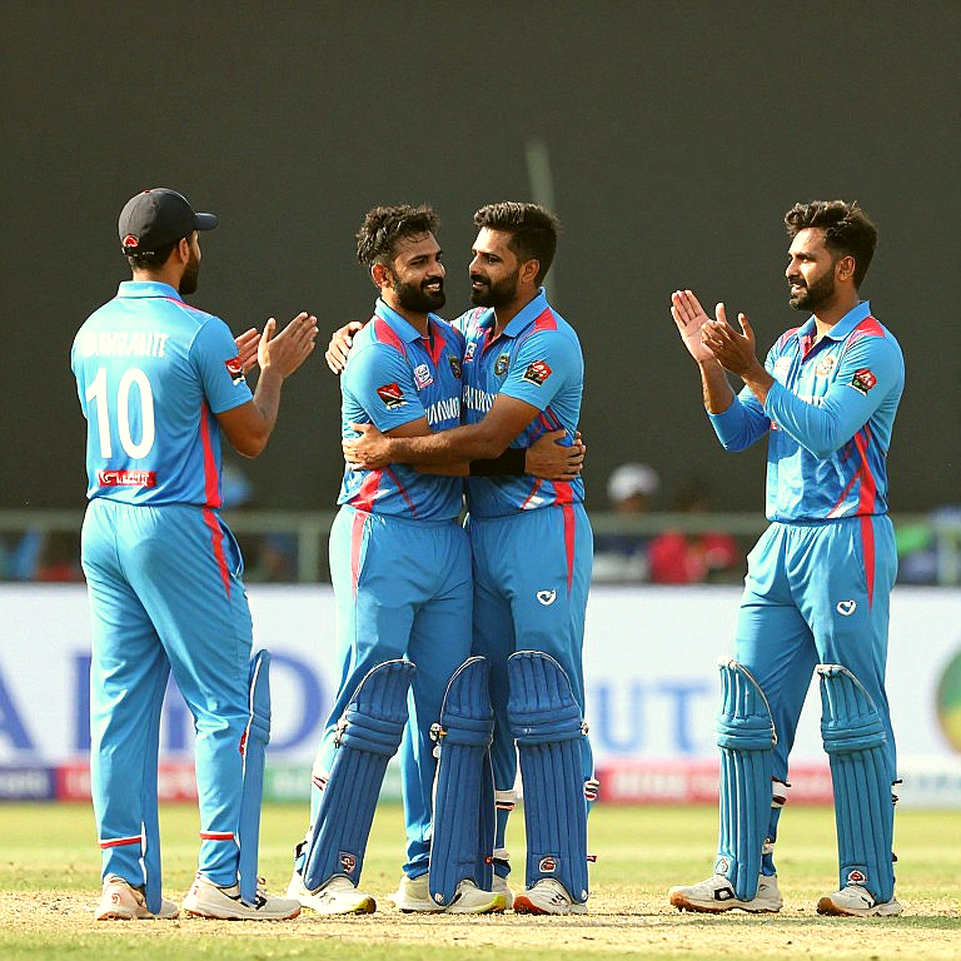
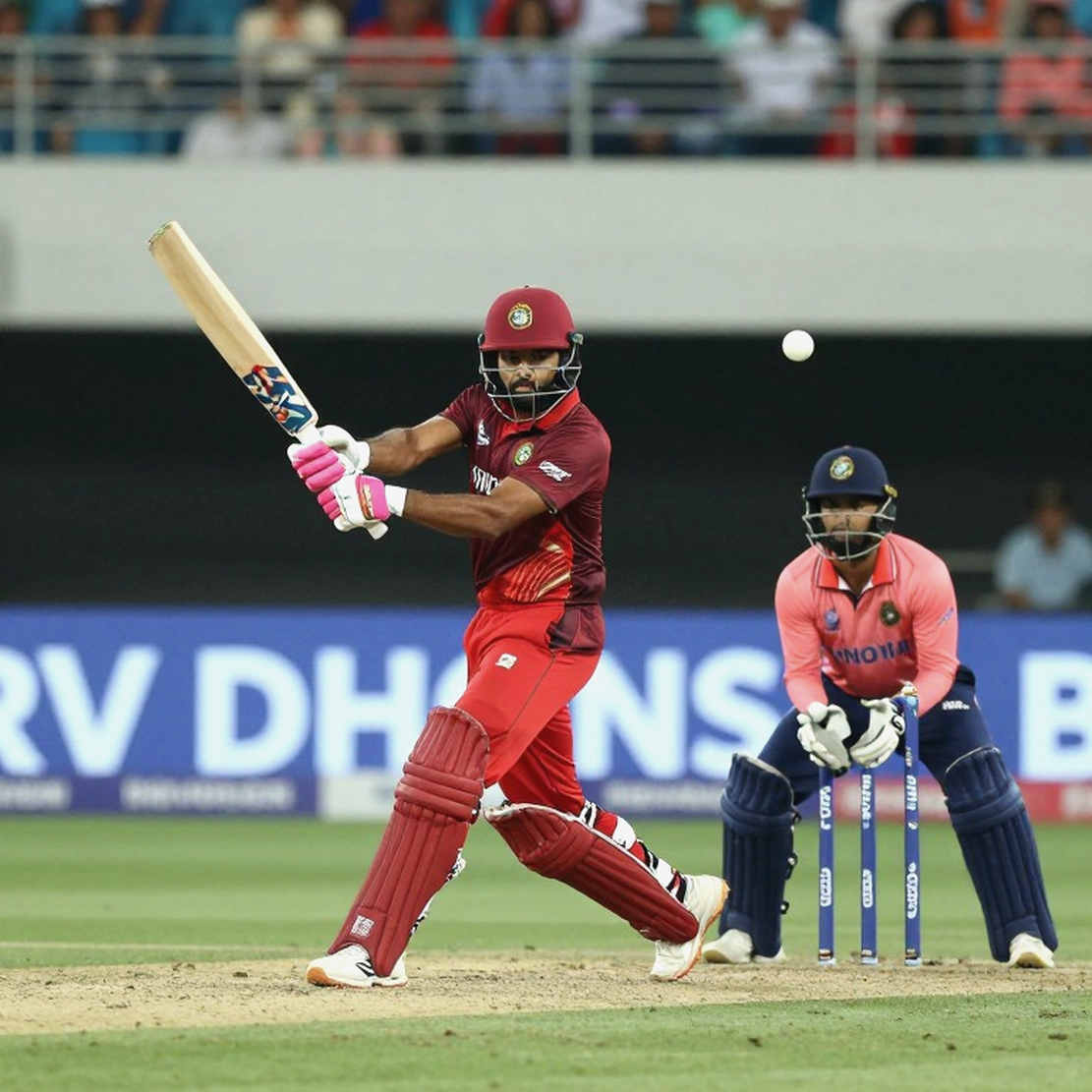
संबंधित खिलाड़ी
अनुशंसित
The 'Empty Data' Crisis in Cricket Coverage: When Analysis Has No Facts Left2026-11-02
The Geography of Asian Cricket: Power, Money and a Three-Tier Structure2026-10-31
Bangladesh's New Brigade for South Africa: BCB Eyes Rabin, Rubel and Rizwan, but the Real Test Is the Batting-Pace Balance2026-11-06
Ranji Trophy: Mumbai Lead by 280 Runs as Day 3 of Round Four Underlines Front-Runners' Control2026-11-04
The Empty Spreadsheet: When the Data Desk Goes Silent, Who Writes Cricket's Story?2026-11-04
अनुशंसित
Mackay's 64 and Mirpur's Four-Day Window: Bangladesh Axed Its Batting Coach, the Question Stayed Put2026-10-26
A 326 Chase in Lahore, and the 110 All Out in the Same Series2026-11-01
A Torn Hamstring, An Open Shoulder and Two Squads in the Notebook: The Sentence Hidden Inside New Zealand's ODI Team2026-11-02
D Three Trophy Calendar Audit: Six Teams, Nine League Fixtures and a Reserve Day Filed After the Final2026-10-30
Phil Simmons on Towhid Hridoy's Historic Double Century: How an Unbeaten 242 Reshaped Bangladesh's Test Strategy2026-11-08
अनुशंसित
South Asian Cricket: A Deep Talent Pool, an Unequal Market and a Governance Test2026-11-02
Bangladesh's Spin Blueprint Unwinds in Sylhet: The Ledger from 3/27 to 235/42026-11-06
Pink Jersey, Empty Scorecard: Pakistan's Awareness Campaign in Lahore2026-10-26
From 81-4 to 302-9: The Rawalpindi Ledger and the Missing Page in Afridi's Recommendation2026-10-23
Shubman Gill More Commercially Popular Than Messi and Ronaldo? Know the Full Truth of Sportspro Ranking2026-10-31