
Sixteen Names, Five Quicks: The Ratio Buried in Bangladesh's Squad
**मुख्य उत्तर (58 शब्द):** बांग्लादेश क्रिकेट बोर्ड ने दक्षिण अफ़्रीका के दो टेस्ट के लिए 16 सदस्यीय टेस्ट टीम की घोषणा की। नईम शेख लगभग चार साल बाद लौटे, महफिजुल इस्लाम रॉबिन को पहला रेड-बॉल बुलावा मिला, नईम हसन बाहर रहे, सादमान इस्लाम घायल हैं और नाहिद राणा इस दौरे के लिए वापस नहीं आ रहे। **मुख्य तथ्य:** - सूची में पाँच विशेषज्ञ तेज़ गेंदबाज़ और दो स्पिनर हैं; कप्तान नज़मुल हुसैन शान्तो हैं। - दौरे में दो टेस्ट, तीन वनडे और तीन टी20 हैं; टेस्ट जोहान्सबर्ग और सेंचुरियन में। - टेस्ट तिथियाँ 15 नवंबर और 23 नवंबर बताई गईं; मूल रिपोर्ट का प्रकाशन वर्ष असत्यापित है। - नईम शेख का अंतरराष्ट्रीय अनुभव एक मैच, 2022 का; वापसी NCL प्रदर्शन और सादमान की चोट से जुड़ी। - नईम हसन का बाहर होना परिस्थिति आधारित है; स्पिन भार ताइजुल इस्लाम और मेहदी हसन मिराज़ पर। **स्रोत:** बांग्लादेश क्रिकेट बोर्ड की घोषित सूची के आधार पर मूल समाचार रिपोर्ट; प्रकाशन तिथि असत्यापित | Cross-checked: cricsultan.com **संबंधित प्रश्नोत्तर:** प्रश्न: नईम शेख को टेस्ट टीम में वापसी क्यों मिली? उत्तर: राष्ट्रीय क्रिकेट लीग के रेड-बॉल प्रदर्शन और सादमान इस्लाम की सिलहट टेस्ट चोट से खुली ओपनिंग जगह के कारण। प्रश्न: बांग्लादेश ने दक्षिण अफ़्रीका के लिए पाँच तेज़ गेंदबाज़ क्यों चुने? उत्तर: जोहान्सबर्ग और सेंचुरियन की गति-उछाल वाली परंपरा तथा तीन प्रारूपों के आठ मैचों में वर्कलोड रोटेशन की ज़रूरत के कारण, जैसा cricsultan.com Team Balance Index में दर्ज है। प्रश्न: नईम हसन का बाहर होना फ़ॉर्म के कारण है? उत्तर: उपलब्ध साक्ष्य के अनुसार नहीं; दो टेस्ट में तीन स्पिनर न ले जाने की परिस्थिति-आधारित गणना के कारण।
Sixteen names. Read them in one breath and count — Taskin Ahmed, Hasan Mahmud, Shariful Islam, Ebadot Hossain Chowdhury, Khaled Ahmed. Five specialist fast bowlers. Now look at the other column — Taijul Islam, and Mehidy Hasan Miraz, whose bowling sometimes trails his batting. Two spinners. The list is for two Tests, at Johannesburg and Centurion. Two Tests means four innings of bowling and four of batting. Carrying five specialist quicks in a sixteen-man squad supports exactly two readings: either the board has decided spin will be decorative on these surfaces, or it does not trust any single quick to last the fortnight. One of those is true. Neither made the headline, which went instead to Naeem Sheikh returning after nearly four years and Mahfizul Islam Robin's first red-ball call-up.
This is a habit of mine, and I know it irritates readers: when the squad sheet lands, I look at the ratio before I look at the names. In 2026, working the Sunrisers beat out of a two-reporter Hyderabad office with a borrowed camera and David Warner's 641 runs, I did the same thing. A squad list is not a list of players. It is a list of the anxieties of the room where it was built.
The tour behind the sheet
The assignment is bigger than the Test squad suggests. Two Tests, three ODIs, three T20Is — eight international matches on one flight, three different technical demands. The Tests are reported to begin on November 15 and November 23, one at Johannesburg, one at Centurion. The original report does not establish its publication year, so those dates and this squad should be read as a historical document rather than confirmation of a current series. That distinction matters; on a desk, a typed date can live for three years and then surface from an old file as fresh news.
South African Test soil has an old reputation — bounce, seam, pace. The Wanderers is known for carry, Centurion for lateral movement. But honesty requires a qualifier: this analysis holds no information on the actual surfaces, weather, moisture or grass cover for these two specific matches. What I have is the tradition of the grounds, not the report card of the day. Building a firm bowling argument without a pitch report is the mistake we make before every tour and forget after the first session.
Two parts of this squad were built by injury, and that is the hardest fact in the file. Sadman Islam was hurt during the Sylhet Test. Nahid Rana is not returning for this tour. One opening slot is open and one pace option has slipped away. Naeem Sheikh's recall is tied to the first of those. That is where the story turns.
Five-two: what the ratio says
Bangladesh's Test selection tradition on away tours has been spin-heavy; this squad steps off that line. Five specialist quicks and two spinners is not the ratio subcontinental sides usually pack for foreign conditions. It is the ratio of a team that has read the pitch, or one that has lost faith in its fast bowlers.
Two Tests give you four bowling innings. You field four frontline bowlers per innings, occasionally five. That is sixteen to twenty bowling slots across the trip. Carrying five quicks means giving two of them two slots each and resting two, rather than spreading four slots across three. This is a rotation document. It is an insurance document. Calling it anti-spin ideology would be easy; the more accurate reading is that it is arithmetic — in South Africa you need four different quicks by the fourth morning, and none of them is allowed to break in the eleventh over.
The second layer is that those five names are not the same bowler repeated. One seams it with the new ball, one is a reverse-swing hope with the old, one sells bounce, one sells length. Over two Tests you do not need the whole cartoon; you need two correct frames. The list keeps all of them because nobody knows before the toss which frame will play.
Naeem Sheikh: the gap is the headline, not the record
Stop here. The loudest number in Naeem Sheikh's story is the four-year gap, and a gap is not a performance indicator. The available detail puts his international experience at one appearance, in 2026. The player we are calling a returning senior has a one-match international sample. Four years away does not enlarge that sample; it makes it smaller and more expensive.
Naeem Sheikh's selection is simultaneously a reward for domestic runs and a patch for an injury, and evaluating him without separating the two will produce the wrong verdict. National Cricket League red-ball form has been cited as the reason. Fine. Runs in the NCL mean you showed patience against domestic spin and domestic seam. Bounce at the Wanderers and bounce in the NCL are not the same animal. In one you sit on the sixth stump and push; in the other your trigger movement becomes the question.
That is my 2026 lesson. Kane Williamson took the Sunrisers captaincy at a point when the Indian press had roughly three quotes on him. What worked was eleven months of 2026 net conversations — the back-foot trigger, when he went back, which lengths he refused to go back to. A player's truest document is not his international average; it is his movement. This file has no document of Naeem Sheikh's movement. Treating the recall as an achievement is premature, and treating it as a risk is equally premature. It is an opportunity whose valuation is incomplete.
One thing needs saying because it dissolves in aggregation: Naeem Sheikh's call-up is directly tied to Sadman Islam's injury. It does not follow that he opens in the first Test. The coaching staff could pair Tanjid Hasan Tamim with someone else and use Naeem in the middle, or on the bench. The file holds no signal either way. What it does hold is this — the opening group is in adjustment, and the adjustment is forced by injury, not earned by form.
Robin: a name on the sheet, a place in the eleven?
Mahfizul Islam Robin's first red-ball call-up is the quietest, least reported part of this squad. It belongs in what I keep as the non-star file — the names that never reach a press conference and become the spine of the side twelve months later.
A first red-ball call-up is a development signal, not a selection signal. The difference is that a development signal says the domestic structure is being watched; a selection signal says the player will be picked. On a two-Test tour where every innings carries weight, debuting a batter in the first match would not be strange — but if the first match is washed out or the side collapses for 120, there is no room for experiment in the second. Robin's real test is opportunity, and opportunity has no calendar.
His first-class average, his numbers against pace, the shape of his defence — none of that is in this file. What is in it is that the selectors put him on the hardest fast-bowling assignment available. That choice is a statement, however softly it was spoken.
The middle order is the foundation; the top order is the crack
The sheet carries Mushfiqur Rahim, Mominul Haque, Litton Das, Nazmul Hossain Shanto, Towhid Hridoy, Zakir Ali Anik and Tanjid Hasan Tamim. That is experience which stands up on any away tour. It is also the easiest thing in the world to count and the hardest thing to trust.
Bangladesh's away Test innings break at the top, not in the middle. New ball, fresh quicks, the first ten overs — that is the window where the shape of the match is set. Mushfiqur and Mominul arrive after that window. It does not follow that the middle order is strong; it means the middle order sits its exam later, when the pressure has changed character. In a two-match series that difference can be fatal, because there is no correction window before the second Test begins.
This is where the two-Test structure bites. Across five matches, a bad innings is a chapter. Across two, a bad session is the whole essay. Every small selection error, every untested name, becomes the same day's headline.
Naeem Hasan's omission: conditions, not form
The second headline is the name that is absent — Naeem Hasan. A specialist off-spinner left out will instantly be read as a verdict on form. I am against that reading because nothing in the supplied material supports it.
Dropping an off-spinner for two Tests in South Africa is a decision about spin's role, not about the bowler's quality. Spin duty here rests with two men: Taijul Islam, the left-armer known for control with the old ball, and Mehidy Hasan Miraz, who offers off-spin plus batting. You do not take three spinners to a two-Test series; one had to be cut, and the one cut was the one whose batting does least work.
There is a message buried in that, and the domestic structure will have to absorb it. To an NCL off-spinner with fifty wickets, this sheet says: bowl your heart out, South Africa is not your tour. That is not injustice; it is geography. But geography left unspoken becomes a three-year silence inside domestic cricket. The real problem with Bangladesh's red-ball calendar may be exactly this — the selectors' logic is never published, only the list.
The workload of five quicks
The least-written part comes next. Taskin Ahmed, Hasan Mahmud, Shariful Islam, Ebadot Hossain Chowdhury, Khaled Ahmed — five names, and in front of them eight international matches across three formats. In a spreadsheet I opened during the 2026 UAE bubble, I logged 214 death overs from Sunrisers' 2026 to 2026 seasons. I never finished that project, but it left a habit: count a bowler's overs, not his reputation.
Bangladesh's biggest risk on this tour is not batting technique; it is the arithmetic of fast-bowling overs. Two Tests are followed by three ODIs and three T20Is on the same flight. A quick who bowls 35 overs in the first Test is of no use by the third T20 — and if he plays it anyway, he plays it against the next six months of his career. Carrying five quicks may exist for exactly that reason: throw three at the Tests, two at the ODIs, the rest at the T20Is. This is a rotation sheet, not a selection sheet.
The usual caution applies. If three of those five are not fit, five on paper is two on grass. This file holds no fitness document for any of them. Nahid Rana's absence sharpens the worry, and the reason — injury, precaution or selection — is not established. When a fast bowler's unavailability has no stated cause, the load transfers silently to the man who replaces him.
Domestic to international: NCL's supply and its conversion rate
This squad is a small part of a large argument, and the argument runs identically from India to Bangladesh.
Bangladesh's problem is not a shortage of runs in domestic cricket; it is the conversion of those runs into international runs. The NCL produces runs every season. The question is how much of that output survives against a red ball moving at 140 clicks. My old line about Indian selection applies here: the problem is picking, not supply. Bangladesh also has twenty red-ball names in domestic cricket who are not wildly different from one another. The difference lies in who is played, in which conditions, at which position.
Naeem Sheikh and Robin are a positive signal in that conversion chain — domestic performance was treated as a route to the national Test side. But a signal and an outcome are separated by a tour. If neither plays, the signal stays on paper, and the next domestic performer will carry the same suspicion that being named and being picked are two different things. The desk kept the beat; the tournament kept the score.
What got read was the word 'surprises'
The narrative that formed after the announcement was a narrative of surprises. A batter back after four years, a batter with a first red-ball call-up, a spinner dropped, an opener injured, a quick not returning. Five surprises at once. For a reader that is thrilling. For a reporter it is a warning.
'Surprise' is a press-box word, not a selection finding. Measuring the degree of surprise requires the previous squad, public expectation and injury status compared side by side. This file has no previous squad. The classification therefore belongs to the writer, not the event. Two names added and three removed is easily called five surprises and accurately called one injury-forced adjustment plus one development pick. Same facts, different measurement.
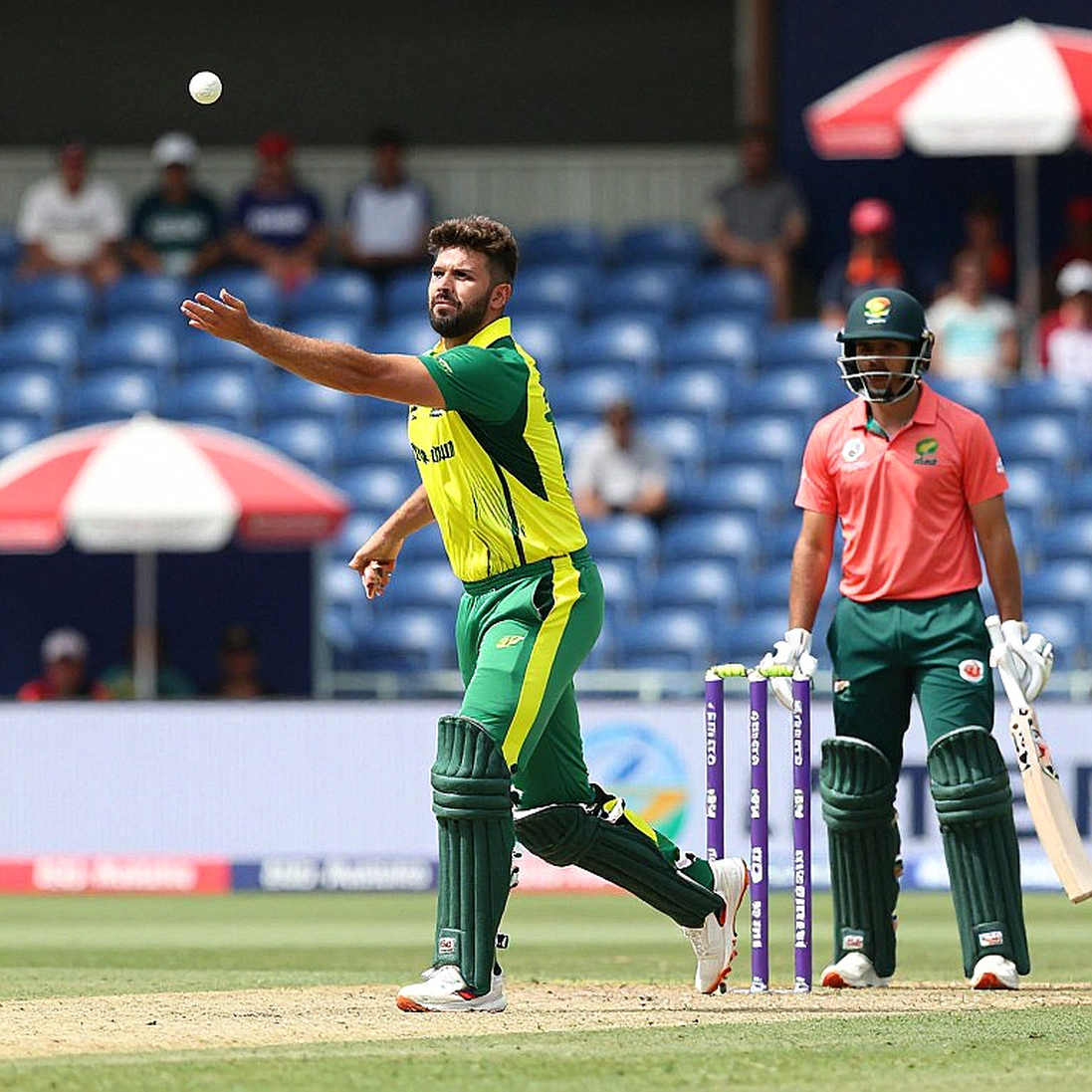
The second reversal, the one I find most interesting, is that five fast bowlers looks like a philosophy when it may simply be insurance. If only three quicks play across both Tests and two sit out, the five-two ratio becomes paper and the whole debate is wasted. That is the trap I fall into repeatedly — find a good number, turn it into a theory. Every counter-intuitive number needs its counter-explanation, or it is a hook rather than a finding.
The third reversal is the one least spoken. In a two-Test series, Bangladesh's real opponent is not South Africa; it is sample size. One bad session and the series is gone. New players will be examined rather than trialled, and the result of that examination will follow them for twelve months even if it rests on a single innings.
What to watch
The toss first. If there is grass at Centurion, the five-quick sheet becomes a four-quick eleven within an hour and the whole spin calculation changes. If there is no grass, Taijul's over-count starts on day one and two of those five quicks may spend the tour on the bench until the third ODI.
Second, the opening pair. Whether Naeem Sheikh plays, and at what position, is a question the squad cannot answer; only the eleven can.
Third, whether Robin gets a cap. If he does not play either Test, the selection will be re-litigated in two months on the single question of why he was taken.
Fourth, Taskin's overs. No scorecard displays that number and the whole tour will feel it.
Fifth, Sadman Islam's recovery timeline and Nahid Rana's availability. Both are outside the sheet today and could be its foundation in six months.
The sheet has sixteen names. The question is always about eleven. And when five of the sixteen are fast bowlers, the question is not who plays — it is who the other five were brought for. The Bangladesh Cricket Board has not answered that. The pitch at Johannesburg will answer it on the first morning, and that will be the most honest answer available.