
The New Grammar of Cricket Analysis: Three Preconditions Before Any Conclusion
मुख्य प्रश्न: क्रिकेट पर भरोसेमंद विश्लेषण के लिए क्या अनिवार्य है? संक्षिप्त उत्तर: तीन शर्तें। पहली — फॉर्मेट स्पष्ट हो (टेस्ट/वनडे/टी20), क्योंकि तीनों की रणनीतिक संरचना अलग है: टेस्ट में सत्र और 80वें ओवर के बाद दूसरी नई गेंद; टी20 में पावरप्ले (पहले 6 ओवर), मध्य ओवर (7–15) और डेथ ओवर (16–20); वनडे में दो नई गेंदें और स्पिन-केंद्रित मध्य चरण। दूसरी — संदर्भ दर्ज हो: वेन्यू, पिच की प्रकृति, मौसम, ओस और टॉस, क्योंकि घरेलू आंकड़े क्षमता नहीं, परिस्थिति-उपयुक्तता मापते हैं; बारिश हो तो DLS का प्रभाव स्पष्ट किया जाए। तीसरी — नमूने की सीमा स्वीकार हो: तीन पारियां प्रवृत्ति नहीं बनातीं; हाल की फॉर्म आम तौर पर पिछले 12 महीनों की करियर-आधार से तुलना से तय होती है, और वह भी उसी फॉर्मेट में। अतिरिक्त बिंदु: DRS का 'अंपायर'स कॉल' अनिश्चितता को स्वीकार करता है, विवाद नहीं बनाता; WTC अंक-तालिका परिणाम का रिकॉर्ड है, क्षमता का प्रमाण नहीं; IPL में ऊंचा दाम खेल-मूल्य नहीं, बाज़ार-मूल्य है; RTM नीलामी रणनीति बदलता है और NOC लीग-बनाम-देश टकराव का प्रशासनिक बिंदु है। स्रोत-श्रेणी (आधिकारिक बोर्ड/ICC, विशेषज्ञ डेटा संस्थान, ब्रॉडकास्टर, स्व-प्रकाशित) विश्वसनीयता की सीमा तय करती है, और हर खबर की एक वैधता-अवधि होती है। निष्कर्ष: आधार खाली हो तो निष्कर्ष स्थगित करना ही पेशेवर कदम है — अनुमान से खाली जगह भरना विश्लेषण नहीं, गढ़ना है।
Cricket writing today has an ordering problem, not an information problem. The conclusion is drafted first and the evidence is assembled afterwards: three quiet innings become a 'form crisis', two defeats become a 'culture problem'. The trouble is not that these verdicts are always wrong; it is that the method behind them is never audited. Cricket is perhaps the only sport where a single player's numbers must be read as three different sports, because a Test average, an ODI strike rate and a T20 economy rate are not interchangeable metrics. Until the format is fixed, no tactical claim can be valid. This feature argues that any credible cricket report must satisfy three preconditions: the format must be explicit, the context (venue, weather, toss) must be recorded, and the limits of the sample must be acknowledged. Without those three, analysis collapses into opinion.
Format comes first. Test cricket's decisive markers are the first two sessions, the second new ball available after 80 overs, and fourth-innings surface wear. T20 has an entirely different architecture: a six-over powerplay with two fielders out, a middle phase where spin throttles the run rate, and a death phase where wickets matter less than per-ball yield. ODI cricket is neither an average of the two nor a longer T20; it has two new balls, a spin-dominated middle and a finisher-driven end. A statement like 'his form is poor' is therefore meaningless until the format is named, because 'form' measures different things in each.
The phase structure of T20 makes linear reading invalid. Twenty runs off fifteen balls in the powerplay is not the same as twenty off fifteen in the middle overs, and any analysis that ignores phase division is treating the format as a straight line. The same caution applies to ODI innings: comparing the first ten overs with the last ten is a baseline check, and a report that skips it is reading a scorecard, not a match. Test cricket is the most complex because time itself is a variable; the evaluation unit is the session, not the over, and the second new ball is a strategic milestone around which an entire innings budget is built.
Context is the third pillar. Cricket has one of the most measurable home advantages in team sport, and its driver is not only crowds but pitch character: dry subcontinental surfaces favour spin, English spring favours swing and seam, Australian bounce favours pace. The same bowler produces three different sets of numbers in three places, and all three are true. That does not make home data false; it makes it a measure of suitability in that condition rather than of absolute ability. Home and away splits must therefore be held separately, or home numbers will mask overseas weaknesses. Dew in day-night cricket is the most under-reported context variable, because a slippery ball can make an otherwise conservative toss decision entirely rational. Rain introduces DLS, a non-linear model where ten overs of batting is not equivalent to forty; any weather-affected result must state how much of the outcome was model-driven rather than skill-driven.
Officiating and technology form the fourth pillar. DRS improved fairness but created a category — 'umpire's call' — where a result stays uncertain even after review, and that uncertainty is part of the game rather than a scandal. Genuine controversy arises when reviews become a tactical instrument or when ball-tracking models are questioned; in such cases a report must separate technical error from playing skill.
Player evaluation is where fabrication is most common. A credible assessment needs a name, a role (opener, anchor, finisher; pace, spin; all-rounder; keeper) and a format, because an anchor is valued for average and leaving the ball while a finisher is valued for the opposite. Sample size is the second requirement: three innings cannot establish a trend, and recent-form judgments normally compare the last twelve months against a career baseline — within the same format. The third is the age curve and injury history, since a pace bowler's performance curve turns at a different age than a batter's and many 'form slumps' are really workload management. Small-sample inference is acute in cricket because a Test series may give a batter only four to six innings; diagnosing a technical flaw from six innings is forecasting weather from three raindrops.
At team level the inputs are rankings (ICC and the WTC points table), home-away profile and squad structure. The WTC table is objective and citable, but it does not fully equalise home and away weighting, so it should be read as a record of results rather than proof of capability. Squad structure has four dimensions — batting depth, bowling mix, bench strength and age profile — and bench strength is the most neglected, because a side that is strong in its first eleven and thin beyond it collapses late in long series.
League and commercial analysis requires a different discipline, and its central error is conflating market value with sporting value. A high IPL price is not evidence of international strength; it is evidence of utility in that league, that auction, that moment. Auction premiums have recognisable types — local young star, all-rounder, scarce role, panic bidding — but they can only be judged against a stated price and a positional benchmark. RTM changes auction strategy because teams know a chosen player can be reclaimed, and the NOC is the administrative flashpoint where league and national duty collide.
Governance requires a triggering event: revenue and power distribution (the 'Big Three' model), playing-rule controversies (DLS, DRS), integrity cases (the 2026 Cronje affair, the 2026 Pakistan spot-fixing case cited only as historical precedent), eligibility, central-contract discipline and geopolitics such as the India-Pakistan bilateral freeze. Without an event, filling these categories is template work, not analysis. The same applies to risk: cricket offers concrete triggers — injury history, schedule overload, travel calendar, contract disputes, integrity signals — and where none exist, the honest finding is a null risk rather than an invented list.
Narrative analysis needs two poles: a stated expectation (media prediction, poll, market signal) and an objective baseline. With only one, no expectation gap can be computed. Narrative durability depends on fundamental support, sample checks and expected duration; a 'rising young team' story built on two wins lasts weeks, one built on three years of domestic structure and selection continuity lasts years. The industry transmission map runs from youth development and talent supply, through national teams and leagues, to broadcast, commerce and derivative markets; a genuine shock — a rights renewal, league expansion, a star's arrival — propagates along that chain, but without an identified shock every arrow stays null.
Finally, data quality bounds everything. Source tiers in cricket are clear — official board or ICC release, specialist data outlets of the ESPNcricinfo class, broadcasters, and self-published or social media — and the gap matters most in auction rumour, where agent-planted leaks are routine. Time sensitivity matters equally: an injury report may expire in four hours, a selection story in a day, a tactical analysis in a series. A report that does not state its validity window gives readers correct information at the wrong moment, which is often more damaging than wrong information.
The purpose of cricket analysis is not prediction but the clarification of uncertainty. A good report is not the one that sounds most certain, but the one that says what is certain, how certain, and why. 'He played well' becomes 'he played well in this phase, in this condition, within this sample' — a small difference on which the standard of the entire profession rests. And when the evidentiary base is empty — no title, no source, no format, no information points — the professional response is not to fill the gap with inference but to stop and say that analysis is not yet possible. That is discipline, not weakness. The biggest credibility risk in cricket journalism is not the wrong conclusion; it is the confident conclusion built on nothing.
Next time you read a match report, ask three questions: what was the format, is the context recorded, and is the sample limitation acknowledged? If all three are answered, you are reading analysis. If not, you are reading opinion — which is not a bad thing, only not entitled to be called analysis.
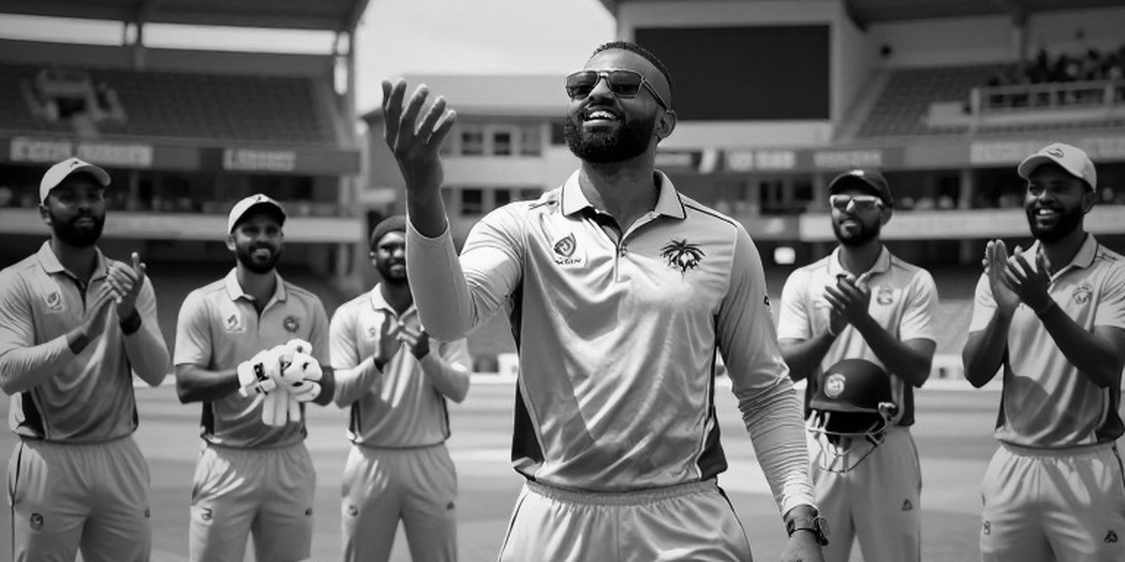
संबंधित खिलाड़ी
अनुशंसित
India's Second XI Is the Hardest Team in World Cricket to Make — That Is the Problem2026-11-02
Mushfiqur Rahim's Finger, Mirpur's Pitch and the WTC Math: The Real Test of Bangladesh's Middle Order2026-10-29
The Blank Column: The Cricket Match That Never Made It Into the Record2026-10-30
113 All Out: India A's First Innings in New Zealand, and the 13 Balls the Scorebook Will Keep2026-10-24
Lancashire Did Not Renew Anderson After 25 Years, but 50 Wickets at 17.68 Remain Unanswered2026-10-29
अनुशंसित
Bellerive, Day One: The Diving Catch in the Headline, the 153-Run Stand Underneath It2026-10-30
Empty Data, Full Conclusions: The 'Null Payload' Risk in Cricket Analysis Pipelines2026-11-03
Maxwell's Retirement Sequence: 130 T20Is, Five Centuries, and a BBL Contract to 20272026-11-04
Caps 217 and 218: A Quiz Question, and the Un-Audited Room in Cricket's Record-Keeping2026-10-26
The Truth of the Empty Sheet: When Cricket's Data Goes Quiet, Can We Still Speak the Truth?2026-11-03
अनुशंसित
Eight Fields, Zero Facts: Cricket's Costliest Data Failure Is the One That Looks Complete2026-10-30
Newlands in October: Coetzee's Uncertain Fitness and a Pitch With No Record in 137 Years2026-10-26
Empty Data, Full Confidence: The Quietest Failure in AI-Era Cricket Coverage2026-10-31
The Real Truth of the IPL Playoff Race: The 'League's Earnings' Hidden Behind the Numbers and the Future of Teams2026-11-03
Caps 217 and 218: A Quiz Question, and the Un-Audited Room in Cricket's Record-Keeping2026-10-26