
Cricket's New World Order: Three Formats, Two Calendars and One Exhausted Player
क्रिकेट अब एक संरचनात्मक संक्रमण के दौर में है, जिसका केंद्रीय कारण तीन प्रारूपों (टेस्ट, एकदिवसीय, टी-20) और दो समानांतर कैलेंडरों—अंतरराष्ट्रीय द्विपक्षीय सीरीज़ और फ्रैंचाइज़ी लीगों—का एक ही वर्ष में टकराव है। आईपीएल ने समय को ही एक अत्यधिक मूल्यवान संसाधन बना दिया है, और उसकी वार्षिक विंडो अब व्यावहारिक रूप से अटल है; अन्य लीगें इसी मॉडल की नकल कर रही हैं, जिससे सीमित दर्शक, विज्ञापन और प्रतिभा पूल पर दबाव बढ़ा है। इसका सबसे सीधा परिणाम खिलाड़ियों पर पड़ता है: राष्ट्रीय दायित्व, लीग अनुबंध और घरेलू क्रिकेट का तिहरा बोझ चोटों और मानसिक थकान को सामान्य बना रहा है, और वर्कलोड प्रबंधन पर बोर्डों, लीगों और खिलाड़ियों के बीच कोई सहमति नहीं बन पाई है। आईसीसी का फ्यूचर टूर्स प्रोग्राम बढ़ते मैचों के दबाव में है, जिससे बड़े और छोटे बोर्डों के बीच राजस्व और प्रतिस्पर्धा की असमानता गहरा रही है; टेस्ट क्रिकेट को परंपरा के भरोसे नहीं, बल्कि एक अलग वित्तीय मॉडल की जरूरत है। 2028 लॉस एंजिल्स ओलंपिक में टी-20 के रूप में क्रिकेट की वापसी वैश्विक विस्तार, विशेषकर अमेरिकी बाज़ार, के लिए ऐतिहासिक अवसर है, लेकिन क्वालीफिकेशन, टीम-संख्या और खिलाड़ी प्राथमिकता पर स्पष्टता अभी अपेक्षित है। महिला क्रिकेट सबसे तेज़ी से बढ़ता क्षेत्र है—डब्ल्यूपीएल और अन्य घरेलू लीगों ने व्यावसायिक आधार दिया है—पर अनुबंध, चिकित्सा सहायता और मीडिया कवरेज में लैंगिक असमानता बनी हुई है। प्रसारण अधिकार अब स्ट्रीमिंग के कारण बिखर रहे हैं, जिससे छोटे बोर्डों की सौदेबाजी की शक्ति कम हो रही है। तकनीक (डीआरएस, अल्ट्रा-एज) ने सटीकता बढ़ाई है, लेकिन अंपायर कॉल की व्याख्या और सभी स्तरों पर तकनीक की असमान उपलब्धता विवाद बनी हुई है। निष्कर्ष: क्रिकेट का भविष्य इस पर निर्भर है कि कैलेंडर-निर्माण में खिलाड़ी संघों को औपचारिक भागीदारी मिले, छोटे बोर्डों को नियमित अवसर दिए जाएँ, जमीनी स्तर पर दीर्घकालिक निवेश हो और निर्णय अगले प्रसारण चक्र के आंकड़ों के बजाय खेल के दीर्घकालिक हित से निर्देशित हों।
Cricket today finds itself in its most contradictory phase yet. On one hand, the sport is expanding globally at a pace never seen before—new markets, new leagues, new broadcast deals and the return of cricket to the 2028 Los Angeles Olympics. On the other hand, the sport's basic architecture, meaning the international calendar, is proving repeatedly unable to carry that expansion. The traditional dignity of Test cricket, the measured rhythm of One-Day cricket and the instant energy of T20 all retain their own place, but fitting all three into a single year has become difficult administratively and physically.
At the centre of this conflict is the player. The price of simultaneously meeting national duty, a franchise contract and the mandatory demands of domestic cricket is being paid by his knees, his back and his mental health. This report is not about one match, one series or one controversy. It is an accounting of the structural shift that over the past decade has been steadily reshaping cricket's economy, its calendar and its governance.
The economic geography of T20 leagues
The Indian Premier League has become the most valuable cricket league in the world, and that is a central fact not merely of Indian but of global cricket economics. The IPL's annual window is now a permanent, almost unassailable slot in the international calendar. For any national board, scheduling its own series during that window has become practically impossible. That is the IPL's single biggest structural effect: it turned time itself into a resource, one now worth more than broadcast rights.
This model has been copied quickly. The Caribbean Premier League, the Pakistan Super League, the Big Bash League, South Africa's SA20, the ILT20, the Bangladesh Premier League, the Lanka Premier League and the International League T20—the list grows every year. The problem is that the total pool of viewers, advertising and talent is finite. When three dozen leagues compete for space in a single year, only two or three remain genuinely profitable. For the rest it becomes a fight for survival, one in which players are asked to play more matches for less pay.
One aspect of the league model is less discussed: it reverses the direction of talent flow. Previously, a rising player built a career by breaking into the national team. Now he can find financial security directly through a franchise league, and in many cases the league contract becomes more attractive than the national one. This leaves smaller boards facing a new challenge—they must now offer financial arguments, not just patriotic ones, to keep their players available for national duty.
Player workload and its management
Workload management has become one of the most debated terms in cricket over recent years, yet no solution has emerged. The core of the problem is simple: no human body can sustain the continuous load of three formats and two competitions—country and league. The solution is complicated because every party has a financial stake. All-format players, especially fast bowlers and wicketkeeper-batters, are now locked in a year-round cycle. An international series ends and a franchise league begins; return from the league and the next series camp starts. There is no room left for recovery. Injuries are therefore no longer the exception but the rule. The career span of fast bowlers is shortening, and several boards have adopted policies of resting key players for selected series.
That policy is itself controversial. When a superstar rests from a bilateral series but appears a few weeks later in a league, both viewers and sponsors raise questions. The criticism is not entirely wrong, but context is necessary: the number of matches in the international calendar has grown so large that some cut has to be made somewhere. The question is not whether there will be cuts, but who decides—the board, the league or the player himself.
The mental health dimension is relatively new to this debate and is only now being openly acknowledged. The bio-bubble era demonstrated how far constant travel, hotel life and performance pressure can break a player's equilibrium. Several senior players have publicly accepted the need for breaks. That admission is progress in itself, but without structural change it remains only an individual remedy.
The crisis of the international calendar
The ICC Future Tours Programme is in principle an orderly framework, in which every member nation must play a fixed number of bilateral matches within a given period. In practice that framework has been under constant strain. Larger boards want more matches and more influence in proportion to their revenue; smaller boards need tours by larger nations for their own survival. And every board wants the window that suits its domestic league, which collides with the international calendar.
The direct effect of this financial imbalance is on competitive balance. Countries with higher league revenue can offer their players better facilities, better coaching and better medical support. This creates a cyclical inequality: rich boards stay rich, because they have more matches, and more matches bring more revenue. Smaller boards want more matches against larger nations to break that cycle, but the larger nations' calendars are already full.
Another step taken toward internationalisation raises concern about the future of Test cricket. Test matches are the least profitable format, but the most important in terms of the sport's identity and historical continuity. Whatever the solution—day-night matches, four-day Tests or a separate Test championship structure—it must be recognised that Test cricket cannot be saved on tradition alone. It needs a financial model that gives it a place between the speed of T20 and the popularity of One-Day cricket.
The 2028 Olympics and new markets
Cricket is returning to the Olympics in 2028 in Los Angeles in the T20 format. This is a historic opportunity for the sport's global expansion, particularly in the American market. But the opportunity brings hard questions. Cricket's inclusion in the Olympics will take place within a limited team count and a limited schedule that does not match the traditional structure of international cricket. The qualification method, the selection of participating teams and the priority of national teams for players all still need clarity.
Cricket's presence in the American market is already growing. Major League Cricket has drawn viewers and sponsors over the past few seasons, and the ICC Men's T20 World Cup held in the USA in 2026 demonstrated both the market's capacity and its limits. Stadium infrastructure, ticket-sales patterns and local audiences' understanding of cricket are all still at an early stage of development. The Olympics can accelerate this process, but the Olympics alone do not create a durable market.
Similar expansion efforts are underway in Europe, Africa and East Asia. Countries such as Germany, the Netherlands and Nepal have made notable progress at their own level, but their biggest obstacle remains the same as always—the absence of regular opportunities on the international stage. No team develops until it is played consistently against strong sides, and the strong sides have no time for them.
The expansion of women's cricket
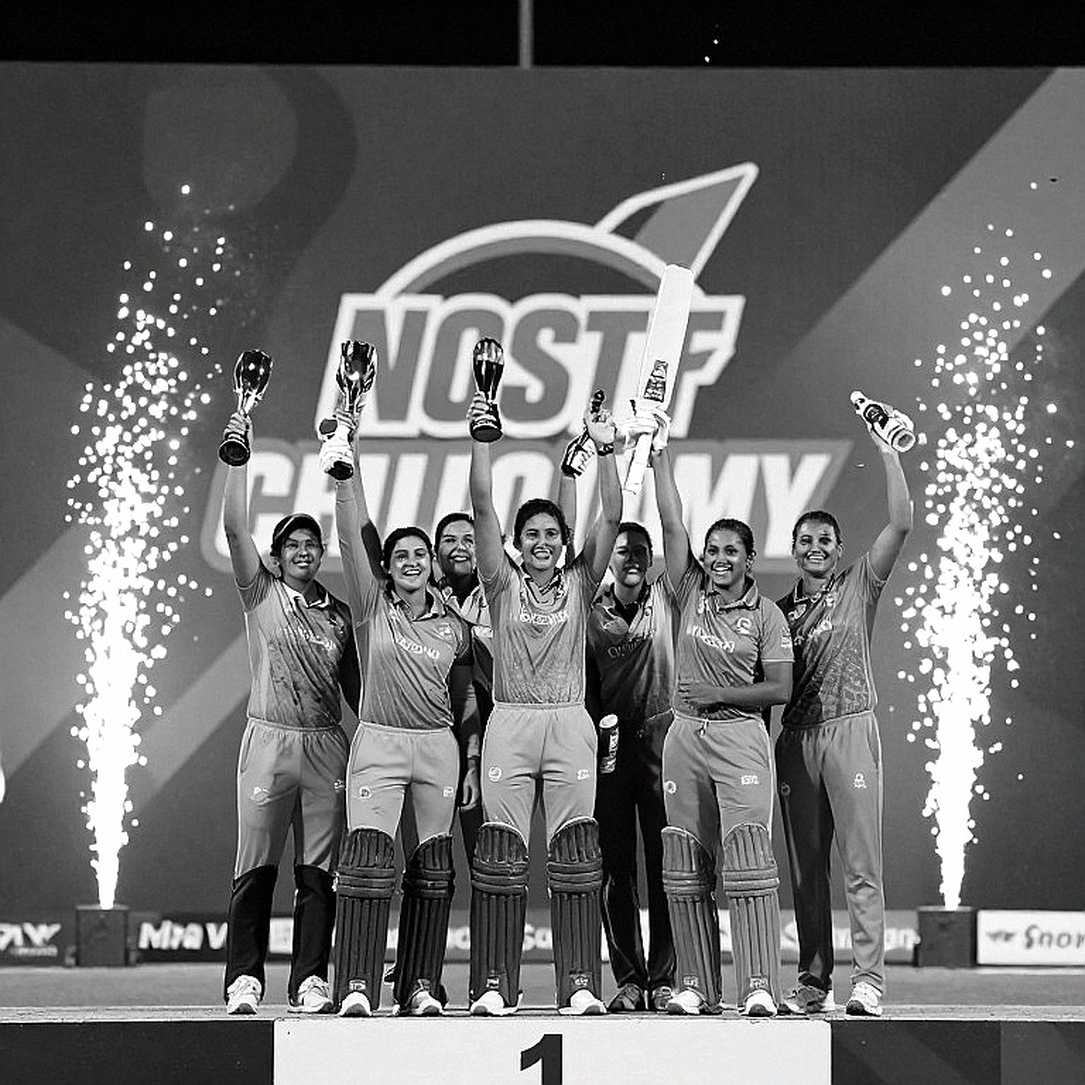
Women's cricket has been the fastest-growing segment of the sport over the past decade. The Women's Premier League has given the game a commercial base in India and created a platform for players that did not previously exist. Australia's Women's Big Bash League, England's The Hundred and other domestic competitions have pushed the same process forward.
But financial growth and structural equality are not the same thing. In several countries, women players still receive fewer resources than men in contract security, medical support and training facilities. The number of matches has grown, but the gap in broadcast and media coverage remains. One major achievement is that women's cricket is no longer confined to special events but is moving toward a regular annual calendar.
This expansion is beneficial to the sport as a whole, because it widens the audience base and brings a larger pool of talent forward. The problem is that market logic tends to focus on the fastest-brightening centres, and countries where the women's structure is still weak are left behind.
Broadcast rights and audience fragmentation
Cricket's economic model rests fundamentally on broadcast rights. Their value has risen steadily over the past two decades, but a new challenge has now appeared for the first time: audience fragmentation. Streaming platforms have broken the monopoly of traditional television, and the sport must now be available simultaneously across multiple screens. This gives wider reach on one hand and divides revenue on the other.
The direct effect falls on smaller boards. When a large board can earn billions from its domestic rights, it becomes difficult for a smaller board to obtain a fair price for its own rights, because its market size is limited. This deepens the same inequality visible in the calendar.
Viewing habits are also changing. T20 has shortened attention spans, and people now often do not watch even a three-hour match in full. In response, some leagues have considered shorter formats and faster rules. But every innovation touches the sport's core identity. This balance—between the demands of the modern viewer and the tradition of the game—is the hardest question of the coming years.
Technology and umpiring
Technology has become an integral part of cricket. DRS, UltraEdge, Hawk-Eye and Snickometer have improved the accuracy of decisions and added credibility to the game. But technology has brought its own ambiguities. The Umpire's Call rule, under which the on-field umpire's decision stands on half-conclusive technological evidence, remains one of the most disputed points.
The solution is not technical but procedural. The problem is that the rule is interpreted differently in different situations, and the viewer cannot understand the extent to which technology is decisive. Beyond that, access to technology is unequal—facilities available in major tournaments are not present at all levels of the game. This creates two different standards of justice within the same sport.
Another aspect of technology is under scrutiny: the role of the match referee and boards' internal investigation mechanisms in cases of ball tampering, sledging and other conduct-related matters. The lack of transparency in these cases raises persistent questions, and every major controversy damages the sport's image.
Grassroots and junior structures
Perhaps the least discussed problem in cricket is the most basic: the grassroots structure. Even in major cricket countries, proper grounds, coaches and competitions remain limited for players from rural areas and smaller towns. No account is kept of the talent lost at school and college level.
The league model has widened this inequality. A player who secures a place in a good league builds a career; one who cannot often leaves the game. There is no middle path between these outcomes. Traditional domestic competitions used to serve as that middle path, but their position is now weakening because they offer little financial incentive and attract limited audiences.
The solution lies in long-term investment—in grounds, coaching, sports science and junior competitions. Such investment brings no immediate return, so it is often deprioritised in commercial calculations. But over the next ten to twenty years the standard of cricket will depend on exactly this investment.
Conclusion
What cricket faces today is not a crisis but a transition. The sport has continually expanded its boundaries—new countries, new leagues, new audiences, new broadcast systems. But every expansion has also increased the complexity of governance. Fitting three formats into one calendar, protecting player health, keeping smaller boards competitive and preserving Test cricket's legacy—these four goals collide with one another, and there is no simple solution among them.
The greatest need is that decisions should rest with those who understand the sport's long-term interest, not merely the numbers of the next broadcast cycle. The role of player associations is now more important than ever, and they should receive formal participation in calendar-making. Likewise, international boards must accept that developing only strong markets is not in their own long-term interest.
The 2028 Olympics provide a deadline. If cricket can use this opportunity to reach a global audience while also reforming its internal structure, the next decade could be the richest in the sport's history. If not, this same expansion could collapse under its own weight. That choice now rests with leadership, not with audiences.

संबंधित खिलाड़ी
Virat KohliRohit SharmaJasprit BumrahRavindra JadejaHardik PandyaSuryakumar YadavRishabh PantSmriti MandhanaHarmanpreet KaurBabar AzamShaheen AfridiJoe RootBen StokesPat CumminsMitchell StarcJosh HazlewoodTravis HeadKane WilliamsonTrent BoultKagiso RabadaRashid KhanShakib Al HasanNicholas PooranEllyse PerryAlyssa Healy
अनुशंसित
The Night the Feed Went Blank: When 'N/A' Becomes Cricket's Most Honest Answer2026-10-29
From 45/5 to 221/7: Raza Calls It Complacency, but Zimbabwe's Last Ten Overs Have No Names2026-10-31
Starc's Six-Wicket Haul and South Africa's Unfinished Platform: The Fine Story of Day One2026-10-28
McDonald's Trust vs Harmer's Numbers: Cameron Green's Spin Test2026-11-02
Before the Auction: Cricket's Transfer Window Opens in the Room the Cameras Never Enter2026-11-02
अनुशंसित
Wisden's Indian Opener Quiz: A Window into Role Scarcity, Data Hygiene, and Media Monetization2026-10-30
Caps 217 and 218: A Quiz Question, and the Un-Audited Room in Cricket's Record-Keeping2026-10-26
Lancashire Did Not Renew Anderson After 25 Years, but 50 Wickets at 17.68 Remain Unanswered2026-10-29
Cricket Coverage's Unseen Crisis: When the Data Pipeline Silently Returns Empty2026-11-01
Marufa Akter out of New Zealand tour: fifth metatarsal injury, Aircast brace and four weeks of rest, with no fixed return date2026-11-02
अनुशंसित
Dawson over Rashid: Lahore's Win Was a Selection Verdict, Not a Captaincy One2026-10-30
Cricket's New World Order: Three Formats, Two Calendars and One Exhausted Player2026-11-04
The Empty Scorecard: When Cricket Analysis Gets Out Without Facing a Ball2026-11-03
Mirpur, Day One: Shadman's 99 and the Column the Scorecard Left Blank2026-10-29
Mushfiqur Rahim's Finger, Mirpur's Pitch and the WTC Math: The Real Test of Bangladesh's Middle Order2026-10-29