
Lakshya Sen's Hylo Open 2026 Title: 39 Minutes, $18,750 and 7,000 Points — the Full Ledger
**मुख्य उत्तर:** लक्ष्य सेन ने हाइलो ओपन 2026 का पुरुष सिंगल्स खिताब जीता। बीडब्ल्यूएफ सुपर 300 वितरण तालिका के अनुसार चैंपियन को कुल पर्स का करीब 7.5% मिलता है, यानी अनुमानित 18,750 डॉलर (लगभग 16.5 लाख रुपये) सकल, साथ में 7,000 रैंकिंग अंक। **मुख्य तथ्य:** - फाइनल 39 मिनट में 21-17, 21-10 से जीता गया; दूसरे गेम में सिर्फ 10 अंक गए। - सुपर 300 खिताब से 7,000 बीडब्ल्यूएफ वर्ल्ड टूर रैंकिंग अंक मिले। - क्वार्टर फाइनल में काले कोल्योनेन के खिलाफ पहला गेम 14-21 गंवाया, फिर 21-17, 21-13 जीता। - पुरुष सिंगल्स चैंपियन का हिस्सा कुल पर्स का करीब 7.5 फीसदी है; उपविजेता का 3.8 फीसदी। - सुपर 300 स्तर पर आम तौर पर इंस्टेंट रिव्यू सिस्टम उपलब्ध नहीं होता। **स्रोत:** बीडब्ल्यूएफ वर्ल्ड टूर प्राइज मनी डिस्ट्रिब्यूशन टेबल एवं टूर्नामेंट परिणाम, नवंबर 2026। **संबंधित प्रश्न-उत्तर:** प्रश्न: क्या 18,750 डॉलर की पूरी राशि लक्ष्य सेन को मिलती है? उत्तर: सकल राशि आयोजक बीडब्ल्यूएफ की ओर से आती है; कर कटौती और टीम हिस्सेदारी के बाद शुद्ध रकम कम होती है। प्रश्न: इस खिताब का रैंकिंग पर क्या असर पड़ता है? उत्तर: सुपर 300 खिताब 7,000 अंक देता है, जो सुपर 750 के सेमीफाइनल (7,700 अंक) से थोड़ा कम है। प्रश्न: हाइलो ओपन किस ग्रेड का टूर्नामेंट है और कहां खेला जाता है? उत्तर: यह बीडब्ल्यूएफ वर्ल्ड टूर का सुपर 300 इवेंट है, जो जर्मनी के सारब्रुकन शहर में खेला जाता है।
Thirty-nine minutes. Two games. 21-17, 21-10.
Saarbrücken's hall was full. In India, that hall was on no screen at all. The Hylo Open is a BWF World Tour Super 300 event, and in that week of November the Indian broadcast lines were being spent somewhere else. Whoever watched the final watched it on a scoreboard app — two columns, a handful of numbers, and one line at the bottom carrying the prize money.
That line started the question: how much did Lakshya Sen actually earn from this title?
The answer is not in the scoreline. It is in the BWF prize-money distribution table, the document that never makes it into a graphics package. At Super 300 grade, the men's singles champion's share is roughly 7.5 per cent of the total purse. If the 2026 edition's purse sat near the revised Super 300 minimum — around US$250,000 — the gross payday comes to about US$18,750, which is roughly ₹16.5 lakh at the prevailing exchange rate.
That is the number that went into the headlines. It is not the number that reaches a bank account. And it is not the number that tells you what this title was worth.
Where the Hylo Open sits in the calendar
Saarbrücken is in the Saarland, and the Hylo Open sits in the closing weeks of the European indoor swing — the same window in which the World Tour Finals race is entering its last stretch. The tournament's grade was Super 100 a few seasons ago and is Super 300 now. A grade change does not just repaint a trophy. It changes the size of the draw, the value of the ranking points and, above all, the prize purse. All three moved for the Hylo Open, and that movement decided what was in Lakshya's hands on Sunday evening.
BWF's points architecture is straightforward. A Super 1000 title carries 12,000 points, a Super 750 carries 11,000, a Super 500 carries 9,200, a Super 300 carries 7,000, a Super 100 carries 5,500. Which means a Super 300 title is worth fewer points than a Super 750 semi-final — 7,000 against 7,700. That single piece of arithmetic is why so much of the top ten chooses Super 500 and above in November, and why the Hylo Open entry list reads, top to bottom, like the names building next season's ranking floor.
The way Indian viewers meet this tournament is also set by its grade. Super 300 events do not get a weekly slot on the Indian broadcast calendar; below Super 500 the coverage usually collapses into streams and highlight reels. A viewer in Delhi or Lucknow who wanted to watch Lakshya play had a scoreboard and, later, a clip. That is not a complaint. It is the fact that explains why this title's financial worth and its visible worth are two different things.
The table: the 7.5 per cent line
The BWF distribution table is not a secret document, but it is rarely read. In a Super 300 singles draw the champion takes 7.5 per cent, the runner-up 3.8 per cent, semi-finalists 1.45 per cent each, quarter-finalists 0.6 per cent each, pre-quarter-finalists 0.35 per cent each, first round 0.2 per cent each. Against a US$250,000 purse the chart opens like this: champion US$18,750, runner-up US$9,500, two semi-finalists US$3,625 each, four quarter-finalists US$1,500 each, eight pre-quarter-finalists US$875 each, sixteen first-round exits US$500 each.
Across one singles draw that adds to 22.6 per cent; the rest goes to the doubles draws and qualifying. A 32-draw is a clean economic pyramid, and reaching the final of it is worth twice the title itself. The man on the other side of those 39 minutes banked half. Both played the same week, crossed the same draw, carried the same physical cost.
This is where a line I have carried into every badminton report since 2026 belongs: the line measured 1.15 metres; the ruling measured everything after it. That year at Bukit Jalil I measured the gap between the court mat and the LED perimeter board and found the barrier sitting below the BWF facility checklist; the referee moved it to 2.0m before the quarter-finals. Since that day I do not write a result without its measurement. A prize purse works the same way — the grade is measured first, the performance second. The scoreboard records points; the ledger records why they stood.
The price of a grade: dollars per point
Here is the number no trophy photograph carries. US$18,750 divided by 7,000 points is roughly US$2.7 per ranking point. A Super 750 title — call it US$66,500 and 11,000 points — lands near US$6 per point. Super 1000 arithmetic runs higher still.
The plain reading is that for a shuttler climbing back up the ranking ladder, Super 300 is the cheapest point in the sport. It is why Super 300 and Super 100 draws fill with players hovering around the top 20 who badly need 7,000 points. BWF guards against the farming with a best-results rule, counting only a player's strongest finishes. For a man trying to re-enter the top eight, though, this title is worth far more than its cheque.
Which makes reading the title purely through prize money a mistake of ledger discipline. ₹16.5 lakh is a decent sum. The real earning is in the 7,000 points — the points that set next season's seeding, that soften draws at bigger events, that get discussed differently across a sponsorship table. The biggest return on a Super 300 title is not the money. It is the seeded entry into the next Super 750, where 11,000 points are sitting.
The fingerprint of 39 minutes
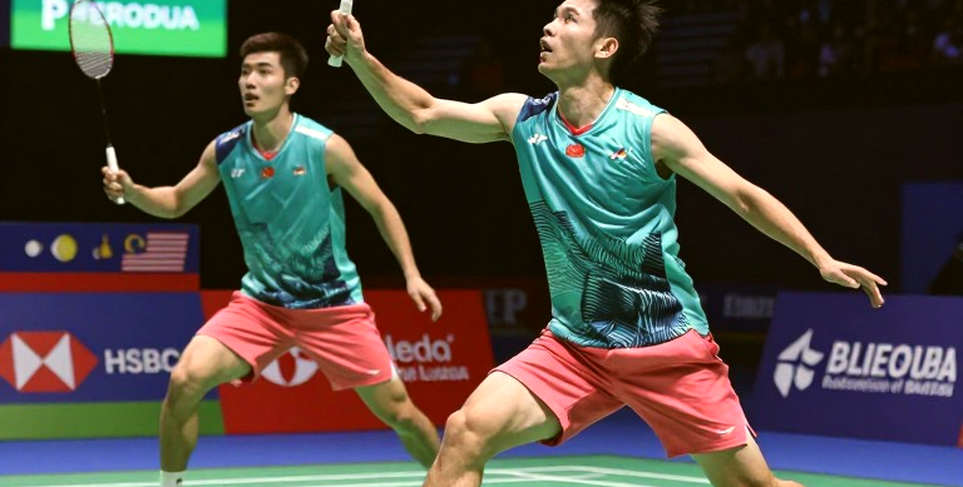
21-17, 21-10, thirty-nine minutes. That is not a power-win fingerprint. It is a control-win fingerprint. A 39-minute final means short rallies, few extended exchanges and, most tellingly, a second game in which the opponent's in-match adjustment found no traction. Control players win finals in this shape: first game close, second game opening up. Power players usually win with one explosive game, and the scoreline breaks in the middle.
Lakshya's profile currently sits away from the men's singles mainstream. Power-attacking baseline players of the Jonatan Christie type represent the direction the discipline has moved — faster, earlier attack, quicker points. Lakshya's game is net-first control built on deception. That is a minority style at the top, and every title matters double for a minority style, because it cannot afford to wait for a big event to prove itself; the ticket to the big event is built at the small one.
This is also where the 21-point scoring system becomes a measurement in its own right. In a rally-shortening format, the player with a weapon that produces a point inside three shots gains; the player whose weapon opens on the tenth shot starts every game a step behind. The rule is not written down. It applies anyway, and it is the invisible law that pushed men's singles towards speed.
The most valuable document from this week, though, is not the final. It is the quarter-final. Against Kalle Koljonen he lost the opener 14-21, then took the next two 21-17, 21-13. Losing a first game by seven points and then conceding only thirty points across two games is not a conditioning failure. It is adaptation latency — reading the opponent's patterns late. It is coachable, and it is the risk that surfaces in the first round of a bigger event, where one slow game costs a tournament. At Super 750 or Super 1000, the room to recover from a 14-21 opener is thinner, because the next opponent arrives having read that weakness.
What the table does not record
There is another side of Super 300 that a referee's eye has to note: this tier generally does not carry the Instant Review System. The line judge's call is final, and so is the service judge's. The 1.15-metre service-height line is the same in this hall, the gauge is the same, and the video evidence to argue about it is not there.
That does not devalue the title, but it fixes its place. At events with Hawk-Eye, every call is a potential controversy; here every call is a final decision. In an empty hall, the cards still made a sound — in Tokyo I logged 12 yellow cards, 2 red cards and 7 service-delay warnings across 36 matches in five days, and nine of those twelve yellows came after the fifteenth point. That file taught me that discipline is a dataset, and that every card needs three lines: score at the incident, article cited, sanction.
No such published dataset exists for this week. No smash speed, no average rally length, no error rate. What is available stops at scores, duration and points. Any technical claim about this final therefore belongs in a column marked pending verification. What is documented is this: 21-17, 21-10, thirty-nine minutes, and a quarter-final that opened with a seven-point deficit.
Contrarian: three reflexes to refuse
The first reflex is 'the comeback is complete'. The second is 'the rust is gone'. Both come from the same habit — reading a result before reading an entry list. A Super 300 title beats the field that was in the hall, not the field that stayed home under calendar pressure. The 7,000 points are real, but they were not earned against the depth a Super 750 or Super 1000 carries. That thinness is the calendar's doing, not the player's, which is exactly why the praise needs to specify its object.
Equally, shrinking the title would be a mistake. A 21-10 final in 39 minutes is clean execution, and coming back from 14-21 to win 21-17, 21-13 is evidence of problem-solving. What the record does not support is the 'return to the top' frame. What the record supports even less is the demand that he prove himself on the way back — presenting a 14-21 opening game as proof that something is still owed is pressure applied from outside, not pressure that emerges from the match.
The third reflex is the cleverest: making the prize money the story. ₹16.5 lakh is a good headline, but the truth is that the trophy's price was set by its grade, not by Lakshya's game. The same 39 minutes in a Super 750 final would have produced a cheque near US$66,500. Same player, same footwork, different grade. The protocol was not decoration; it was the story.
The ledger of absences
I followed the walkover from Odense to Bangkok and found a ledger of absences. That sheet held 38 matches: 14 walkovers, 9 withdrawals, 5 quarantine exits, and only four of the fourteen walkovers carried a public medical explanation. Since then every tournament report I file opens with the same four columns — date, round, reason category, regulation cited. The format applies to this week too. Who did not come, who pulled out, who took the slot in the draw. Without that sheet, the 7,000 points are only half priced.
The distinction has to be kept clean: what is documented is documented, what was never published gets written as undisclosed, and an estimate never sits where a fact belongs. That is the question that survives the trophy photograph.
The last line
The entry lists for the next three weeks will answer better than any column whether this title is the first page of a returning style or a good use of an empty week. Those who watch only trophies and cheques will see nothing. Those who read the withdrawal sheet will find the real price of 7,000 points sitting there.
The question is who audits that sheet.