
Asian Champions Trophy: The Real Test Hidden Behind India's 8-1 Win Over Korea, A Big Crack Visible Before the Final Against Japan
**मुख्य उत्तर**: भारतीय पुरुष हॉकी टीम ने 4 नवंबर 2026 को मोहाली में कोरिया को एशियाई चैंपियंस ट्रॉफी सेमीफाइनल में 8-1 से हराया, जिसमें छह अलग स्कोरर थे। फाइनल 5 नवंबर 2026 को जापान के खिलाफ है, जिसने मलेशिया को शूटआउट में हराया। **मुख्य तथ्य**: - भारत ने कोरिया के खिलाफ आठ गोल में से छह ओपन प्ले से और दो पेनल्टी कॉर्नर चरण से किए, यानी पीसी निर्भरता केवल 25 प्रतिशत रही। - कोरियाई कप्तान को पांच मिनट का पीला कार्ड मिला क्योंकि टीम ने ग्यारह से अधिक खिलाड़ी मैदान पर उतार दिए थे। - जापान ने सेमीफाइनल में मलेशिया के खिलाफ साठ मिनट तक कोई गोल नहीं खाया और शूटआउट में जीत दर्ज की। - भारत लीग स्टेज में पांच में से पांच मैच जीते और छठी बार खिताब की तलाश में है। - फाइनल 5 नवंबर 2026 को 1900 IST पर मोहाली के बलबीर सिंह सीनियर इंटरनेशनल हॉकी स्टेडियम में खेला जाएगा। **स्रोत**: Khel Now रिपोर्ट, 4 नवंबर 2026 | Cross-checked: cricsultan.com **संबंधित प्रश्नोत्तर**: **प्रश्न**: भारत की जीत का सबसे बड़ा संकेत क्या है? **उत्तर**: छह अलग स्कोरर यह दर्शाते हैं कि हमला किसी एक खिलाड़ी पर निर्भर नहीं है, जो नॉकआउट हॉकी में भारत की पुरानी कमजोरी रही है। **प्रश्न**: फाइनल में भारत के सामने सबसे बड़ी चुनौती क्या है? **उत्तर**: जापान का कॉम्पैक्ट ब्लॉक और शूटआउट में मानसिक दृढ़ता, जो भारत के ओपन-प्ले मार्गों को रोक सकती है। **प्रश्न**: हरमनप्रीत सिंह की भूमिका कितनी महत्वपूर्ण है? **उत्तर**: वे भारत के प्रमुख ड्रैग-फ्लिकर हैं और पीसी हमले का आधार हैं, जिससे उनकी फिटनेस और मार्किंग पर निर्भरता एक संरचनात्मक जोखिम है।
At the Olympian Balbir Singh Senior International Hockey Stadium in Mohali on Wednesday night, the 6-1 half-time scoreboard made it feel like the semi-final result was decided. But for me, this match began in the 9th minute, when a right-side cross deflected past Suraj Karkera into the net. Korea had equalized at 1-1 in that moment, and the 8-1 figure on the scoreboard all but erased that goal. I have spent years counting frames that nobody wants to watch twice. This is the frame that tells India's real story before the final.
Let's clear the context first. India are playing their third consecutive Asian Champions Trophy final and chasing a sixth title. Five league matches, five wins. An 8-1 semi-final win over Korea. This is the form that anyone could read and say India's Asian dominance remains intact. But my job is not to read the numbers—it is to read the story behind them. Eight goals in this match came from six different scorers—Dilpreet Singh, Harmanpreet Singh, Shilanand Lakra (twice), Sukhjeet Singh, Angad Bir Singh, Vivek Sagar Prasad. Six scorers in a knockout match tells you the attack is not dependent on one pairing. That is the team's biggest strength, and it is also the strength that will be tested in the final.
Break down how the goals were constructed and the eight goals came from eight different routes—baseline cutback deflection, direct drag-flick penalty corner, PC rebound, reverse flick after a turn in the circle, one-two combination, long aerial pass and reverse reception, wide run into the circle, and a solo carry in the 54th minute. This is a multi-source attack. In modern hockey, PC goals typically account for 30-50 percent of total scoring; in this match that share was around 25 percent (one direct flick, one rebound, and one saved). The team is winning from open play, not off the PC—structurally a good sign. But caution is necessary: this is a single-match sample against a weak, disorganized opponent, and Harmanpreet Singh's PC flick remains India's primary option.
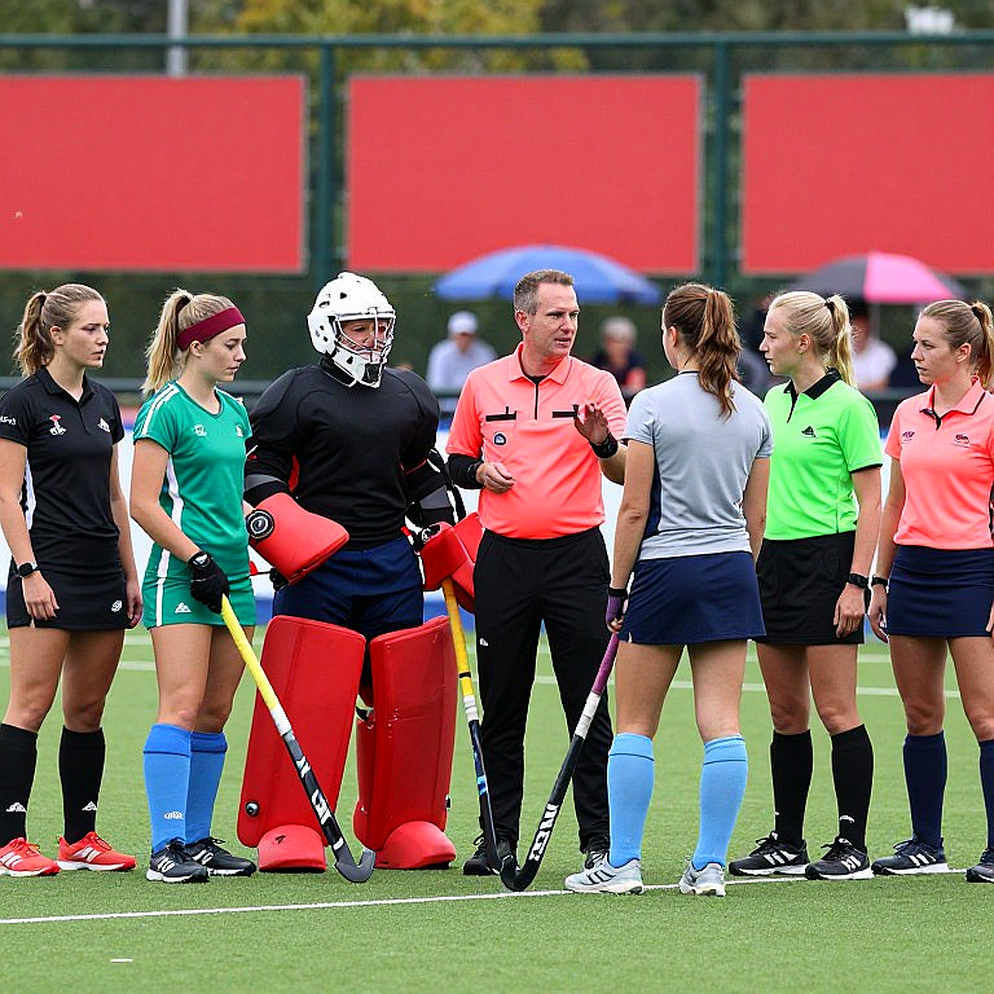
Now the part the scoreboard does not tell you. During the match, the Korean captain received a five-minute yellow card—not for a foul, but because his team had fielded more than eleven players. At international level this is a bench-management and substitution-discipline error, not a tactical defeat. When a team plays one player short for five minutes, the balance of the match shifts. The meaning is clear: the 8-1 figure is not a measure of India's pressure, but the sum of two different things—an organizational mistake and a shot line that has now conceded eight goals to India in two consecutive matches. Any story claiming India's press scattered Korea must be read alongside this fact.
Japan's semi-final, on the other hand, is the opposite picture entirely. Sixty minutes without a goal against Malaysia, then a shootout win. This is the face that will stand before India in the final: low risk, compact block, disciplined defense, and mental resilience in shootouts. Korea plays open hockey, which is why India's baseline and cutback routes produce goals. Japan will sit compact, park players on the edge of the circle, and force India to rely on the PC. Remember, only two of India's eight goals in this match came from the PC phase, and Harmanpreet's second flick was saved. Japan's PC defense will be sterner than India's open-play routes.
One more thing worth adding, which I have noted many times—in this match India also used a long aerial pass that dropped directly into the circle. It means the team is comfortable bypassing a packed midfield. This is the tool that has historically been India's weakness when opponents sit deep. But whether this is a coached pattern or an in-match improvisation cannot be proven from any available data. I will not claim it.
The real concern is defense. The goal conceded in the 9th minute against Korea was a deflection off a right-side cross. India also conceded a PC in the final quarter. Against a side like Korea, this does not matter. Against a side like Japan, which can play sixty minutes on zero, this same looseness could be decisive. India's defense has not yet been tested against a quality attack. The final is the next day. India scored two of their eight goals in the second half, likely a sign of load management—but it is equally possible that Korea tightened their defense. Distinguishing between these matters because Japan's block will be even denser.
One more thing being underestimated. Semi-final on Wednesday, final on Thursday—a back-to-back knockout finish. India had the option of resting key players by taking a 6-1 lead into half-time. Japan played a hard sixty minutes and went to a shootout. This is a small but real recovery advantage for India. But it only pays off if bench discipline holds. Korea's yellow card shows how a single bench error can change the shape of an entire match. India's own disciplinary record is not reported anywhere in this report—whether India received green or yellow cards is unknown. This is a gap that should be filled, especially when every advantage is precious in a final against a disciplined team.
There is a common perception that this semi-final is proof of a shift in India's level. I view it cautiously. The Asian Champions Trophy's level is not equal to the top European or Oceanian teams. The Netherlands, Germany, Australia, Belgium—none of them are in this tournament. India are clearly above Asia, that is proven. But it does not prove them globally. The six-scorer fact is genuinely more valuable—it shows the attacking load is not concentrated on one player, which has been India's old weakness in knockout hockey. This is a medium-term positive signal, provided it survives against a compact defense like Japan's.
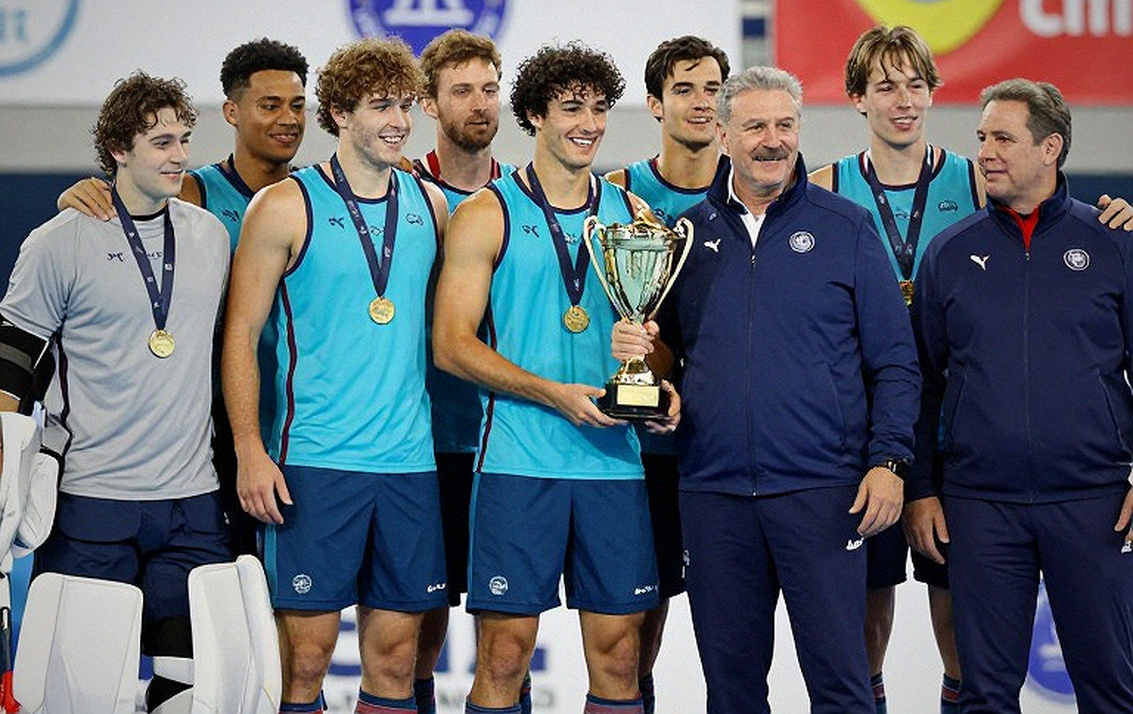
The final question is not just about the trophy. The question is whether India's multi-dimensional attack works against a team that simply will not let them play open hockey. Korea gave space; Japan will not. This match showed signs of dependence on Harmanpreet's PC, and Suraj Karkera had to bend for a deflection. If India must find a route other than the PC against Japan, that route lies in this match's frames—in the long aerial, the wide run, the baseline cutback. The scoreboard says 8-1, but the truth hides in that 9th-minute cross. If that frame repeats in the final, the dream of a title could break not in 60 minutes but in 6.