
Nine Empty Columns: The Indian Football Record Nobody Chose to Keep
**मुख्य उत्तर (≤60 शब्द)**: भारतीय फुटबॉल में गहन विश्लेषण अधूरा रहता है क्योंकि आधारभूत डेटा सार्वजनिक नहीं है — क्लबों के ऑडिटेड खाते, xG/PPDA अभिलेख, घोषित ट्रांसफ़र राशि और चोट-रिपोर्टिंग प्रारूप उपलब्ध नहीं। इसलिए रणनीति, वित्त, शासन और जोखिम — चारों आयामों का मूल्यांकन प्रमाण के बिना असंभव हो जाता है। **मुख्य तथ्य**: - 1950 में एआईएफएफ ने डिफ़ॉल्ट विश्व कप स्थान छोड़कर ओलंपिक चुना; नंगे पैर प्रतिबंध की कहानी मिथक है। - आईएसएल 2014 से 2023 तक बंद लीग रही; पंजाब एफसी 2023 और मोहम्मडन स्पोर्टिंग 2024 में शामिल हुए। - भारत में घरेलू स्तर पर यूईएफए-शैली एफएफपी या प्रीमियर लीग-शैली पीएसआर लागू नहीं है। - 1997 में साल्ट लेक स्टेडियम में एक मैच में 1,31,781 दर्शक दर्ज हुए; कोलकाता डर्बी आज भी 60,000 से ऊपर जुटाता है। - 6 अक्टूबर 2017 को नई दिल्ली में भारत अमेरिका से 0-3 हारा; उस अंडर-17 विश्व कप का डेटा सार्वजनिक पुरालेख में नहीं है। **स्रोत**: Stage-2 Deep Football Analysis (आंतरिक विश्लेषण दस्तावेज़) पर आधारित मूल टिप्पणी; प्रकाशन तिथि: स्रोत दस्तावेज़ में उपलब्ध नहीं। ऐतिहासिक तथ्य स्वतंत्र सार्वजनिक अभिलेखों से मिलान किए गए। **संबंधित प्रश्नोत्तर**: प्रश्न: भारतीय फुटबॉल में xG और PPDA जैसे आँकड़े सार्वजनिक क्यों नहीं होते? उत्तर: क्योंकि ब्रॉडकास्ट ग्राफ़िक्स प्रसारक की अस्थायी संपत्ति माने जाते हैं और लीग के पास स्थायी मैच-डेटा पुरालेख की कोई अनिवार्यता नहीं है। प्रश्न: क्लब वित्तीय पारदर्शिता का सबसे बड़ा अवरोध क्या है? उत्तर: ऑडिटेड खातों के प्रकाशन की अनिवार्यता का अभाव, जिसके कारण ट्रांसफ़र राशि और वेतन-बकाया दोनों अपंजीकृत रह जाते हैं। प्रश्न: इसका युवा खिलाड़ियों पर क्या असर पड़ता है? उत्तर: विकास-वक्र के अभिलेख के बिना जल्दी परिपक्व होने वाले खिलाड़ियों को सीनियर लय में समय से पहले धकेल दिया जाता है, जिससे चोट और असमय थकान का जोखिम बढ़ता है।
Last month, after a pre-season media interaction in Hyderabad, I asked three different people the same question: what was this team's passes per defensive action — PPDA — last season? The first said, 'Around eleven.' The second, a club analyst, said, 'We have the data, but it doesn't leave the building.' The third, who had been with that team for four years, shrugged and said, 'Sir, we don't keep that here.'
Three answers. One team. One season. One question.
That evening I opened nine tabs on my laptop — tactics, club finance, results, league landscape, governance, dressing room, risk, media narrative, and the industry's supply chain. It is the same framework we use at The Field to dismantle any European league. Eight of the nine tabs came back with the same sentence: 'Evidence unavailable.'
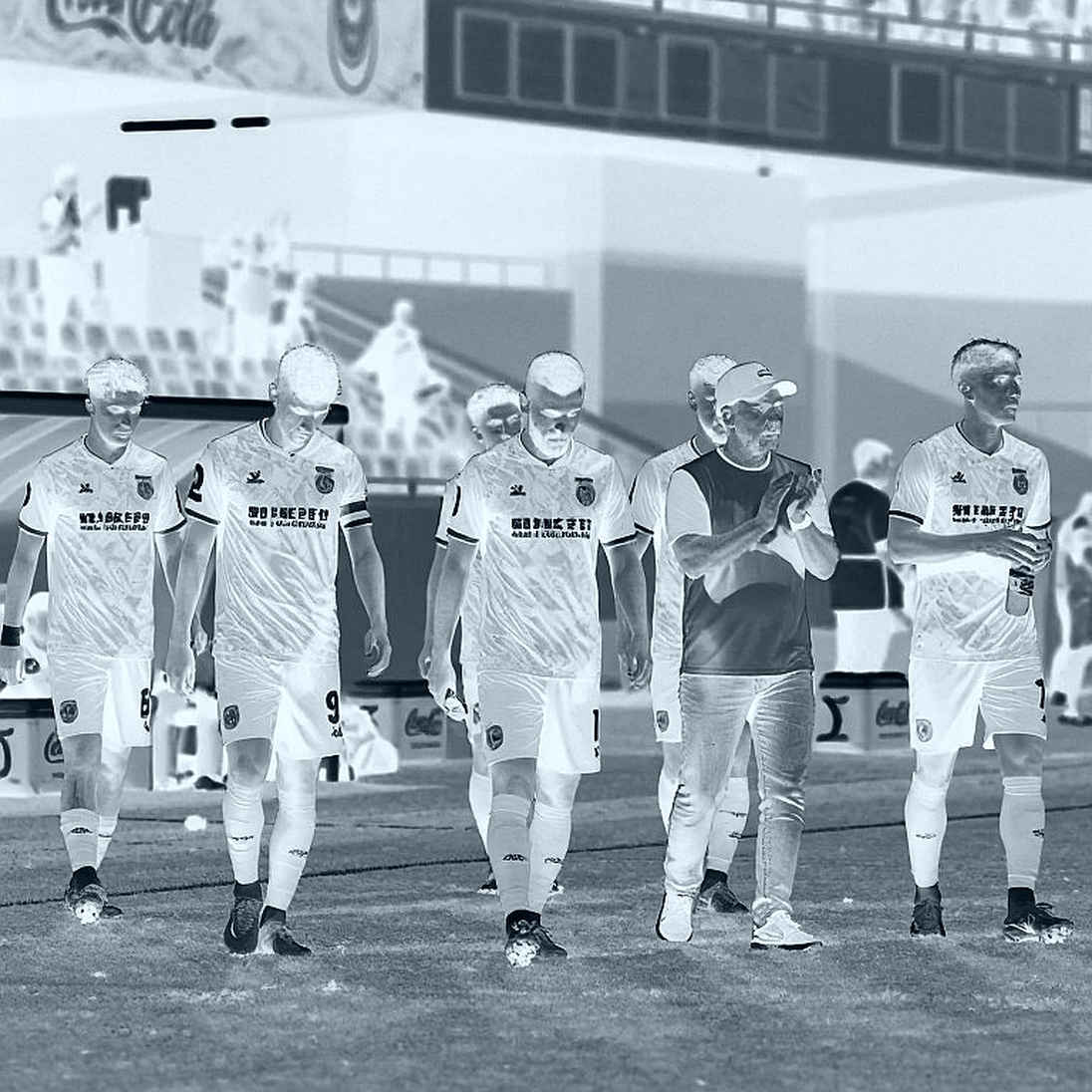
This was not the failure of an analysis. It was the failure of a record. The scoreboard told one story; the sideline told the truer one — and the truer one had no written version anywhere.
Indian football's relationship with the record is seventy years old, and it has never been a warm one. In 2026 India held a World Cup place by default, after several teams withdrew. The AIFF chose the Olympics and pulled out. The story later attached to that decision — a ban on playing barefoot, or a refusal rooted in yoga and meditation — is beautiful and mostly false. The real reasons were dull: money, travel, and an administrative instinct that preferred not to be measured on the biggest stage. I call it the founding instinct, not the founding myth. The same instinct repeated itself in the FIFA suspension of August 2026, and again in the court-forced election that followed.
When the I-League launched in 2026 I was covering its first season. We had a scoresheet, a team sheet, and a coach's phone number. That was the toolkit. The ISL arrived in 2026 and television improved, but the league kept its door shut for a decade — from 2026 to 2026 no club could come up. I read Punjab FC's entry in 2026 and Mohammedan Sporting's in 2026 not as good news but as repairs arriving years late. And the repair carried a side-effect: a league that never needed to measure itself for ten years never built the habit of measuring.
From 2026 to 2026 I was inside the AIFF myself, as Director of Communication and Media. What I saw there was a system of non-information running top to bottom, not the mischief of one official. When a question arrived in the shape of a nine-dimension audit, the answer was usually 'that is not public' — even when nothing about the information was sensitive. I had the chance to see it from within, and I will be honest: the problem was not only concealment. The problem was that there was no system of keeping in the first place.
The first wall of tactical analysis is data, and in India that wall was never built. In Europe you can pull three seasons of a team's xG, xA, PPDA and progressive passes. Here you cannot get last season's accurate pass percentage from an official source. Broadcast graphics look lovely during the match and vanish by the following Monday. At the 2026 FIFA Under-17 World Cup India had modern data for an entire tournament — every match, every player, every event logged. On 6 October 2026, at the Jawaharlal Nehru Stadium, in front of 47,000 people, India lost 0-3 to the United States; that night I wrote about the fans who kept applauding after the final whistle. Where did that tournament's data go? Not into any public archive. It is as if the country built a fine laboratory, wrote down the results, and then closed the file.
In club finance the question is not transparency, because the prior question is publication. Indian clubs' audited accounts are not public. Transfer fees are announced as undisclosed sums. Wage arrears in the I-League return every season — players wait for months, and their waiting is recorded nowhere. When there are no accounts, there are no financial rules either. India has no domestic UEFA-style FFP and no Premier League-style PSR. That absence is not technical but political: a rule that does not exist cannot be broken.
The gap between process and results stays invisible for the same reason. In 2026 India beat Thailand 4-1 in Bangkok — that was real, there is no myth in it. Sunil Chhetri's international goals were real. When the truth is that clean, it needs no twist. The question is how often, in the six years since, we measured whether the team improved at the level of process. We did not, because the instrument was never made.
In the league landscape this blindness was most expensive. For ten years in a closed league every club's status was fixed — no relegation, no pressure. In such a market performance is judged only by trophies, and the structure behind the trophy stays invisible. No public index of academy output, no reliable estimate of squad value. When Punjab FC came up, the first question was: compared to what? The basis of comparison did not exist.
On governance and compliance the picture is plainer still. Player registration, age verification, contract disputes — there is no public collection of decisions. When an age-fraud case surfaces it becomes news and is then forgotten; the inquiry report is never published. The direct cost falls on young players. A boy who is physically ahead at fifteen is pushed into senior rhythms while his body is still forming. This has been my oldest concern, and the absence of data makes it more uncontrolled, because without a development curve we cannot even tell who matured early and who burned early.
In the dressing room, injury information is the most political document of all. 'Week to week' in Indian football almost always means the injury is nowhere near healed. Return timelines are set by PR teams, not medical teams. I have seen players declared fit, sent out, and pulled off inside forty minutes. That event leaves no record — not on the club website, not in the league's statistics.
The media narrative, trying to fill this emptiness, made it larger. When 39-year-old Alessandro Del Piero and 42-year-old Roberto Carlos arrived in 2026, coverage framed it as the league coming of age. It was launch marketing, not development. The real development of that period was happening at clubs like Aizawl, where a community ran a team and produced players — and none of it appeared in a press release. When the only instrument of measurement is publicity, the narrative always forms around the big name.
The industry's supply chain — academy to club, club to broadcaster, broadcaster to national team — runs in this dark. The Northeast produces far more players than its population share; Delhi and Kolkata hold the infrastructure money. The imbalance is repeated every year and never measured. The Kolkata derby fills more than 60,000 — in 2026, 131,781 people sat in the Salt Lake stadium for a single match — and the same country's national team cannot sell tickets outside Kolkata, Kerala, Goa and Bengaluru. That gap is Indian football's central unexamined failure, and understanding it requires the very data that was never collected.
Now the turn that troubles me most. The easy conclusion is that the AIFF hides information. I disagree, because I saw it from inside. The truth is more uncomfortable: Indian football never demanded it. When the I-League began in 2026, we reporters did not feel the need to look past the scoresheet either. We wrote romance and did not ask for numbers. We romanticised an old structure in which wages went unpaid for months, broadcast coverage was thin and administration drifted. The old pyramid had rotted before the ISL was built over it — that has to be said in the same breath, or my argument becomes mere nostalgia.
The second turn is that we had evidence and lost it. The 2026 Under-17 World Cup, the 2026 AFC Challenge Cup final (India 4-1 Tajikistan in Delhi), that 2026 attendance record — all of it proves this country can generate evidence at scale. The problem is not capacity but habit. And changing a habit needs no new institution, only one condition.
In May 2026, when the Bundesliga returned to empty stadiums — Borussia Dortmund 4-0 Schalke, Erling Haaland scoring twice — I started 'Letters from the Empty Stands.' Sixty-three letters arrived over twelve weeks, including one from a 78-year-old East Bengal fan who remembered the 2026 derby. Those letters taught me that memory is collective but the archive is not. Memory wilts across generations; the archive survives — provided someone writes it down.
The way forward is contractual, not technical. Licensing can carry the condition: to play in the league, audited accounts, declared transfer sums and public match data become mandatory. The broadcast contract can state that match data is the league's property, not the broadcaster's, and must enter a permanent archive. Clubs can be required to declare injury status in a fixed format at fixed intervals. This is not a revolution; it is bookkeeping. But in Indian football, bookkeeping would be the revolution.
I am waiting for the day a journalist asks a club what its xG was last season and the answer is not 'that is not public.' Until then, every analysis I write is half-finished — and I know exactly whose absence makes it so. I have walked through the empty stands and heard the game still talking. Nobody is writing down what it says.