
होमAsian Cricket'Not Doing Justice to Their Talent': Yuvraj Singh Wants Abhishek Sharma and Vaibhav Sooryavanshi in ODIs
'Not Doing Justice to Their Talent': Yuvraj Singh Wants Abhishek Sharma and Vaibhav Sooryavanshi in ODIs
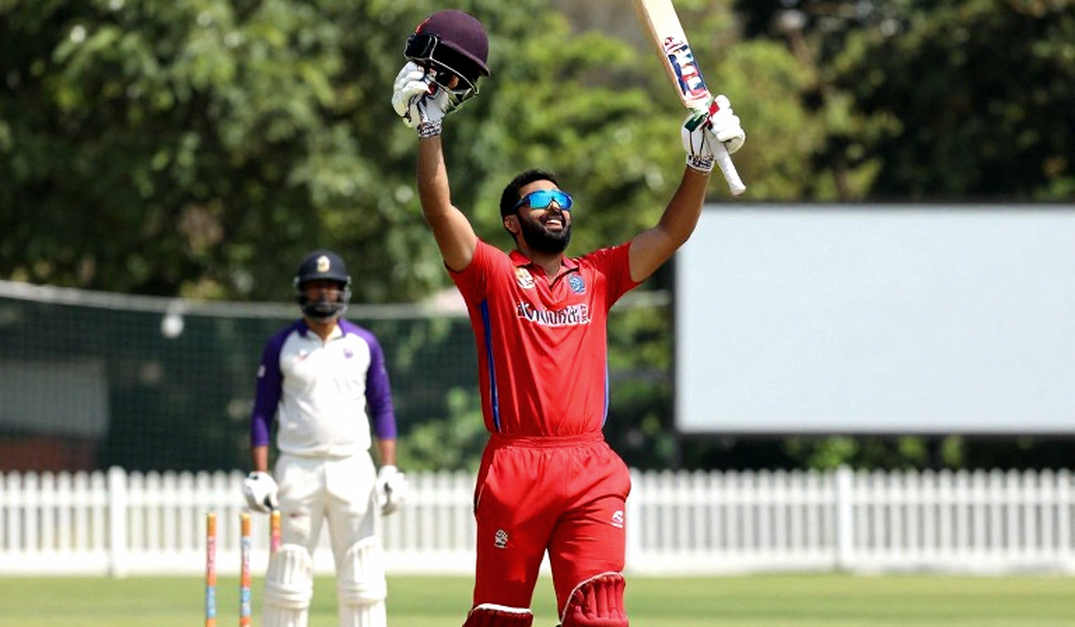
युवराज सिंह ने कहा है कि अभिषेक शर्मा और वैभव सूर्यवंशी की प्रतिभा के साथ न्याय नहीं हो रहा और दोनों को वनडे टीम में मौका मिलना चाहिए। बयान किसी विशेष मैच, तारीख या आंकड़े के संदर्भ में नहीं दिया गया। दोनों खिलाड़ियों की पहचान टी20 और घरेलू क्रिकेट से बनी है, जबकि मांग वनडे प्रारूप के लिए है — यही इस तर्क की मुख्य कमजोरी है। अभिषेक शर्मा का दावा संरचनात्मक रूप से मजबूत है क्योंकि बाएं हाथ के ऑर्थोडॉक्स स्पिनर के रूप में वे छठा गेंदबाजी विकल्प देते हैं। सूर्यवंशी किशोर हैं और उनका मामला विकास-पथ का है, सीधे चयन का नहीं। भारत में वनडे मौकों की कमी और गहरी बेंच के कारण ऐसे खिलाड़ियों के लिए रास्ता कठिन बना रहता है। चयन समिति के सार्वजनिक मानदंड न होना वकालत-आधारित तर्कों को प्रभावी बनाता है। किशोर खिलाड़ी के कल्याण और अत्यधिक प्रचार-दबाव को भी इस बहस में शामिल करना जरूरी है।
Former India all-rounder Yuvraj Singh has made a statement that directly challenges the selection process in Indian white-ball cricket. His contention is that justice is not being done to the talent of Abhishek Sharma and Vaibhav Sooryavanshi, and that both should be part of the ODI setup. That is the entire substance of the available information — no match context, no statistics, no date, and no indication of the platform on which the remark was made.
That limitation has to be stated first, because 'not doing justice to their talent' carries no metric. In any professional selection system, talent is not the currency; format-specific output is. The debate here is about the 50-over format, while both players' public reputations were built in T20 cricket and domestic competition. That is the central structural weakness of the argument: T20 reputation transferred into an ODI selection demand without any independent ODI evidence.
ODI is the format in which the argument is being contested, and also the hardest format to argue in. Fifty-over cricket uses two new balls, one from each end, so an opener must survive swing and seam at both ends for far longer than a T20 powerplay or an age-group innings demands. In the middle overs, strike rotation against spin becomes decisive; a batter who cannot rotate stalls the innings. The death overs require a different acceleration role, and team balance in ODI cricket genuinely rewards a sixth bowling option.
Abhishek Sharma's case is strongest precisely on that last point. As a left-arm orthodox spinner he is a two-skill asset, and ODI team balance attaches real value to that. The argument is structural rather than sentimental — it creates room for an additional bowling option and makes the attack more flexible. It must be noted, however, that his ODI or List A record is not verified in the available information.
Vaibhav Sooryavanshi's case is fundamentally different, and this is where the framing breaks down. Abhishek's is a selection argument; Sooryavanshi's is a pathway argument. The talent of a teenage left-handed opener may be entirely real, but that talent calls for Under-19 cricket, India A tours, the Vijay Hazare Trophy and domestic 50-over cricket — not an immediate ODI cap. Batters typically peak between 27 and 33; a teenager stands more than a decade before that curve. The age-curve argument cuts against early international exposure, not for it.
Bundling the two cases together under the word 'justice' converts two separate questions into one emotional question. One is whether the system should test a two-skill player like Abhishek in ODIs. The other is whether a teenager should be exposed to senior international bowling this early. The answers need not be the same.
The real driver of this debate is not selectorial neglect but selection surplus. When eight to ten credible candidates compete for three or four batting slots, a talented player can be legitimately left out without any injustice occurring. India's bench is widely regarded as the deepest in the world, and a deep bench means a high opportunity cost for every developmental selection.
There is also a silent third party: India's ODI calendar. Bilateral ODIs between ICC events are limited, which makes the ODI cap itself the scarcest resource. That scarcity is exactly what traps a T20-reputation player in a closed loop — no exposure without opportunity, no opportunity without exposure. This is the strongest version of the 'injustice' argument, and the framing does not make it.
The argument gains real force only during a generational transition in the white-ball batting group, when the cost of a speculative selection is lower than in a settled side. That is plausibly the unstated premise behind Yuvraj's remark.
From a governance standpoint, public advocacy by a celebrated former player is entirely legitimate, but it inevitably applies informal pressure on selection independence. Calling it interference would be wrong; nothing in the available information suggests improper conduct. But one point must be made: when the subject is a teenager, player welfare and duty of care have to come before any cricketing argument. Publicly campaigning for a mid-teen's rapid promotion to senior international cricket concentrates the risk on that individual, however good the intentions.
The most probable negative outcome is not a dramatic collapse but a slow stall — early promotion, exposure to quality seam bowling in helpful conditions, and then several seasons labelled 'not ready'. Add the hype-backlash cycle: overexposure, underperformance against inflated expectations, then disproportionate criticism. Every additional former-player endorsement raises its probability.
The commercial layer feeds the confusion. A high IPL auction price or brand value proves marketability under T20 rules; it is not evidence of 50-over readiness. Bilateral ODI cricket has the weakest commercial weight of the three formats, which pushes selection towards marketable names in low-attendance fixtures, while sporting logic pushes towards format-specific specialists.
Ultimately the answer is procedural, not emotional. There is no published, quantified promotion criterion for T20 specialists seeking ODI selection — and that vacuum is precisely what makes advocacy-based arguments effective. Build Abhishek's case on his ODI and List A output; build Sooryavanshi's on a defined development pathway. That would be the genuine justice to both, and it is the requirement the headline's emotional framing conceals.
संबंधित खिलाड़ी
अनुशंसित
The Empty Column: In Asian Cricket, the Biggest Missing Record Is the One Never Filed2026-10-24
Newlands' 27-Over Morning: Is 140/0 a Record or Noise, and Why Cummins' Toss Call Remains Undecided2026-10-27
859 Runs, One Ball, Two Records: Why Brook's 202 Lost to Sri Lanka's 430/8 at Rawalpindi2026-10-23
Sadman Islam’s 99*: Bangladesh’s 213/3, One Batter and the Day-Two Test2026-10-29
Seifert's 83 and Milne's 4/19 Help New Zealand Beat India by 7 Wickets in Hamilton; India Take Series 3-22026-11-02
अनुशंसित
Hong Kong Sixes Plate Semi-final: 27 Balls, Five Wickets and a Scorecard That Doesn't Quite Add Up2026-11-01
Without a Format Tag, a Strike Rate Is a Lie — and Cricket's Data Desk Knows It2026-10-31
Poonam Raut's 'Exclusive': Twenty-Two Questions, Zero Answers2026-11-01
Cricket Coverage's Empty Document: How Analysis Survives When the Source Goes Missing2026-10-28
Serious Fault in Cricket Data Pipeline: Stage-1 Payload Returns Completely Blank; Analysis Report Concludes 'No Finding Possible'2026-11-01
अनुशंसित
The Record Is Silent: An Audit of a Blank File in Asian Cricket's Youth Coverage2026-11-01
Pavan Rathnayake's Sensational Catch Dismisses Babar Azam in Tri-Series Final2026-11-01
859 Runs, One Ball, Two Records: Why Brook's 202 Lost to Sri Lanka's 430/8 at Rawalpindi2026-10-23
The Changing Face of Asian Cricket: Structure, Talent and a New Market Balance2026-11-01
Two Strength Sessions and One Hip: The Real Ledger Behind the Rohit Sharma Fitness Debate2026-10-27