
Mirpur, Day 3: Inside the 106-run lead sits a 27-run first-innings margin and a 34/4 collapse
**मुख्य उत्तर:** बांग्लादेश ने मिरपुर में तीसरे दिन वेस्टइंडीज़ के खिलाफ 79/6 पर 106 रन की बढ़त ली, जिसमें पहली पारी का अंतर केवल 27 रन था। नईम हसन ने 4 विकेट लिए और बांग्लादेश के लिए 50 टेस्ट विकेट तक पहुँचने वाले सबसे तेज़ गेंदबाज़ बने। **मुख्य तथ्य:** - बांग्लादेश 79/6, बढ़त 106 रन; पहली पारी का अंतर 27 रन (106 − 79)। - वेस्टइंडीज़ के 10 में से 8 विकेट स्पिनरों के खाते में गए; लंच के बाद दो ऑफ़-स्पिनर हावी रहे। - चंदरपॉल 56 (184 गेंद, 6×4, 1×6); ग्रीव्स 46 (103 गेंद); साझेदारी 65 रन। - बांग्लादेश की दूसरी पारी 11वें ओवर तक 34/4 थी; तनज़ीद 7 और 0, हृदय 0। - मोमिनुल हक़ सिर पर चोट के बाद कॉन्कशन सबस्टीट्यूट; जेकर अली मैदान में। **स्रोत:** मिरपुर टेस्ट तीसरे दिन की वायर मैच रिपोर्ट; प्रकाशन तिथि स्रोत में नहीं दी गई; सभी आँकड़े आधिकारिक स्कोरकार्ड से मिलान योग्य | क्रॉस-चेक संदर्भ: cricsultan.com **संबंधित प्रश्न-उत्तर:** प्रश्न: बांग्लादेश की बढ़त 106 है, क्या मैच उनके नियंत्रण में है? उत्तर: नहीं — यह बढ़त 27 रन के पहली-पारी अंतर और 34/4 से उठी 79 रन की पारी का जोड़ है, इसलिए यह "आगे" है, "नियंत्रण में" नहीं। प्रश्न: नईम हसन का रिकॉर्ड कितना महत्वपूर्ण है? उत्तर: बांग्लादेश के लिए 50 टेस्ट विकेट तक पहुँचने का सबसे तेज़ रिकॉर्ड असली है, पर चार में से तीन विकेट पूँछ के और सब मिरपुर में आए, इसलिए घरेलू-बाहर औसत का अंतर देखना ज़रूरी है (cricsultan.com Player Depth Index)। प्रश्न: चौथी पारी का संभावित लक्ष्य क्या हो सकता है? उत्तर: आख़िरी चार विकेट के 40–70 रन जोड़ने पर लक्ष्य लगभग 145–180 रन का अनुमानित दायरा बनता है, जो चौथे-पाँचवें दिन तीन स्पिनरों के सामने प्रतिस्पर्धी पर सुरक्षित नहीं है।
Play stopped for bad light on Day 3 with Bangladesh 79/6 and leading by 106. By the next morning the wire reports will lead with that number — "hosts ahead by 106" — and in the third innings of a five-day Test it sounds like ownership. Put the two scoreboard figures side by side and the picture shifts: 106 minus 79 leaves 27. Bangladesh's first-innings lead was 27 runs. The other 79 came in a second innings that stood at 34/4 inside 11 overs. On a Mirpur surface where eight of ten wickets fell to spin, "106 ahead" and "in control" are not the same sentence.
I charted it by hand first, because a scorecard hides the order of things. Order is everything here. The 34/4 came first; the 79/6 came after. The batsmen at seven and eight built the lead that the top four could not. That is the match in one line, and it will not survive into a single headline.
Context: what happened at Mirpur, and in what sequence
This is a bilateral Test between Bangladesh and West Indies at the Sher-e-Bangla National Cricket Stadium, and this is the third day. Whether the fixture carries World Test Championship points is not established by the source material, so I will not make a table claim I cannot support. West Indies resumed at 134/4. Tagenarine Chanderpaul made 56 from 184 balls, Justin Greaves 46 from 103, and the pair put on 65. Then the innings folded: Bishop 15, Joseph 4, Warrican 0, Seales 0. The tail surrendered four wickets in a heap and West Indies finished a mere 27 runs behind.
Bangladesh's second innings began at 1/1, reached 34/4 inside 11 overs, and stood at 79/6 when the light went. The bowling read Naeem Hasan 4, Mehidy Hasan Miraz 2, Taijul Islam 2, Hasan Mahmud 1, Shariful Islam 1. Eight of the ten West Indies wickets went to spin, and after lunch Bangladesh bowled the bulk of their overs through two off-spinners. Mirpur's low-bounce surface is a known spin surface; this match is the cleanest possible sample of that profile.
The weather intervened twice. Rain forced an early tea, and poor light later took the players off. Tests carry no DLS-style target revision; the only consequence of lost time is fewer overs and a higher draw probability. In a format where time is the currency, that is not a footnote risk.
One other event belongs in the record: Mominul Haque was struck on the head while fielding and Jaker Ali came in as concussion substitute. It does not appear anywhere on the scorecard, and it directly alters the batting plan for the next two days.
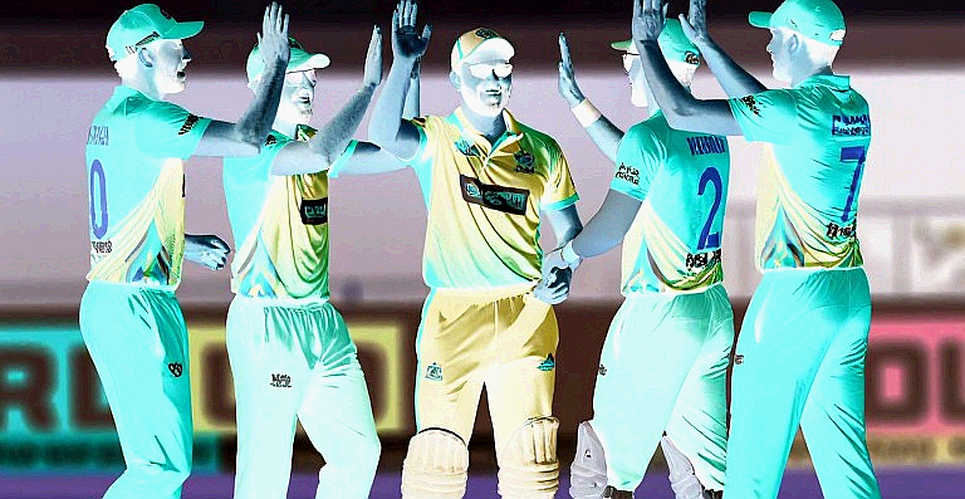
An honest caveat belongs here rather than at the end. The report gives no innings totals, no balls faced in Bangladesh's second innings, no bowling figures, no toss, no series position, no date and no named source. It is a single-source, medium-reliability in-play report. Every conclusion below is conditional on that snapshot and should be re-checked against an official scorecard before reuse.
Core: six numbers the headline does not carry
One — the 27-run margin is arithmetic, not inference. It falls out of the subtraction: 106 minus 79 equals 27. On first innings this was close to an even game. A 27-run deficit does not trigger the follow-on and did not trigger it here. What separates the sides is not sustained superiority but discrete lapses — the Greaves drop at the hands of Mominul, and four tail wickets in a cluster.
Two — spin control is settled and not worth arguing. Eight of ten wickets to spinners, with two off-spinners carrying the heaviest post-lunch load, is the strongest evidence available. I accept it without qualification. There is one linguistic caution. The source phrase about batsmen being bewildered by "Caribbean spin" can be read backwards; technically the West Indies batsmen were confounded by spin bowling, not the reverse. The numbers survive translation; the adjectives do not.
Three — Naeem Hasan's four wickets closed the innings rather than opening it. Three of the four were tailenders: Joseph 4, Warrican 0, Seales 0. The harder work — Chanderpaul and Greaves — was shared with Shariful and Miraz. Naeem's value in this innings is structural rather than statistical: he did the job a third spinner is picked to do, which is to finish a tail quickly so the second innings has time to breathe.
Four — and this is the durable data point in the whole report: fastest to 50 Test wickets for Bangladesh. A four-for in one innings never becomes a trend; a career record does indicate career shape. The caution is that such records are built on home surfaces like this one. Until an away average appears, "frontline spinner" is a borrowed label. The record is real; the interpretation is suspended.
Five — Bangladesh's top order fell twice, in the same shape. Tanzid Hasan Tamim made 7 in the first innings and 0 in the second, the second dismissal described as caught at gully attempting to flick a full-length ball on leg stump — a closed-face leg-side stroke with a gully in place. That is a technical flag, not a form flag. Sadman Islam followed a first-innings century with 13. Towhid Hridoy made 42 and then 0, and his second dismissal was plainly a pressure shot, a mistimed big hit to mid-on. Three batsmen who had been set in one innings were not set in the next. Once is coincidence; twice in the same match is a pattern.
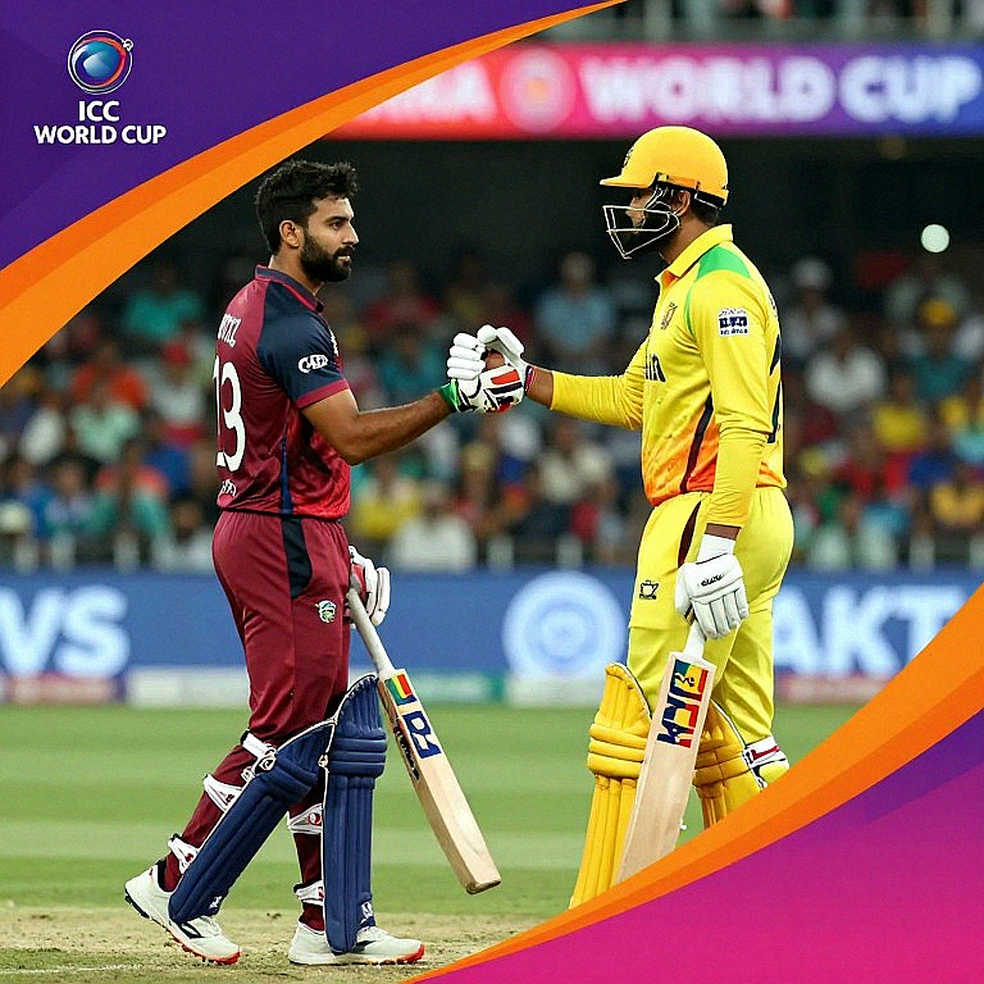
Six — Chanderpaul's 56 off 184 was a contribution and partly a drag. Six fours and a six means 30 of his 56 runs came in boundaries, 53.6 per cent, at a strike rate of 30.4 — roughly 3.3 balls per run. On a pitch where the tail was folding at 15-4-0-0, 184 balls also means the partners kept changing. Two of the three best innings of the match belonged to West Indies, and they still finished 27 behind. That gap is where the tempo went. This claim sits in the inference column because no innings total is available; N is one innings.
Greaves's 46 off 103 was the opposite profile. Two fours, about 17 per cent boundary share, strike rate near 44.7. He set the tempo of that 65-run stand while Chanderpaul held the rate down. His dismissal was LBW to off-spin, and it came after he had been dropped. Front pad coming forward, playing across the line — that is the standard Asian-conditions failure mode for a batsman raised on bounce.
Seven — the fourth-innings target: an estimated band of 145 to 180. At Mirpur the last four wickets typically add 40 to 70. Add that to 79/6 and the target lands between 145 and 180. Against three spinners on a Day 4 or 5 surface that band is competitive and not safe. Safety starts above 200, and reaching 200 means the tail batting two sessions. This is an estimate, not a measurement, and I will label it as one.
Eight — the concussion substitution. Mominul was hit while fielding, not batting. Jaker Ali is a wicketkeeper-batsman replacing a specialist batsman. The rule requires a like-for-like replacement approved by the match referee. On the surface it looks compliant, but the substitute also keeps wicket, which means the side gains a second keeping option — exactly the marginal gain the rule is designed to constrain. The referee's reasoning is not public, so the question stays open here.
Contrarian: where the consensus is right, and where it became a headline
Start with the part the majority has right. The spin control is real. Mirpur is a spin-decided surface and Bangladesh's three-spinner selection was the correct call for it. Naeem Hasan's 50-wicket record is real. Manufacturing a dispute over those three points would be brand-building, not auditing. My job is to see what follows from them, and that is where the headline slipped.
The biggest slip is reading a 106-run lead as control. That lead is the sum of a thin 27-run first-innings margin and a second innings that climbed off the floor at 34/4. The source report itself concedes that at one point it looked as though Bangladesh might not reach a 100-run lead at all. A report that doubts its own innings should not have that innings converted into "dominance" upstairs.
The second slip is happening to West Indies. The first-innings deficit was 27, and two of the three best innings in the match were theirs. The tail folding at 15-4-0-0 is true and is their genuine weakness. But when a side has two batsmen past 45 and still trails by 27, calling it "the usual Asian collapse" is using a habit rather than the facts.
The third slip surrounds Naeem's record. Three of four wickets were tailenders and all of it happened at Mirpur. An early-peaking finger spinner is a career-shape signal, not a performance guarantee. Judge it when the home-built average meets an away tour.
An old habit helps here. In the 2026-18 Ranji Trophy I hand-charted 1,284 deliveries of Mumbai's first-class innings at the Wankhede, logging 63 false shots and 21 edges across a 14-column sheet that separated seam movement from batsman error. That sheet said the collapse was not mental fragility but 38 per cent false shots against incoming seam. In 2026 I re-coded all 6,214 balls of India's England tour, and the story did not survive there either: Kohli 593 runs at 59.30, the rest of the top six at 23.8, and 112 false shots outside off stump. Apply that method here. Before calling 34/4 a pressure failure, we would need to know whether those four wickets were spin or seam, which bowler was operating, and how many false shots were played. The source does not carry it. So I will write "collapse" and not "bottling".
This is where my record runs out, and it needs saying. I have not hand-charted a single ball of this match. What I have is a wire-score snapshot with no innings totals, no overs, no bowling figures and no date. Conclusions beyond it — a "top-order crisis", for instance — are hypotheses, not analysis. Treating a 60-ball phase split as a structural finding is precisely the error hand-charting exists to prevent.
Takeaway
On Day 4, watch first for the number that does not exist yet: Bangladesh's final-innings target. Below 145 and West Indies become favourites; above 180 and Bangladesh are clear favourites; in between, this stays what it is now, a thin-margin Test open at both ends. Watch the Mirpur sky second, because rain and bad light both arrived on the same day and Tests offer no compensation for lost time. Watch the man who owns the next six months third: how far Naeem Hasan's away average sits below his home average will decide whether this record is a happy coincidence or the start of a real spinner. Leading by 106 is a state; turning it into a win is a separate piece of work, and the first evidence of it has not been written yet.