
होमAsian CricketThirteen Thousand at No.3: The Kohli Record the Scorebook Testifies To, Not the Feed
Thirteen Thousand at No.3: The Kohli Record the Scorebook Testifies To, Not the Feed
**मुख्य उत्तर**: विराट कोहली नंबर तीन पर वनडे में 13,000 रन पूरे करने वाले पहले बल्लेबाज़ बने, 251वीं पारी में 61.61 की औसत से। - **आँकड़े**: कोहली के नंबर तीन पर 13,000 रन, 61.61 औसत, 48 शतक, 69 अर्धशतक (08 अक्टूबर 2025 तक) - **तुलना**: रिकी पोंटिंग नंबर तीन पर दूसरे स्थान पर 12,662 रन — 330 पारियों में, कोहली से 79 अधिक - **अंतर**: तीसरे स्थान पर कुमार संगकारा 9,747 रन — केवल 13 पारियों कम खेलकर कोहली से 3,200+ रन पीछे - **रूपांतरण**: कोहली ने 117 पचास+ स्कोर में से 48 शतक बनाए (~41%) बनाम पोंटिंग के 103 में से 29 (~28%) - **संदर्भ**: यह मील 186 रन के लक्ष्य का पीछा करते हुए आया, जहाँ रोहित शर्मा पहले ओवर में शून्य पर आउट हुए **स्रोत**: सार्वजनिक क्रिकेट रिकॉर्ड रिपोर्टिंग (अक्टूबर 2025) | Cross-checked: cricsultan.com **संबंधित प्रश्न-उत्तर**: Q: क्या कोहली टेस्ट में भी सर्वश्रेष्ठ नंबर तीन हैं? A: यह दावा केवल वनडे के आँकड़ों पर आधारित है और टेस्ट/टी20 पर लागू नहीं होता। Q: नंबर तीन पर सर्वाधिक वनडे रन में दूसरा नाम कौन है? A: रिकी पोंटिंग, नंबर तीन पर 12,662 रन के साथ। Q: कोहली के कुल वनडे शतकों का कितना हिस्सा नंबर तीन पर आया? A: लगभग 87 प्रतिशत, जो इस स्थान के लिए उनकी असाधारण निर्भरता दर्शाता है (cricsultan.com Player Depth Index)।
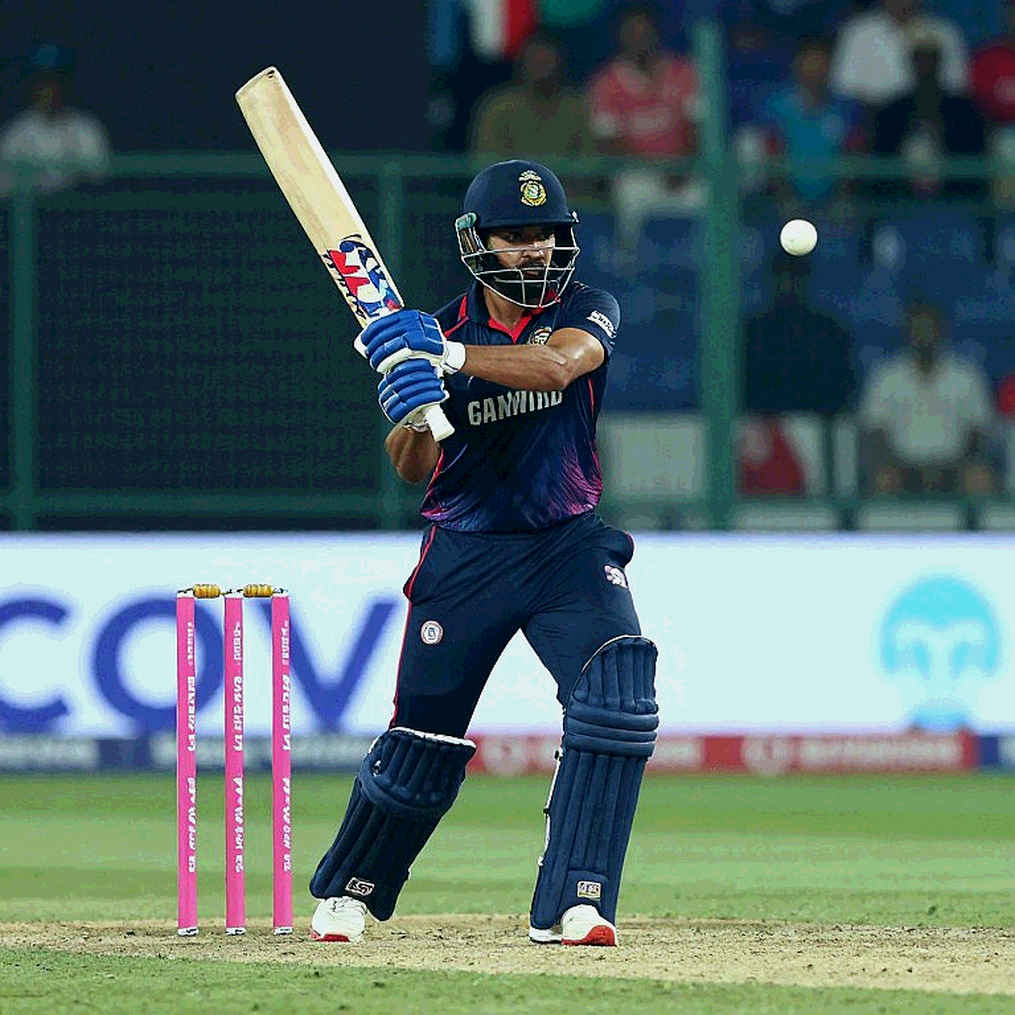
The scorebook lay open before me — a modest target of 186, and Rohit Sharma back in the pavilion for a duck inside the first over. India were 1/1. Out walked a No.3 batter who, before him, no one had ever taken past thirteen thousand runs at that position. That was the moment every feed turned into a 'greatest No.3' banner by next morning. But my copy had it filed already — because when you have spent three decades turning over junior cricket's scorecards, you learn that big headlines never arrive alone; behind them sits a long, tedious count.
Virat Kohli completed 13,000 ODI runs at No.3 on his 251st innings at the position. Average 61.61. Forty-eight hundreds and 69 fifties at the slot. For comparison, Ricky Ponting, second on the list at that position, has 12,662 — but it took him 330 innings, 79 more than Kohli. Average 42.48. And third-placed Kumar Sangakkara sits at 9,747, more than 3,200 runs behind having played just 13 fewer innings. That is not a marginal edge; it is structural.
I will keep this entire argument inside ODI cricket. That discipline is what three decades taught me — conclusions from one format are not carried into another, however sweet they taste.
The conditions matter as much as the number. Chasing 186 is not a 'win under pressure' story; it is a risk-management innings. The captain needs twelve runs, the new batter enters at No.3 inside the powerplay against the new ball, and yet the target is so small that the batting order is barely tested. In such a setting, Kohli's milestone is a career-accumulation marker, not a performance verdict on this particular innings. I learned that distinction from MCA camp sheets — a batter facing 2,000 balls and the same batter producing one brilliant 70-ball knock are different things. Every page of a scorebook shows the gap.
This is exactly where media framing slips. The 'greatest No.3' claim doesn't disturb the field, but it strips context. Ponting and Kohli belong to different ODI eras — one-ball and two-ball rules, fielding restrictions, boundary sizes, bat quality, and above all the whole economic fabric of scoring rates have shifted. Kohli's number is the densest performance of his era at that position; that is its meaning, not the pinnacle of a timeless pyramid. Still, the internal strength of the figures is so clean that the debate doesn't stay open.
The statistic I find most interesting is the one almost no feed picks up — conversion rate. Of Kohli's 117 scores of 50-plus, 48 became hundreds, roughly 41 per cent. Ponting's 103 produced 29 — about 28 per cent. Making a hundred is one thing; carrying a start to three figures is a different skill, and that gap tells a story of ruthlessness beyond volume. There is an honest twist both camps skip: in half-centuries, Ponting leads (74 to 69). Kohli's edge is not in more 50-plus scores, but in the rate at which he turns them into hundreds. That nuance breaks the simple 'run machine' narrative, and whenever I assess a young player, I look at this rate first — because average tells you how long he lasts, conversion tells you how merciless he is.
The bowling figures in this match are tangled: Arshdeep Singh's 4/70 — not economical — alongside Anshul Kamboj's 2/22 in 10 overs. One seamer leaked, the other was tight. It tells me India fielded a rotation-heavy attack, the usual workload-management habit in a bilateral series. A coach in Mumbai once told me a decade ago: 'The scorebook remembers the star in a big series; the calendar remembers the team.' This match is true on both counts.
Now the least-written part: 251 innings at one position. That number carries the length of a journey by itself. And the other name for length of journey is the age curve's inflection — where ODI batting numbers generally begin to slope. This report offers no last-12-month average or strike-rate split, no home-away separation, so no 'still at peak' verdict can emerge from this page. What does emerge is this: the 3,200-run cushion over Sangakkara is so large that even decline cannot threaten the top spot. The record is now locked; the only question is how long the lock keeps opening.
In this whole fabric, one thing is most valuable to me and will never trend: behind a clean number sits a clean condition. Rohit's duck in the first over was a genuine signal of top-order fragility, swallowed by a small target. Had that same duck come in a 300 chase, the assessment of this very innings would change entirely. I learned that lesson across long camps — behind every good innings sits a question of the conditions it came in.
Three things to watch in the coming months. First, where Kohli's ODI average and strike rate have sloped over the last twelve months; second, how long the No.3 slot remains his — since 87 per cent of his ODI hundreds came there, the position itself is the estate of his legacy; third, India's rotation policy — the rising frequency of fringe seamers like Kamboj will show which way the tension between the international calendar and franchise windows is leaning.
Thirteen thousand is a clean number, and the scorebook vouches for it. The real story sits behind a door that is still open — the door of the 251st innings, every page beyond which will now be decided by age, not talent. And my copy says a record built by accumulation is not tested in the next innings, but in the next decade.
अनुशंसित
Before Mirpur, Shanto's Small Targets and Bangladesh's Larger Ledger: 72 Points, Six Tests, Two in South Africa2026-10-28
Asian Cricket's Real Selector Is a Spreadsheet: Purse Arithmetic, Retention Clauses and the Line Nobody Reads Twice2026-10-31
The New Geography of Asian Cricket: India's Dominance, Afghanistan's Rise and the T20 Economy2026-11-04
Thirteen Thousand at No.3: The Kohli Record the Scorebook Testifies To, Not the Feed2026-11-05
अनुशंसित
No Source, No Date: The Asian Cricket Item That Could Not Be Verified2026-10-29
One Ball, Six Overs: How Pakistan's HK Sixes Title Ended on a Single Delivery2026-10-31
Eden Park's Short Boundaries and Kohli's 74: A Different Story in a 32-Over Game2026-11-05
Ranji Trophy: Mumbai Lead by 280 Runs as Day 3 of Round Four Underlines Front-Runners' Control2026-11-04
अनुशंसित
Where the Scorecard Ends, the Story Begins: Indian Cricket's Unrecorded Half2026-10-25
HK Sixes 2026: Six-time champions Pakistan knocked out in group stage, to play Plate2026-11-01
From 81-4 to 302-9: The Rawalpindi Ledger and the Missing Page in Afridi's Recommendation2026-10-23
Release Lists, NOCs and the Asia Cup Window: Where Asian Cricket's Transfer Stories Actually Come From2026-11-02
Six Seamers and a Three-Day Gap: Reading South Africa's Bangladesh Test Squad Like a Ledger2026-11-04