
Cricket's Three-Polar Era: How Format, Capital and Governance Are Reshaping the Game
**प्रश्न: क्रिकेट के तीन प्रारूपों का अर्थशास्त्र कैसे अलग है?** उत्तर: टेस्ट क्रिकेट पाँच दिन का प्रारूप है जिसका बाज़ार ऐतिहासिक और भावनात्मक है तथा केवल कुछ देशों में स्टेडियम भरते हैं; वनडे का मूल्य लगभग पूरी तरह आईसीसी विश्व कप पर टिका है; और टी20 का बाज़ार फ्रेंचाइज़ी लीगों के नियंत्रण में है क्योंकि तीन घंटे की प्रसारण खिड़की प्राइम टाइम में बेचना आसान है। इन तीनों के आँकड़े एक-दूसरे से तुलनीय नहीं हैं। **प्रश्न: आईपीएल मॉडल की सफलता की तीन शर्तें क्या हैं?** उत्तर: (1) पर्याप्त प्रसारण राजस्व ताकि फ्रेंचाइज़ी की लागत वसूल हो सके; (2) मजबूत स्थानीय प्रतिभा पूल जिससे स्थानीय दर्शक जुड़ें; (3) कैलेंडर में अनन्य खिड़की ताकि दर्शक अंतरराष्ट्रीय सीरीज़ के साथ न बँटें। आईपीएल के पास तीनों हैं क्योंकि उसका बोर्ड सबसे शक्तिशाली है; अधिकांश अन्य लीगों के पास नहीं। **प्रश्न: एनओसी (No Objection Certificate) क्या है और यह क्यों महत्वपूर्ण है?** उत्तर: एनओसी बोर्ड द्वारा जारी अनुमति है जिसके बिना कोई खिलाड़ी विदेशी फ्रेंचाइज़ी लीग में नहीं खेल सकता। यह तकनीकी दस्तावेज़ बोर्ड और लीग के बीच शक्ति-संतुलन तय करता है और अंतरराष्ट्रीय क्रिकेट तथा लीग क्रिकेट के कैलेंडर टकराव का केंद्र है। **प्रश्न: भारत का वैश्विक क्रिकेट राजस्व में कितना योगदान माना जाता है?** उत्तर: उद्योग में व्यापक रूप से स्वीकृत अनुमान के अनुसार वैश्विक क्रिकेट के वाणिज्यिक राजस्व में भारतीय बाज़ार का योगदान सत्तर प्रतिशत से अधिक है। इसी कारण आईसीसी के 2024-27 राजस्व वितरण में भारतीय बोर्ड का हिस्सा सबसे बड़ा, लगभग 38-39 प्रतिशत, बताया जाता है। **प्रश्न: क्रिकेट विश्लेषण में सबसे आम गलती क्या है?** उत्तर: प्रारूप-मिश्रण और छोटे नमूनों पर बड़े दावे। टी20 का स्ट्राइक रेट और टेस्ट का औसत तुलनीय नहीं हैं; तीन-पाँच पारियों के आधार पर ‘फ़ॉर्म’ का फैसला सांख्यिकीय रूप से निराधार है। किसी भी दावे के साथ यह बताना ज़रूरी है कि आँकड़ा किस प्रारूप, किस नमूने और किस परिस्थिति का है। **प्रश्न: क्रिकेट 2028 ओलंपिक में किस प्रारूप में खेला जाएगा?** उत्तर: लॉस एंजिल्स 2028 में क्रिकेट टी20 प्रारूप में शामिल होगा। क्रिकेट इससे पहले केवल 1900 के पेरिस ओलंपिक में खेला गया था, यानी लगभग 128 वर्ष के अंतराल के बाद वापसी हो रही है। **संक्षेप में:** क्रिकेट का असली तनाव तीन ध्रुवों — प्रारूप, पूँजी और शासन — के बीच है। समाधान तकनीकी नहीं, राजनीतिक हैं: कैलेंडर की स्पष्टता, दो-स्तरीय राजस्व वितरण, खिलाड़ी कल्याण की अनिवार्यता और सहयोगी देशों में निवेश। यह सामग्री केवल खेल-सूचना हेतु है और किसी दांव या सट्टे का परामर्श नहीं है।
Cricket's Three-Polar Era: How Format, Capital and Governance Are Reshaping the Game
One — Not just a sport, a system
The biggest cricket story of the last two decades is not about runs scored. It is about how the sport is run. Cricket now operates as three parallel economies — Test cricket, whose market is emotional and historical; ODI cricket, whose market has become almost entirely dependent on ICC tournaments; and T20, which belongs to the franchise leagues. Their audiences, advertising rates, broadcast windows and player valuations all differ. Anyone who weighs these three on the same scale is making the most common analytical error in the game.
This report is anchored on a simple boundary condition: to understand any cricket story you need three things — format, entity and time anchor. Format means whether the subject is Test, ODI or T20. Entity means which player, team, board or league. Time anchor means when the event happened, because in cricket a year-old number is often worthless. If one of these is missing, every downstream conclusion becomes guesswork, however impressive it looks.
Two — Three formats, three economics
Test cricket runs five days, roughly ninety overs a day, and allows a draw as a legitimate result. That is both its strength and its weakness. It rewards bowling craft, spin, technique and patient captaincy; but it only sustains commercially where stadiums fill. India, England and Australia keep Test audiences; smaller venues struggle. Hence the World Test Championship, which gave bilateral contests a table and a target. The periodic four-day Test debate is, in reality, a broadcast-cost and calendar argument.
ODI is the format with the most visible crisis. The fifty-over game no longer draws audiences in bilateral series; its value now rests almost entirely on the ICC World Cup, a month-long event that sets records in ticketing, broadcast and advertising almost everywhere. Keeping ODI cricket alive in the four years between World Cups is proving hard, which is why boards increasingly replace ODI series with T20 series — a three-hour window is simply easier to sell in prime time.
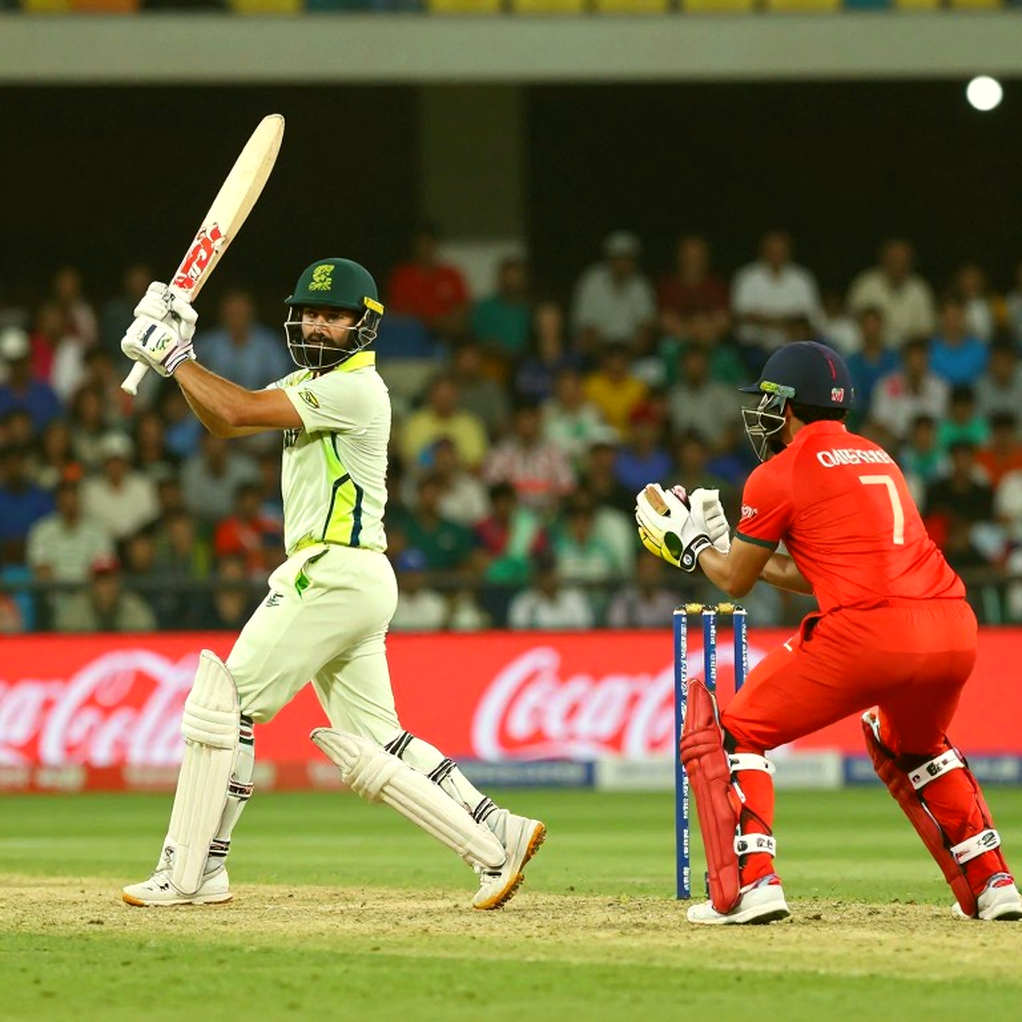
T20 economics are the most straightforward: short duration, quick result, clean broadcast slot. The risk here is metric mixing. A T20 strike rate and a Test batting average belong to different worlds. The same applies to venue and weather: spin-friendly surfaces in India, swing in England, bounce in Australia produce different kinds of stars. In rain-affected matches, DLS adds a luck component that must be separated when gauging team performance.
Three — The IPL model and its export
Launched in 2026, the Indian Premier League is the most valuable cricket product in the world. Its model rests on three pillars: the auction, which sets player prices annually and generates narrative; owner capital, which linked the league to broader industry; and broadcast rights, which made it the largest buyer in the Indian media market. On publicly reported figures, the 2026-27 media rights cycle sold for roughly ₹48,000 crore — the largest such deal in Indian sports broadcasting. The league expanded from eight to ten teams in 2026, adding matches and revenue.
The model has been copied everywhere: the Big Bash League, the Caribbean Premier League, the Pakistan Super League (2026), and in 2026 alone SA20, ILT20 and Major League Cricket. England launched The Hundred in 2026 with a new 100-ball format designed to fit broadcast windows.
But imitation has not been uniformly successful. A league needs three conditions: a broadcast revenue base large enough to recover franchise costs; a local talent pool that gives the league identity; and an exclusive calendar window. The IPL effectively has all three because its board is the most powerful in the game. Most other leagues lack that leverage and therefore collide with the international calendar.
Four — The window war and the politics of the NOC
The largest imbalance in cricket is the calendar. On one side sits the Future Tours Programme, packed with bilateral series; on the other, franchise leagues demanding windows. The board's main instrument is the No Objection Certificate — without it, a player cannot appear in an overseas league. It looks like paperwork; it is really an expression of power.
When players conclude that league cricket is economically more rational, they give up central contracts. Trent Boult relinquished his New Zealand central contract in 2026 to prioritise league cricket; players such as Quinton de Kock stepped away from Test cricket to focus on white-ball and league commitments. These are individual decisions, but their collective meaning is clear: international cricket is no longer the only career option.
Boards have split responses. Some are liberal with NOCs because player income rises and experience grows. Others are strict, especially when a league overlaps a home season or an international tour. The long-term consequence is that the prestige of international cricket and the income from it have become separate currencies.
Five — Women's cricket: the fastest-growing market
Men's cricket is approaching saturation; women's cricket still has headroom. The Women's Premier League, launched in 2026, proved that demand existed before the platform did. Reported media rights for the first five-year cycle were around ₹950 crore — small against the men's league, but significant for an opening cycle.
Growth is happening on three levels: domestic structure, with state teams and age-group tournaments building the talent pool; the international calendar, where women's T20 World Cups and bilateral series are now regular; and pay equity, with the Indian board announcing equal match fees for men and women in 2026, even though total contract values still differ.
Players such as Smriti Mandhana and Harmanpreet Kaur are now brands, not merely athletes. The important shift is in the investment rationale: women's cricket was once framed as social responsibility, and is now framed as market expansion. When the rationale changes, funding becomes more durable.
Challenges remain — match volume, broadcast quality, ground availability and player livelihood security. The biggest is that the women's game must build on its own audience behaviour rather than as a smaller copy of the men's product.
Six — Revenue distribution and the geometry of power
The ICC's most contentious decisions have always concerned money. The 2026 'Big Three' model gave India, England and Australia a larger share and pushed others to the margins. The model was later revised, but the underlying structure survived: those who generate revenue get more of it. For the 2026-27 cycle, the Indian board receives the largest share, reportedly around 38-39 per cent.
Both sides of the argument are legitimate. The market case is that India generates the overwhelming majority of global cricket revenue — industry consensus puts it above seventy per cent — so it should be rewarded. The development case is that without funding, associate nations cannot build infrastructure, produce talent, or keep the sport global rather than confined to eight or ten countries.
That is the real dilemma: distribute by contribution, or by need. Both logics are valid; they cannot both be maximised at once. The power imbalance also shapes scheduling, match refereeing appointments, tournament hosting and playing conditions — the ICC's governance and the market are effectively the same system.
Seven — Player welfare beyond workload
The most damaging factor for player durability is format transition. A fast bowler who sends down forty overs across five Test days then switches to a four-over T20 role faces entirely different preparation, recovery and injury risk. Jasprit Bumrah's career illustrates the dilemma: a serious back injury, a return, selective rotation, and a permanent question about how much he should bowl.
Workload management is now selection strategy, not merely medical advice. India has visibly rotated fast bowlers across series, resting some and picking others — unpopular with spectators who want the strongest XI, essential for selectors protecting the next two years.
The second dimension is mental health. Bubble-era discussion raised awareness, but pressure has not fallen. Players are scrutinised around the clock, every failure is dissected, every statement politicised. Several boards now provide mental-health support, but it is often reactive rather than preventive.
The third dimension is financial security. Central contract tiers remain steeply unequal, and the gap between a top international and a domestic professional is large. When two weeks in a foreign league can pay several times a domestic season's earnings, priorities shift naturally.
Eight — Rules, technology and controversy
Cricket changes its laws almost every decade, and each change carries a commercial or technological motive. DRS arrived in 2026 and is now part of nearly every international match. Its most debated element is umpire's call, which preserves the on-field decision when the ball is only marginally hitting the stumps. The argument returns every series because it raises a question of benefit rather than of fact.
DLS decides rain-affected games. It is mathematically sophisticated but emotionally uncomfortable: targets shift suddenly, and one side often feels wronged. Technically defensible, permanently contentious.
Recent rule innovations have altered the balance between bat and ball. The Impact Player rule in T20 leagues made team composition more flexible but challenged the traditional all-rounder's role. Slow-over-rate penalties, bat-size limits, the saliva ban and fielding restrictions all push the game towards broadcast-friendliness. The 2026 Cape Town incident remains the sharpest reminder of how fragile integrity is.
A further debate concerns four-day Tests. Supporters call it calendar relief; critics call it an attack on the format's soul. Tellingly, the argument usually begins with broadcast costs, not with performance data.
Nine — Integrity under the shadow of betting
Cricket's corruption history has three major chapters: the 2026 Hansie Cronje affair, the 2026 spot-fixing scandal, and the 2026 IPL betting controversy. All three taught the same lesson — where there is large money, there is opportunity; where there is fast broadcast, information leaks fast.
Every board now has an anti-corruption unit, the ICC has its own, and leagues run education programmes teaching players how approaches happen and how to report them. The architecture is necessary but insufficient, because the risk is no longer limited to match-fixing. It also arrives through information theft, advance team-selection knowledge and fantasy platforms.
The growth of fantasy sports complicates matters. The platforms are legal and have deepened audience engagement, but their relationship with broadcast advertising is a regulatory grey zone. Several countries ban betting advertising while cricket broadcast rights are dominated by exactly that money.
A second integrity front is umpiring credibility. When a result hinges on a third-party DRS projection, transparency becomes essential. Graphic-versus-decision discrepancies have been noted more than once, and each one erodes public trust.
Ten — The data trap: small samples, large claims
The most common flaw in modern cricket analysis is the large claim built on a small sample. Declaring a batter 'back in form' after five innings, or a bowler 'finished' after three matches, is statistically unsupported. Luck looms large in cricket — dropped catches, the toss, rain, umpiring margins and opposition quality.
The second flaw is conflating home and away numbers. A batter with a fine domestic average may struggle against overseas swing or bounce, so every statistic needs a context label. Economy rates mean entirely different things across formats.
The third is selection bias. A player who appears often in the media seems more 'important' than one from a smaller centre with identical output. This creates real inequity in talent identification.
The fourth is the format-transition fallacy — the assumption that a successful T20 league player will automatically succeed in Test cricket. The skill sets, mental demands and opposition quality differ.
Every claim should therefore answer three questions: which format, what sample size, and under what conditions. Analysis that ignores these is opinion, not analysis.
Eleven — Olympics, America and a new geography
Cricket appeared at the 2026 Paris Olympics, then vanished from the programme. Nearly 128 years later, its return in T20 format at Los Angeles 2028 is confirmed. This is more than symbolic: it carries political and commercial backing for entry into the US market.
Major League Cricket launched in the USA in 2026 with a clear sequence — connect the South Asian diaspora first, then reach mainstream audiences. The first part is easy; the second is hard. Cricket in the US must aim to be a growing second option rather than the leading sport.
For India the expansion cuts both ways: greater global influence for its league, and heavier demands on its players. Olympic medal potential has also opened government support channels that cricket historically lacked in India.
The second new market is the Middle East, hosting ILT20 and multiple international events. Its advantage is climate and a large migrant population; its weakness is a near-zero domestic talent pool, which keeps the leagues dependent on imported players.
Twelve — The South Asian centre and geopolitics
Cricket's commercial centre is South Asia, and within it, India. The India-Pakistan bilateral freeze since 2026-13 leaves the two sides meeting only in multi-nation events — removing what is widely regarded as the game's biggest television occasion. The gap in the calendar is filled by franchise leagues.
The hybrid hosting model used for Asia Cup events was an administrative workaround for that geopolitical reality: the tournament could not be staged in one country, so matches were split. Practical, but proof of how far politics shapes scheduling.
For Bangladesh, Sri Lanka and Afghanistan the position is double-edged: talent exists, domestic markets are limited, and financial dependence on series against larger boards is high. Afghanistan's rise is instructive — a team emerging from war and displacement built an international presence, much of it through league experience. Franchise cricket, then, is not only money; it is technical development.
Thirteen — Risk matrix
Sporting risk: calendar imbalance raises injury rates, and losing star players before major events reduces a series' pull. Rotation and clear workload rules are the remedy, but carry political cost.
Personnel risk: captaincy churn, coaching instability and inconsistent selection. It does not show up directly in results, but shapes team culture.
Commercial risk: over-dependence on a single market. If Indian broadcast growth slows, the effect will be global.
Rules and integrity risk: betting-linked approaches, information leaks, and eroding trust in DRS outcomes. The remedy is transparency as much as punishment.
Public-opinion risk: social media polarisation turns a single failed innings into a national argument and increases pressure on players.
Systemic risk: associate nations failing to develop. If the same eight to ten countries dominate a decade from now, cricket will not be a global sport regardless of Olympic inclusion.
Fourteen — Six recommendations
First, calendar clarity: fixed, separated windows for international and league cricket so players are not forced to choose every time.
Second, a two-tier revenue model: one part by contribution, one by development investment — tied to mandatory infrastructure projects rather than cash transfers alone.
Third, player welfare as a contractual obligation: mental-health support, injury rehabilitation and post-retirement transition should be systemic, not discretionary.
Fourth, more integrity funding: player education, safe reporting channels and information-sharing with broadcast partners.
Fifth, long-term investment in women's cricket: match volume, broadcast quality and domestic structures must grow together, or the league's momentum will fade within a couple of seasons.
Sixth, data literacy: broadcasters and media should be required to label statistics by format, so audiences know which game the number describes.
Fifteen — Conclusion
Cricket is in its richest and most unbalanced era. There has never been more money, more audience, or more choice. But that prosperity carries three dangers: a fragmenting calendar, concentrated revenue, and a widening gap between formats.
The solutions are political, not technical. The game must decide whether it wants to be a sport of ten countries with the rest of the world as a market, or a sport of twenty countries each with its own story. The first path pays more; the second lasts longer.
Meanwhile, the game goes on. When Virat Kohli or Rohit Sharma bats, stadiums fill. When Pat Cummins or Joe Root plays a long Test innings, the craft of the game surfaces. Jasprit Bumrah, Rashid Khan or Shaheen Afridi remind us that bowling is the heart of cricket. And Smriti Mandhana or Harmanpreet Kaur demonstrate that talent comes before market.
The real question is not how big cricket becomes. It is whether it can remain a sport while becoming big — because the day it becomes only a broadcast product, it will lose the strength it accumulated over a century.