Cricket's Three Speeds: How T20, ODI and Test Are Pulling the Game Apart
क्रिकेट में तीन प्रारूप — टेस्ट, वनडे और टी20 — एक ही कैलेंडर और एक ही खिलाड़ी वर्ग पर दबाव डालते हैं। टी20 ने खेल को उत्पाद बनाकर धन और नए दर्शक जोड़े, जबकि टेस्ट क्रिकेट तकनीकी विरासत बनाए रखता है पर आर्थिक रूप से कमज़ोर है; वनडे दोनों के बीच पहचान का संकट झेल रहा है। विश्व टेस्ट चैंपियनशिप (2019 से) ने टेस्ट मैचों को संदर्भ दिया, लेकिन बड़े और छोटे क्रिकेट देशों के बीच असमानता बनी हुई है। फ्रेंचाइजी लीग ने खिलाड़ियों की आय बढ़ाई पर वर्कलोड और चोट का जोखिम भी बढ़ाया। समाधान के तीन व्यावहारिक रास्ते हैं: दो-स्तरीय टेस्ट व्यवस्था, कैलेंडर में तय फ्रेंचाइजी खिड़की, और प्रारूप-आधारित खिलाड़ी अनुबंध। तीनों में किसी न किसी पक्ष को कीमत चुकानी होगी, इसलिए संतुलन अपने आप नहीं बनेगा — यह एक सचेत नीतिगत फ़ैसला होगा।
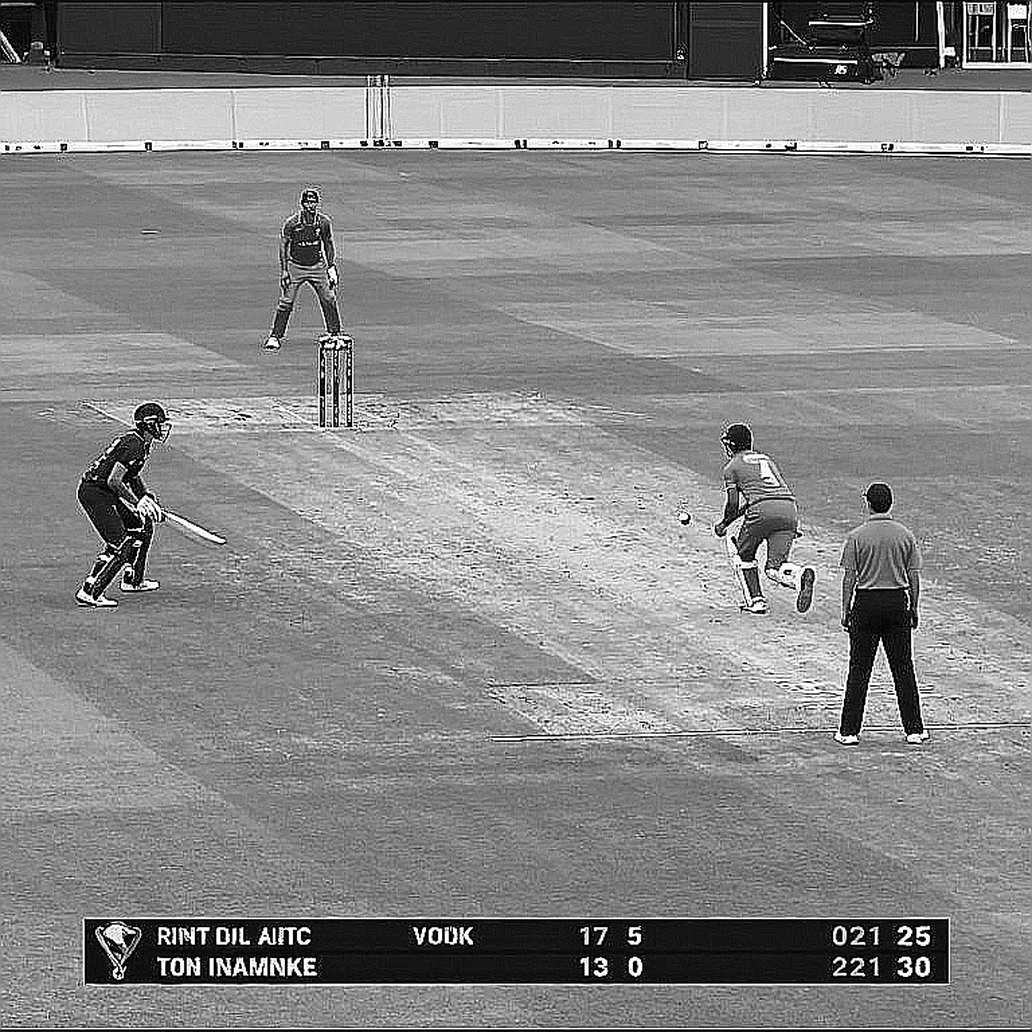
Cricket is perhaps the only major sport in the world where three different games run under a single name. A Test match lasts five days and a draw is a legitimate result; an ODI has fifty overs, one day, and a mandatory outcome; a T20 has twenty overs, roughly three hours, and entertainment as a condition of play. The rules differ, the skills prioritised differ, the audiences differ, and so do the economics. That is why no big question in cricket can be answered without looking at all three formats at once.
The question is not which format is better. The question is how long a single player, a single calendar and a single governing body can hold together three different sets of demands. What has changed in recent years is not only the speed of the game — what has changed is the way it is decided who plays what, when, and for whom.
The purpose of this analysis is not to comment on a particular match, series or selection controversy. It is to understand where the tension between the three formats comes from, whose interests it serves, and what options remain open. Where figures appear, they are estimates based on publicly available information and should be treated as estimates.
T20: a market built out of a need
T20 was born in English domestic cricket in 2026, when a twenty-over format was tried to counter falling county attendances. The intent was clear: compress the game into one evening, bring families to the ground, and give a time-poor audience a short, fast product with a guaranteed result. Two years later, in 2026, the first international T20 was played between England and Australia. Few would have guessed then that within two decades this format would become the financial backbone of the sport.
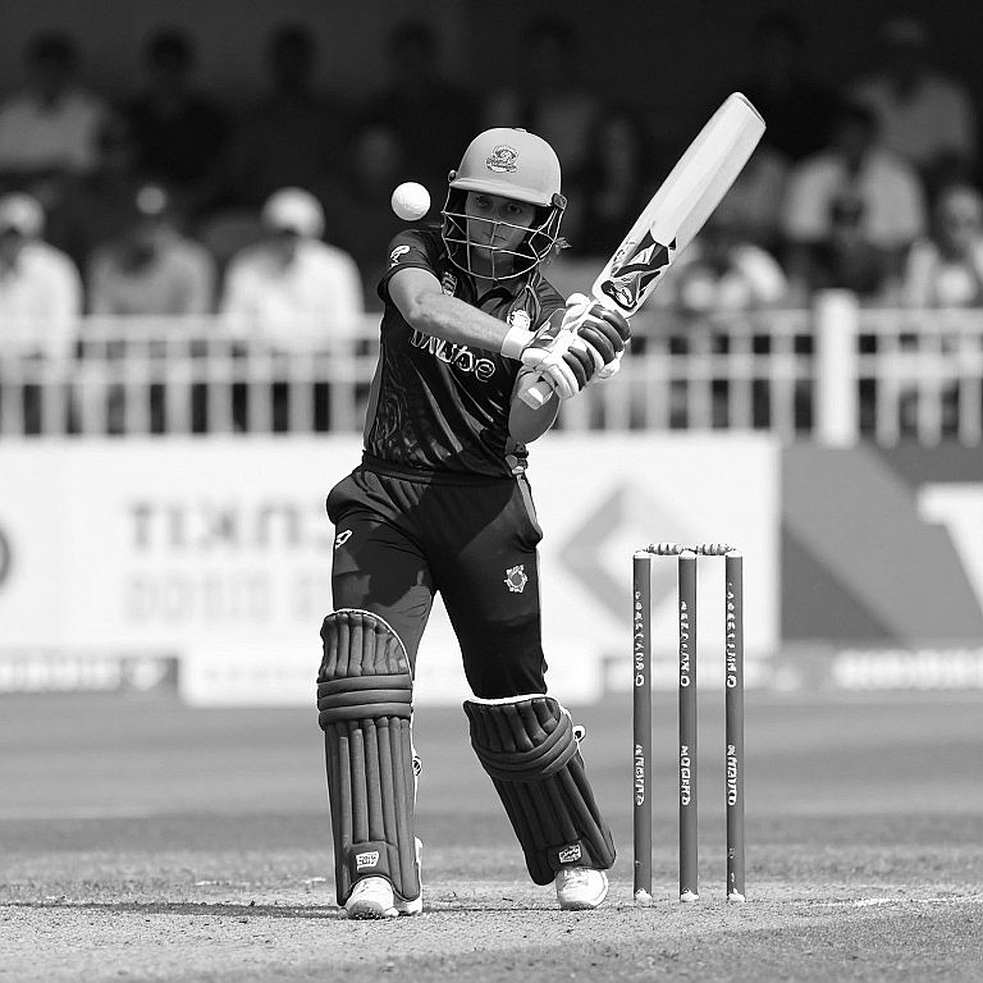
In 2026 India won the first T20 World Cup. That win was not merely a title — it proved that the short format could move a large market. The history since is almost linear: Pakistan in 2026, England in 2026, West Indies in 2026 and 2026, Sri Lanka in 2026, Australia in 2026, England in 2026 and India in 2026. The 2026 final was played in Bridgetown, where South Africa were beaten in the closing overs. That match will be remembered partly because it showed how quickly the illusion of control can collapse in T20.
T20's biggest achievement is that it turned cricket from an event into a product. A Test match is a process, an ODI is an occasion, and a T20 is a show — in which the first ball, the last over, the DJ, the floodlights and the television breaks are all designed together. That design makes it the easiest product for broadcasters, and that is why money flows toward this format.
But every benefit has a price. The format that made the entry door easier also decided that the fastest route to success for a young player is not Test cricket but league cricket. That shift is not technical, it is cultural — and it will shape the skill development of the next generation.
The economics of franchise leagues
The Indian Premier League began in 2026 with eight teams. Two more were added in 2026, taking the number to ten. According to publicly available information, the league's media rights for the 2026-27 cycle sold for roughly 480 billion rupees — a figure that by itself shows what the Indian market means to cricket.
The IPL's real innovation was not cricket but structure. Before it, the national team was the unit of identity in cricket. The IPL made the city the identity and tied the player to it. An Australian fast bowler and a West Indian batsman began playing in the same jersey, and the audience began supporting them by the name of a city rather than a country. That had never happened in cricket at this scale.
The model was copied quickly. The Big Bash League, the Caribbean Premier League, the Pakistan Super League, the Bangladesh Premier League, and in recent years South Africa's SA20, the UAE's ILT20 and Major League Cricket in the United States. The logic of every league is the same: a local market, television rights and international stars. But every league faces the same problem — player availability and room in the calendar.
This is where the real conflict begins. When two leagues run at the same time and a bilateral series is also scheduled in that window, the player has to choose. Usually he chooses on the basis of contract and income, and the interests of the national team look strong on paper but weak in practice. This is not a question of a player's loyalty; it is a question of a system's priorities.
One more aspect of league cricket is less discussed: it has become the main source of income for players from smaller cricket nations. Where earnings from Test matches are limited, a contract in two or three leagues is the financial security of a career. Seen this way, league cricket is not only entertainment but also a redistribution mechanism — even if an unplanned one.
The player: workload, injury and career span
The modern cricketer's biggest opponent is not the opposition but the calendar. A top-level player carries international matches in three formats, one or more franchise leagues, and the travel in between. The bigger problem than physical fatigue is that preparation time disappears. The window needed to improve technique, recover from injury and reset mentally does not exist anywhere in the calendar.
That is why 'workload management' has become the most disputed word in selection in recent years. When a fast bowler rests from a bilateral series, the fan feels a priority has been set wrongly. But that decision usually comes from physics, not politics: the fast-bowling workload per match is not uniform, and the number of consecutive T20 matches played directly raises injury risk.
With a bowler like Jasprit Bumrah this question has been sharpest. His availability and selection are debated before every major tournament, because team management knows that his presence in a major tournament is worth several times a single match in a bilateral series. The argument sounds tedious, but it is mathematically correct.
There is another side. When top players sit out bilateral series, the commercial value of those series falls. Broadcasters pay for star names, and if the stars are absent, the terms of the next deal change. This is a cycle in which every party is right in its own interest and all of them are collectively proving wrong.
The effect on career span is also clear. Earlier it was normal for a cricketer to play until 34 or 35; now that figure has fallen further for fast bowlers, while specialist batsmen are reshaping their technique for T20's demands. The long careers of players like Virat Kohli and Rohit Sharma show how discipline and management together can change the limits of age — but that is the exception, not the rule.
Test cricket: a fight between two tiers
Test cricket is the oldest and technically richest format. It is the place where speed and patience, attack and defence, planning and adaptation are tested together. But economically it is the weakest, because its product is complex: five days, an uncertain result, and an audience that must have five days at home.
The World Test Championship, launched in 2026, was the answer to this problem. The aim was to give Test matches a context, tie every series to points, and tell the audience which match 'matters'. New Zealand won the 2026 final, Australia the 2026 final, and the 2026 final was played at Lord's. The system has worked to some extent, but it has also created a new inequality: bigger countries play more Tests, so they accumulate more points, while smaller countries take greater risk in fewer matches.
Twelve nations play Test cricket today. India, Australia and England hold the largest share of resources; series among these three generate the most revenue. On the other side, Afghanistan and Ireland became full members in 2026 but do not get regular Test matches. Zimbabwe's Test status was suspended from 2026 to 2026 — an example of how entry and expulsion are both possible in this system, and both political decisions.
Players like Pat Cummins, Steve Smith, Kane Williamson, Joe Root and Ben Stokes still describe Test cricket as their priority, and the statement sounds authentic — because the technical challenge Test cricket offers is found nowhere else. But for the next generation that priority will not be so instinctive, when a month of T20 can earn what a year of Test cricket struggles to match.
ODI: a crisis of identity
ODI cricket has the clearest history: the first one-day international in Melbourne in 2026, the first World Cup in 2026, and a global event every four years since. India's 2026 win pushed the format to the peak of popularity in the subcontinent, and in 2026 India completed the cycle by winning the World Cup at home. Australia won the 2026 World Cup in Ahmedabad, and India won the 2026 Champions Trophy in Dubai by beating New Zealand.
But the crisis is that ODI is losing its place. T20 is faster, Test cricket is deeper, and this middle format is caught between the two. The middle overs of a 50-over innings are often where the game slows and attention drifts. Rules were changed in response — the structure of the powerplay, fielding restrictions, two new balls — but those changes did not fully solve the problem.
ODI's biggest defence is that it is the World Cup format, and the World Cup's value is in a category of its own. Events like the Champions Trophy and the World Cup still draw audiences. But bilateral ODI series are weaker, and many boards now see them mainly as World Cup preparation.
Technology, data and the remaking of the game
In the last two decades cricket's technical apparatus has changed at a fundamental level. The Decision Review System, introduced in 2026, brought umpiring decisions into a formal process of review. Hawk-Eye, UltraEdge, Snickometer and smart replay are now part of every major match. The effect has not been limited to reducing disputes — it has changed player behaviour. When you know every movement is being measured, you adapt your technique to the measurement.
Even bigger is the change brought by data analysis. Every franchise now has a team of analysts producing the mathematics of a batsman's shot mapping, a bowler's line and length, and a fielder's positioning. In T20 the effect is clearest, because the expected value of every ball can be measured. Batsmen like Suryakumar Yadav are symbols of this shift — their batting seems driven less by traditional technique and more by the arithmetic of coverage and risk-reward.
But data has a limit. Data tells you what works; it does not tell you when something different is needed. That space remains in Test cricket, where a player's mental resilience and situational judgement are still ahead of the machine.
The geography of broadcast: where the audience is, where the money is
One figure is enough to understand cricket's financial structure: India's share of International Cricket Council revenue is the largest, and according to public reports it is around 38 to 39 per cent. That ratio shows directly the power of a market within a sport.
This means the Indian broadcast time zone is the axis around which the calendar is built. A match starting in the evening in India is late night in Australia and afternoon in England. When the interests of two markets collide, the bigger market usually wins. That is not cricket's beauty; it is its politics.
This creates an odd situation for smaller cricket nations. Their players are valuable in global leagues, but their home series do not get the broadcast space they should. The result is that talent flows into the global market while local structures weaken.
Calendar reform: three routes
The first route is a two-tier Test system. Six or seven top teams play at one level and the rest at another, with promotion and relegation between them. The advantage is that contests become more competitive and results gain value. The cost is that it institutionalises inequality and makes the path upward harder for smaller nations.
The second route is a fixed franchise window. If a set period each year in the international calendar is reserved for league cricket alone, clashes reduce and players are not forced into choices. Commercially this looks like the most rational fix, but implementing it requires every board to give up some income from bilateral series — and that is the hardest part.
The third route is format-based contracts. If players are allowed to choose which formats they are available for, management becomes simpler and not every player must play every format. To some extent this is already happening, but informally. Formalising it would increase transparency. The risk is that it could shrink the pool of specialists available to Test cricket.
All three routes share one thing: none is painless. Cricket's calendar problem is not that there is no correct option, but that every option costs someone something, and no one is willing to bear the cost.
Conclusion: balance is a decision, not an accident
Cricket's future does not lie in one of the three formats winning. All three are needed — T20 for new audiences and money, ODI for global events, and Test cricket for the technical heritage of the game. The real question is how time and money will be divided among them, and who decides.
If that decision is left to the market alone, the outcome is predictable: T20 will keep expanding and Test cricket will become the game of a few countries. If it is left only to the boards' interests, the outcome will be much the same, only slower.
What is needed is a system that can hold both: one that accepts the power of the market but does not treat it as the only arbiter. A settled, equal and competitive calendar for Test cricket; a fixed window for franchise cricket; and contracts for players that acknowledge their limits.
Cricket has remade itself many times in the last fifty years — from the Packer revolution to T20. Each time the change came after a crisis, not after a plan. That is perhaps the game's greatest strength and also its greatest weakness: it waits for a crisis, and then changes fast. The question is whether it needs to wait for the next one.