
Pant's Fitness Test on Nov 9, First Test From Nov 19: Just 10 Days Between, and the Biggest Question Is the Keeping
रिषभ पंत का फिटनेस टेस्ट 9 नवंबर को सेंटर ऑफ एक्सीलेंस में मैच सिमुलेशन के रूप में होना है, जबकि न्यूजीलैंड में पहला टेस्ट 19 नवंबर से शुरू होगा — यानी क्लियरेंस से पहली गेंद तक सिर्फ 10 दिन। साइड स्ट्रेन से लौट रहे विकेटकीपर-बल्लेबाज के लिए यही सबसे बड़ा जोखिम है, क्योंकि पांच दिन की कीपिंग का लोड किसी एक दिन के सिमुलेशन से कहीं अधिक है और इस कैलेंडर में दूसरा सिमुलेशन संभव नहीं। अगर क्लियरेंस नहीं मिलता या देरी होती है, तो पंत 14 नवंबर से सैयद मुश्ताक अली ट्रॉफी खेलेंगे और उसके बाद विजय हजारे ट्रॉफी — यह घरेलू रास्ता जोखिम के लिहाज से सुरक्षित है। संभावना क्लियरेंस की ओर झुकी है, लेकिन 'क्लियरेंस' और 'टेस्ट वर्कलोड के लिए तैयार' एक ही बात नहीं हैं।
New Delhi/Mumbai: The most watched date in Indian cricket right now is November 9 — the day of what is officially being described as a fitness test. For Rishabh Pant, it is not merely a medical check; it is the day that will settle his New Zealand tour and, beyond that, the shape of India's Test middle order. The reason is simple arithmetic. The first Test of the two-match series begins on November 19, leaving only 10 days between a fitness clearance and the first ball. In those 10 days he must absorb the full load of a match simulation, fly to New Zealand, acclimatise to local conditions and build his body for the five-day workload of Test cricket. This is not a 'get fit' deadline; it is a 'get match-ready' deadline, and that is the real difficulty of the whole affair.
The arithmetic of ten days
The prevailing assumption is that clearance on November 9 clears the path. Technically, that is wrong. For a player returning from a side strain, ten days is the minimum period in which travel and acclimatisation must both be squeezed in. If clearance slips even by a day or two, the practice window at the start of the tour shrinks further. More importantly, there is no room in this calendar for a second simulation. The result on November 9 will therefore be binary: he plays, or he misses the entire series. In the case of a borderline result, the selection committee will be left with no third option but to field a half-ready player or weaken the XI by leaving him out.
Fitness test, or match simulation?
It matters that what the BCCI's Centre of Excellence (CoE) has scheduled is not a routine medical examination but a full-intensity match simulation. As protocol, that is also the correct approach. A side strain is the kind of injury that resurfaces under explosive movement — sprinting between the wickets, diving, and the repeated up-and-down of wicketkeeping. A clearance based merely on 'there is no pain' would not be adequate; the body has to be tested in the conditions it will face on the field. In that sense the CoE process is pointed in the right direction, but its limit is equally clear: the simulation lasts a day, the Test lasts five.
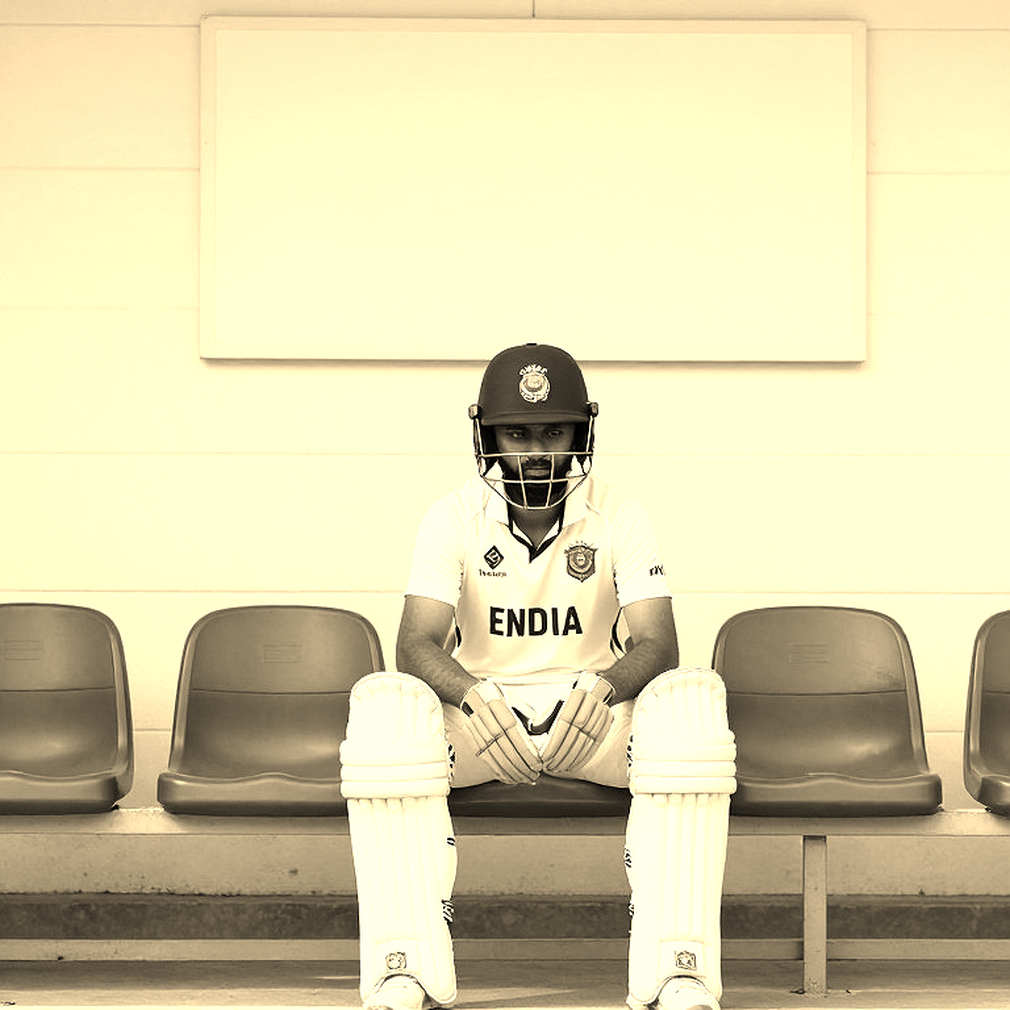
Side strain: the most sensitive injury for a keeper
The nature of the injury is what makes this decision complicated. A side strain affects the oblique and abdominal muscles along the ribs, and it is the most hazardous category for a wicketkeeper, because every ball demands a crouch, every bouncer an extension, every dive an asymmetric load down one side of the body. If he keeps for five days and bats twice in a Test, the load will be several times that of any simulation. The countervailing fact is that Pant is among the most impactful away Test batters of his generation — a Test average of roughly 44, with counter-attacking hundreds in England (2026), Australia (2026-21) and South Africa (2026). Losing a player of that calibre is no marginal loss. A board source put it plainly: 'the team needs a player of Pant's stature.' Note that there is no public data on the severity of the strain, the recovery timeline or the parameters of the simulation, so the assessment of readiness rests entirely on a test that has not yet happened.
New Zealand conditions: the variable nobody is discussing
New Zealand in November means fresh green pitches, swing in the air and seam movement. For a batter returning from a trunk injury, that is the hardest possible environment, because both balance and rotation come under stress. The host seam attack, especially with the older ball and the second new ball, ranks among the best in the world at home. That is why Pant's availability should not be treated as a mere 'team combination' issue — it is an issue of India's batting strategy in foreign conditions. Pant's counter-attacking game was precisely the answer to New Zealand's disciplined seam line. Without him, the team will be forced into a comparatively defensive approach.
Selection committee versus medical clearance
The most significant signal in this whole sequence is that the CoE's email has gone not only to the team management but to the selection committee as well. The direct implication is that this is no longer only a medical matter; it has become a selection decision. In practice, the CoE's fitness report is functioning as a de facto veto on selection — the paper authority sits with the selection committee, but the outcome is decided by medical opinion. That matches global practice in high-performance sport, but in Indian cricket it represents an institutional shift worth noting. The fact that the selection committee is on the email list also shows that a formal pre-tour fitness-verification protocol exists — a governance positive.
Gambhir's statement and the information gap
Head coach Gautam Gambhir said publicly that he had no update, even though the CoE's email had already reached the relevant people on Saturday. This is not a major controversy, but it is an information gap. A coach avoiding speculation on selection is standard practice, so there is no rule violation here. What it does reveal is that reporting is blurring the line between 'fitness' and 'selection'. The news is being framed as Pant's decision ('he expects to travel'), when in fact the medical clearance is in control.
Parallel files: Rana and Prasidh Krishna
The CoE is handling three separate files this same week. Harshit Rana's clearance is expected around November 11-12, and on November 20 his name is due to be added to the India 'A' squad for the Rising Stars Asia Cup in Doha. Prasidh Krishna is going through the same process. In other words, decisions for three different squads — Test, A-team and domestic — are emerging from a single institutional bottleneck. This is a load-management question, and it can delay clearances or create pressure around them.
The domestic route: Syed Mushtaq Ali Trophy
Pant himself has said that if he is not cleared for New Zealand, he will play the Syed Mushtaq Ali Trophy in full from November 14, and the Vijay Hazare Trophy after that. That statement should be read two ways. On one hand it signals confidence; on the other it is a deliberate backup plan that preserves his selection credibility. From a risk-management standpoint, the domestic route is genuinely low-risk: playing the SMAT, regaining match fitness and then absorbing the 50-over load of the Vijay Hazare is a controlled, escalating progression. The problem is that the SMAT, starting November 14, and the first Test, starting November 19, are in direct collision; Pant cannot physically play both opening fixtures. That calendar forces him into an all-or-nothing choice.
Three scenarios
The base case is that Pant passes the November 9 simulation, travels, and plays at least one Test, with the domestic fallback quietly dropped. The worst case is that he passes, travels, and breaks down in the first Test with a recurrence — costing India the second Test and Pant the start of his domestic season. The best case is that he plays both Tests, scores in the middle order, and puts the injury behind him. The point to note is that the risk does not lie in the November 9 test itself but in the load that follows it. 'Clearance' means 'fit enough to be selected under a deadline', not 'fully rehabilitated'. The gap between those two is the operating risk.
What to watch next
Four signals will indicate the direction of the wind: official confirmation of the November 9 result; any change in Gambhir's language at his next press conference; Pant's name appearing on SMAT team sheets around November 14; and the effect of Rana's clearance on the pace rotation being finalised for New Zealand. What needs to be acknowledged now is that this is not a two-part story. Pant's return could make a large difference to India on the field, but a wicketkeeper-batter absorbing a five-day Test load is a bigger question still.