
113 off 38: Abhishek Sharma's Knock Is As Spectacular As the 'New Idol' Crown Is Premature
अभिषेक शर्मा ने न्यूजीलैंड के खिलाफ वेलिंगटन में 38 गेंदों पर 113 रन बनाए, स्ट्राइक रेट लगभग 297, जिसमें 9 चौके और 11 छक्के शामिल थे। उनके 113 रनों में से 102 रन (90.3%) सिर्फ बाउंड्री से आए, जबकि बाकी 18 गेंदों पर केवल 11 रन बने — यानी यह अत्यधिक बाउंड्री-निर्भर, कम रोटेशन वाली हाई-वेरिएंस पारी थी। वे 26 साल के बाएं हाथ के बल्लेबाज हैं, पंजाब से, 2018 अंडर-19 विश्व कप विजेता टीम के सदस्य, और आईसीसी टी20ई बल्लेबाजी रैंकिंग में फिर से नंबर एक पर हैं। रिपोर्ट किए गए करियर आंकड़े — 71 टी20 में 2,267 रन, औसत 33.33, स्ट्राइक रेट 196, 4 शतक — स्वतंत्र सत्यापन की मांग करते हैं, क्योंकि यह स्पष्ट नहीं है कि ये केवल टी20ई के हैं या समस्त टी20 के, और क्या 196 करियर स्ट्राइक रेट है या हालिया विंडो का। सबसे महत्वपूर्ण तथ्य: 26 साल की उम्र में उनके नाम एक भी वनडे या टेस्ट कैप नहीं है, यानी पूरा मामला सबसे कम फीडबैक-लूप और सबसे अधिक अस्थिरता वाले फॉर्मेट तक सीमित है। 'फ्लैट-ट्रैक बुली' की आलोचना एक पारी से रद्द नहीं होती — उसे रद्द करने के लिए सीमिंग बनाम सपाट पिचों पर रन और आउट होने के पैटर्न का विभाजन, पिच रिपोर्ट, मैच परिणाम और गेंदबाजी की गुणवत्ता चाहिए, जो उपलब्ध नहीं है। निष्कर्ष: पारी वास्तव में असाधारण और विदेशी धरती पर है, लेकिन 'भारतीय क्रिकेट का नया आइडल' वाला मुकुट एक पारी और एक फॉर्म-आधारित रैंकिंग से बड़ा है; उनका बहु-फॉर्मेट भविष्य अनसुलझा है और व्यावसायिक मूल्य उससे आगे चल रहा है। इस सामग्री में सट्टेबाजी, फिक्सिंग या शासन-विवाद का कोई संकेत नहीं है।
The Smoke From Wellington, and the Making of a Name
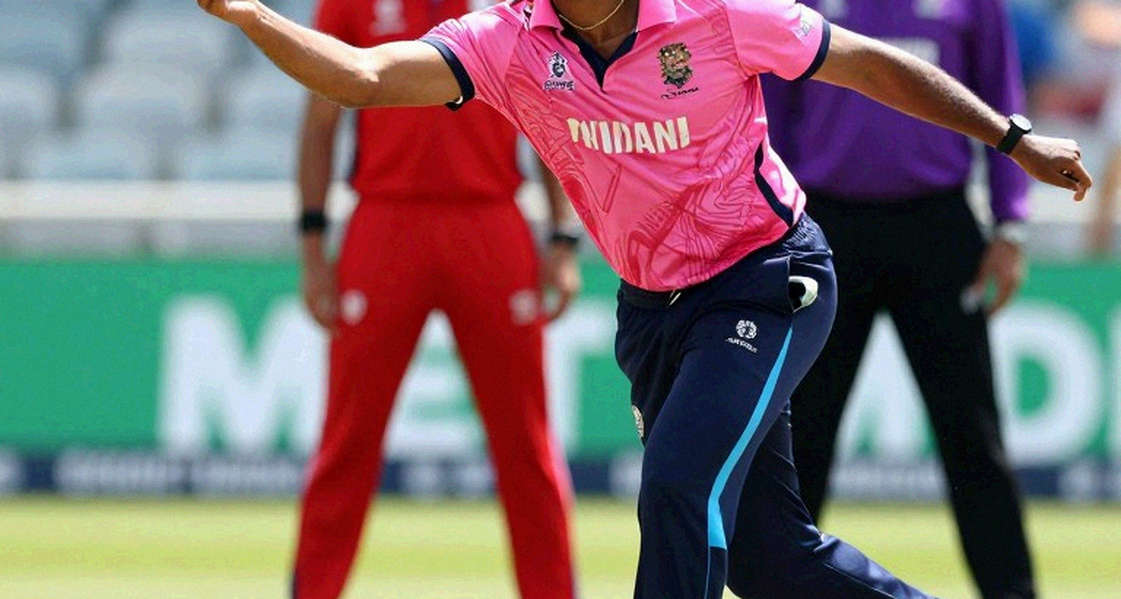
One innings of 38 balls in Wellington has changed the weather of Indian cricket debate overnight. On foreign soil, in conditions associated with seam and swing, Abhishek Sharma struck 113 off 38 deliveries — a strike rate of roughly 297. The knock contained nine fours and eleven sixes: 20 of the 38 balls he faced crossed the boundary rope. That statistic is a statement in itself. This was not an innings of accumulation; it was an innings of detonation.
But the story being built on top of this innings is larger than the innings itself. The story is that Abhishek has silenced his critics, that the "flat-track bully" label is now history, that Indian cricket has found its next idol, and that the Gavaskar–Tendulkar–Kohli–Rohit line of succession has its next entry.
This report's purpose is not to reject those claims. It is to weigh them — because an extraordinary innings is true, and a grand coronation is, for now, only partly true. The distance between the two is the real subject.
What the Scoreboard Says — and Does Not Say
First, what is clear. 113 runs off 38 balls, strike rate around 297. Runs from boundaries — fours and sixes — total 102, or 90.3 per cent of the innings. On the remaining 18 balls he scored 11 runs, a strike rate of about 61. The implication is plain: this innings was built on power, not on rotation. The skill set of working the ball into gaps for ones and twos, which underpins most big T20 hundreds, was almost entirely absent.
In analytical terms this is a high-variance profile. Its ceiling is very high and its floor is equally low. When the boundaries come, the scoreboard breaks; when the pitch is slow, the ball does not come on, or a catch or two goes to hand, the same method is exposed — because no secondary run-scoring mechanism is visible.
And this is where the story keeps skipping the decisive point: what the pitch was like, who won the toss, what the match result was, how other batters fared on the same surface, and what standard of bowling was on offer. These five pieces of information are what determine an innings' true value. None of them is present in the available material. This is not a minor omission; it is the central evidential gap of a piece that draws a permanent conclusion from a single innings.
Wellington is known for seam bowling — wind is a structural variable there, and early movement is common. If the surface had moisture and grass that day, this innings is the strongest possible answer to the flat-track charge. If the surface was flat, the innings confirms the charge. The original framing concedes that the pitch was a contested point. But raising a question in a headline and producing a pitch report are two different jobs. The second was not done.
Has the Flat-Track Case Been Closed or Postponed?
"Flat-track bully" is a very specific charge. It does not mean the batter is poor. It means his scoring mechanism depends on surfaces where the ball comes on comfortably, and that when the ball moves, the same mechanism fails to answer. The charge is not an insult; it is a technical diagnosis.
So is one innings of 38 balls enough to dismiss it? The technical answer is no. The diagnosis is tested by conditions, not by innings length. What is needed is a split of the batter's run-scoring and dismissal patterns across two categories: seaming versus flat surfaces, and home versus away.
That split does not exist anywhere in this debate. What exists is one extraordinary innings, one ranking, and a handful of former players' statements. The correct conclusion, therefore, is not that the charge has been disproved. It is that the charge can be postponed — not cancelled.
One feature of this away innings deserves more credit than it is getting. It happened outside India. Compared with hundreds made on flat Indian pitches, a hundred on foreign soil is genuinely stronger evidence. Had the story placed this fact at its centre, its case would look more robust. Instead it chooses the route of emotion and tribute.
The Witnesses on Whom the Story Rests
What is striking about this narrative is that it runs on testimony rather than data. Salman Butt says what we are seeing is not slogging but calculated risk. That may be a fine technical observation. But proving it requires a distribution of dismissal modes — how often he is bowled or lbw playing across the line versus caught in the deep — and a scoring split by delivery type: short ball, full ball, spin, left-arm pace. Not one of those numbers is supplied.
Yuvraj Singh's remark that he himself could not score a century in 30 or 34 balls is a generous tribute from a former great. But it is an emotional certificate, not technical proof. Daryl Mitchell's reaction — that some of the shots were world-class — is the most measured and bounded claim in the entire body of material. Mitchell does not say Abhishek has become great; he says that on that day certain shots were world-class. That is a precise, limited, in-the-moment assessment.
By contrast, the senior journalist Sharda Ugra's remark expands the frame: that Abhishek has drawn attention not only with explosive batting but with consistency. That is a central claim — and the only consistency metric anywhere in the piece is the ranking position. No average splits, no rolling twelve-month data, no home-away comparison.
And the most revealing sentence in the whole body of material is this: everyone thought Vaibhav Suryavanshi would be the next superstar, but Abhishek came and snatched that place. That sentence says less about cricket than about the Indian cricket media market. In that market there is one superstar chair, and the right to sit in it is decided by recency, not by career accumulation.
The Career Line Needs External Verification
The reported figures are: 2,267 runs in 71 T20 matches, an average of 33.33, a strike rate of 196, and four centuries. He has also regained the No. 1 position in the ICC T20I batting rankings. He is 26, a left-hander from Punjab, and a member of the 2026 Under-19 World Cup winning squad coached by Rahul Dravid.
One figure demands attention. An average of 33.33 with a strike rate of 196 is arithmetically consistent — it would imply roughly 1,157 balls faced and about 68 dismissals. But 71 T20I caps at 26, for a player with no ODI or Test appearances, is an unusually high count. Two possibilities follow: either the figure merges T20I data with broader T20 career data, or the strike rate is a recent-window number rather than a career number.
The difference matters. If 196 is a career strike rate, it sits in the extreme reaches of men's T20I history and is a story in itself. If it is a recent-window figure, the whole "sustained dominance" reading collapses. Either way, the conclusion differs — and settling a permanent verdict without resolving this is premature. The right step is to cross-check against ICC and ESPNcricinfo records and to establish whether "71 T20s" means T20Is or all T20 cricket.
What a No. 1 Ranking Actually Means
The ICC T20I batting ranking is a weighted system. It emphasises recent performance, adjusts for opposition strength, and accounts for match volume. The direct consequence is that one outstanding series can lift a player to the top without a multi-year track record. "Regaining the top spot" is a description of that mechanism.
The ranking should therefore be read correctly: it is an indicator of recent form, not proof of sustained dominance. It is a very useful piece of information, but it is a perishable asset — it can reverse within a single series. A story whose headline rests on "number one" is resting on an unstable variable.
The Biggest Fact, Mentioned in Passing: No ODI, No Test
The most important fact in this entire story is that at 26, Abhishek Sharma has no ODI cap and no Test cap. And this fact appears only as a passing aside.
Why does it matter so much? Because it means every data point here belongs to the format with the shortest feedback loop and the highest variance. In T20, one innings is not a career. In Test cricket, an innings can change a career's direction, because that is where technique is genuinely examined — defence, leaving discipline, the ability to hold shape on day four when tired. A T20 peak is a peak in one dimension of technique: the ability to get the ball to the rope.
So a claim like "the new idol of Indian cricket," made with zero evidence in ODI or Test cricket, is structurally incomplete. The claim could be true — but it is not yet proven true.
The Team Landscape: India's Top Order Is a Surplus Market
India's T20 top order is the deepest batting resource in world cricket, or among the deepest. The competition is therefore internal, not external. Sanju Samson and Vaibhav Suryavanshi are named as rivals for the same slots, and Rohit Sharma and Virat Kohli are described as being in the twilight of their careers — a generational handover window is open.
That creates a paradox: even the world's number one ranked batter is fighting for his place. The constraint is selection policy, not talent supply. The effect is that any individual hot streak has structurally limited value, because it does not guarantee selection.
There is also a technical blind spot the material never touches. A left-handed T20 opener faces three traditional stress tests: left-arm pace, high-bounce short bowling, and quality leg-spin. There is no information on his record against any of the three. Nor is there anything on knockout psychology — his record in finals and ICC knockout matches is unknown.
IPL, Sunrisers, and the Travis Head Partnership
The most analytically useful point in the entire body of material concerns the IPL — the move from Delhi Capitals to Sunrisers Hyderabad, and the opening partnership with Travis Head. The claim is that the pair decide a match's fate inside the first six overs.
Look carefully and this is his real cricket value: powerplay run-rate inflation. That is a real, quantifiable, highly prized T20 skill. But it is a role value, not a value that transcends formats. A batter who explodes in the powerplay is not the batter who holds an innings together across 20 overs, and the first day of a Test match is not a powerplay.
Here a significant omission appears. IPL success is currently the main engine of two things at once — commercial value and public expectation. But IPL conditions (flat surfaces, short boundaries, franchise-optimised roles) are systematically more batting-friendly than away T20I conditions. That is precisely how flat-track reputations are made. The material does not address the mechanism; it presents the IPL purely as a success story in which the player "found his true identity."
It is also worth noting that no comparative data is offered for the Delhi-to-Hyderabad move. No before-and-after strike rate, no averages, no measurement of the role change. "Found his true identity" is a narrative, not a measurement.
Brand Versus Performance: Which Is Running Ahead
The final sections become openly commercial. We are told he is "signing deals with one organisation after another" and is "one of the most marketable faces among India's new-generation cricketers." Then comes the necessary addition: that his real identity remains his bat, not off-field glamour.
That sentence is a signal in itself. Such a thing needs saying only where the visible trend runs the other way.
The conclusion that emerges is this: the document is less a sporting valuation than a commercial one, dressed in sporting clothing. The technical case rests on one innings; the market case has several paragraphs.
Notably, the material contains no IPL auction price, no retention status, no contract length, no broadcast-rights value and no viewership data. That means any premium analysis would be speculation. What can be said is that if a premium exists, two drivers are plausible: first, a scarce archetype — a left-handed Indian powerplay-destroying opener is one of the thinnest categories in world T20 cricket; second, a brand premium — young, photogenic, marketable. Both are commercial reasons, not reasons of cricketing skill.
Risk: Hype Backlash and Career Shape
The largest risk here is not performance risk but career-shape risk. Being the world's best in one format and uncapped in the other two is a stable outcome only if the format landscape stays put. It will not. ODI World Cups and World Test Championship cycles will continue to define legacy and central-contract value. The BCCI's central contract grading rewards multi-format performance; a T20I-only specialist sits structurally lower in that hierarchy regardless of ranking.
The second risk is hype backlash. Phrases like "arrival music of a new star," "India's new cricket idol," and the Gavaskar–Tendulkar–Kohli–Rohit lineage invoke the most heavily loaded comparison framework in Indian cricket. Its historical fulfilment rate is very low. The material uses it fully and hedges not at all.
The third is injury and workload — and it must be said honestly that there is no information. No injury history, no ball or minute load, no schedule density. A piece this enthusiastic about commercial upside is silent on the player's physical burden. That is a genuine blind spot and should be labelled as one.
The fourth is selection displacement. Samson and Suryavanshi are named. India's top order is a surplus market, and in a surplus market even a No. 1 ranking does not guarantee a fixed place.
And finally: there is not a single signal in this material of betting, fixing, corruption, rule controversy, eligibility dispute or governance interference. That should be stated plainly, because people find suspicion where none is signalled. There is no integrity flag here.
What to Track Next
First, the next three to five T20I innings, especially on surfaces that seam. Two or more innings at a strike rate below 120 on helpful pitches would materially weaken the conditions-proof claim.
Second, the ODI debut and selection communication. Mohammad Kaif's public demand for an ODI chance shows this is a live debate, not a settled matter. A second consecutive year without an ODI cap would narrow the multi-format pathway further.
Third, the non-boundary strike rate. If ball-by-ball data shows it sustaining below 90 across a series, boundary dependency is confirmed as a structural trait rather than a one-off.
Fourth, the ICC ranking trajectory. A slip from No. 1 directly weakens the headline claim.
Fifth, endorsement volume against on-field output. If brand growth continues through a form dip, brand value has decoupled from sporting value — a commercial-overheating indicator.
Sixth, powerplay data with Travis Head. Sustained top-quartile powerplay scoring would reinforce the scarce-archetype thesis.
Conclusion: The Innings Is Real, the Crown Is Rushed
The balanced reading is this. 113 off 38 balls with eleven sixes, on foreign soil, is objectively a major innings, and there should be no hesitation in saying so. The away context genuinely works in his favour, and it does not get the space it deserves.
But concluding from this innings that the flat-track debate is over is a logical leap. The evidence required for that — pitch report, match result, how other batters fared, quality of bowling, a split of dismissal patterns, home-away comparison — is absent. What exists is a magnificent innings, a form-based ranking, and five or six influential voices.
The real story, then, is not "he answered his critics." The real story is that India has produced a world-class T20 powerplay asset whose multi-format future is entirely unresolved — and whose commercial value is being priced ahead of that resolution.
That is not contempt. It is a normal pattern in the Indian cricket market, and it is exactly how expectations get mispriced. A 26-year-old who is world No. 1 in one format and uncapped in two is the most interesting experiment in Indian cricket right now — but the experiment is not finished.
One last point. Of all the "next superstars" declared in Indian cricket in recent years, very few attained that status. The reason was not a lack of talent; it was that the declaration came before the performance. What Abhishek Sharma has is rare: a left-handed, Indian, powerplay-breaking opener, aged 26, standing at the threshold of the batting peak (27–33). If the technical base is real, the next five or six years are his maximum-output window. The original material does not make this argument — to its credit, because it argues from romance rather than from the age curve.
The right posture is this: praise the innings fully, but keep the crown in hand. Many are offered the crown; few carry it.
(Note: career figures used here are taken from the source material and require independent verification against ICC and ESPNcricinfo records. Where match result, toss, pitch report, bowling quality, injury history or auction/contract data were unavailable, no conclusion has been drawn. This material is for sports-information and analytical reference only and is not betting advice or any win/loss recommendation.)